



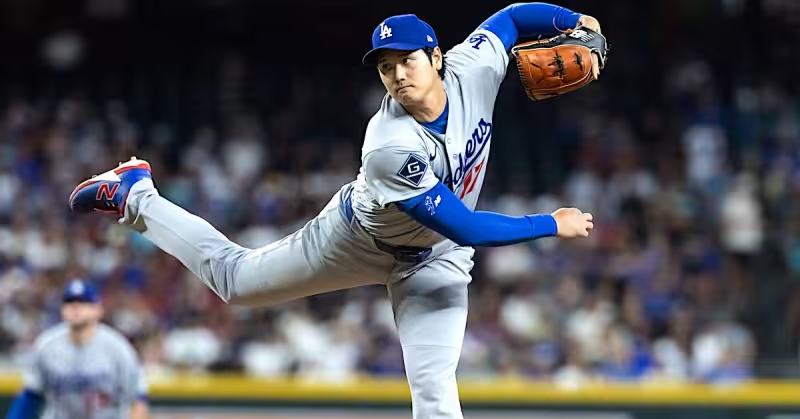
Justin Wrobleski is scheduled to take the mound Tuesday night at Dodger Stadium against the Tampa Bay Rays on four days' rest, marking only the second time this season a Dodgers starter has gone on that short a turnaround.
Wrobleski’s assignment matters because he has been one of Los Angeles’s most durable starters. He ranks second on the club with 73 1/3 innings, is averaging 6.3 innings per start and has gone at least six innings in eight of 11 starts. He has four outings of seven innings or more — second on the staff behind Yoshinobu Yamamoto — and owns seven quality starts this year; the Dodgers have won six of those starts. The club leads the majors with 41 quality starts and their six-man rotation has produced an MLB-best 5.75 innings per real start with a 3.13 ERA.

The timing intensifies the test. Wrobleski’s last turn came last Thursday in Pittsburgh, when he worked 4 2/3 innings before exiting after a four-run fifth inning and after taking a comebacker off his right hamstring. That outing was the first time in 11 starts he failed to reach five innings. The Dodgers are relying on starters to go deep — Eric Lauer, for example, completed six innings in Monday’s series opener against the Rays — and putting Wrobleski on four days' rest interrupts the usual cadence.
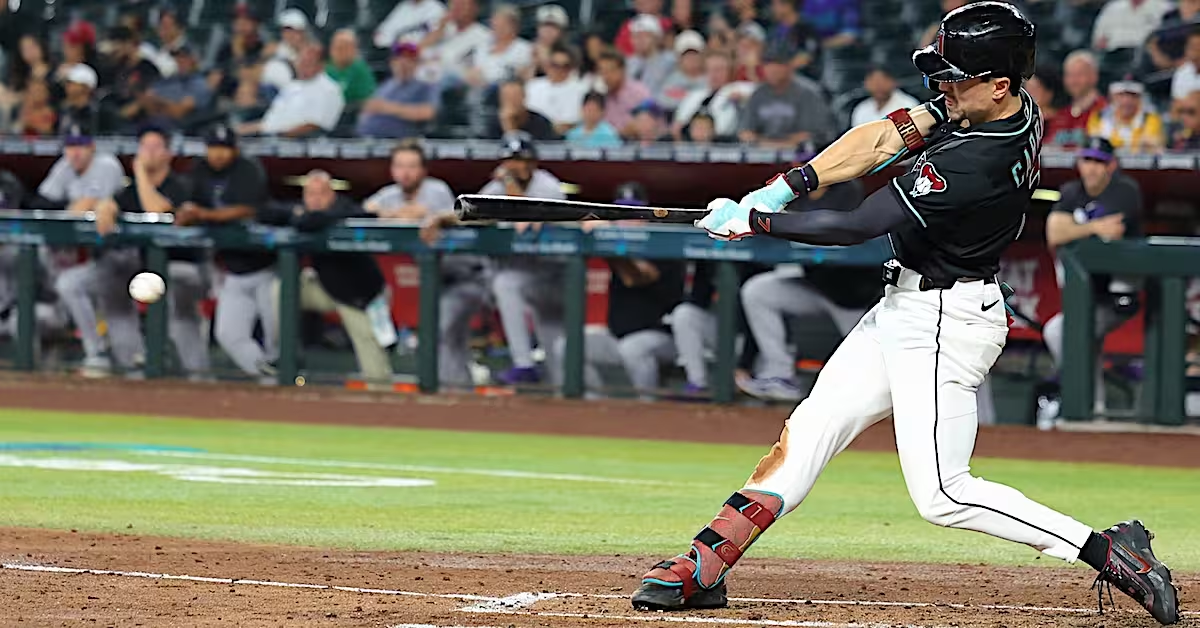
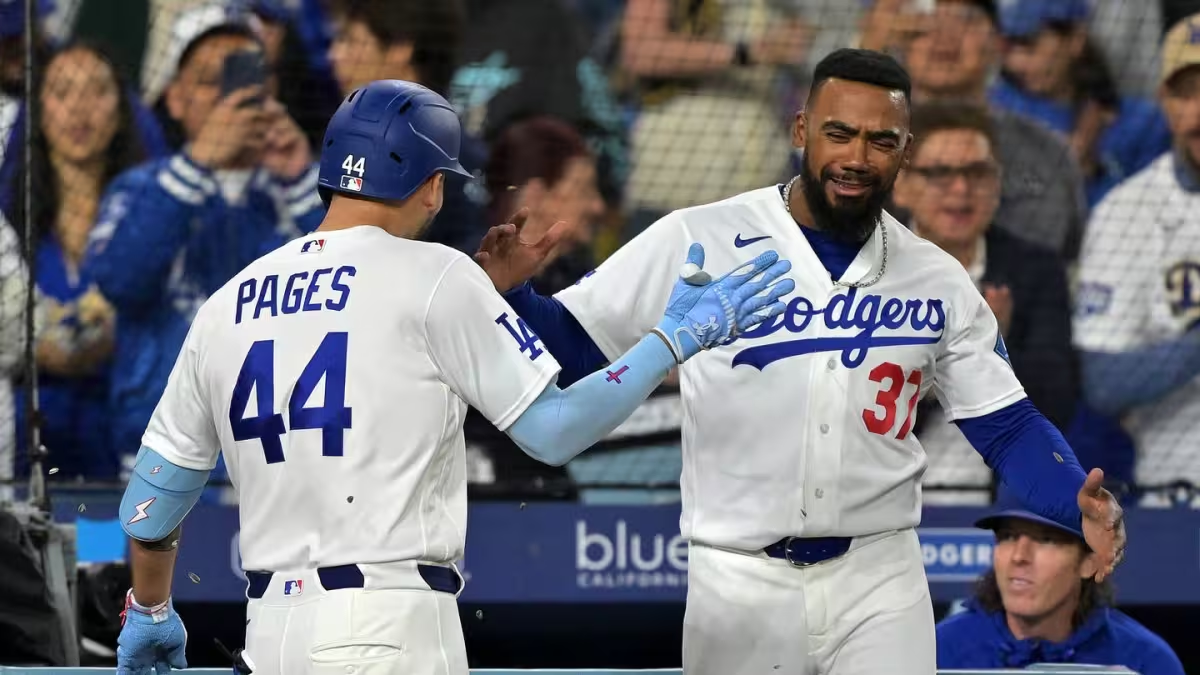
The friction is clear: Wrobleski is being asked to start on compressed rest after a shortened outing and a hard comebacker to his hamstring. The club has leaned on a six-man rotation to protect the bullpen and sustain those long starts; sending Wrobleski back out on Tuesday risks either a truncated outing that forces the bullpen into heavy work or a showing that confirms the rotation’s durability despite short turnarounds.
Practical details before first pitch: Wrobleski will aim to re-establish the length he’s provided most of the season and to avoid a repeat of the 4 2/3-inning night in Pittsburgh. The Dodgers enter the game having benefited heavily when starters reach the sixth inning — they are 29-12 in games with a quality start — and maintaining that edge is the immediate priority. Tommy Edman was back with the Dodgers on Tuesday, and Lauer’s six-inning performance Monday took some immediate pressure off the relief corps.
What to watch during the game: whether Wrobleski can get through the lineup two or three times at his season average of roughly 6.3 innings, how the Dodgers handle his pitch count after the hamstring contact, and whether the bullpen must cover multiple innings. If Wrobleski can deliver another quality start, the rotation’s MLB-best innings and run prevention numbers are likely to hold as the team navigates the heavy June schedule; if he exits early again, the Dodgers will face the familiar trade-off between protecting a pitcher’s recovery and preserving a bullpen already conditioned to cover volatile stretches.
Wrobleski’s outing will be the immediate measurement of whether the Dodgers’ six-man plan keeps working under strain: a durable performance extends the lead in games won when starters go deep, while another short night will force the club to reshuffle short-term workload and test the depth their rotation has been built to provide.



