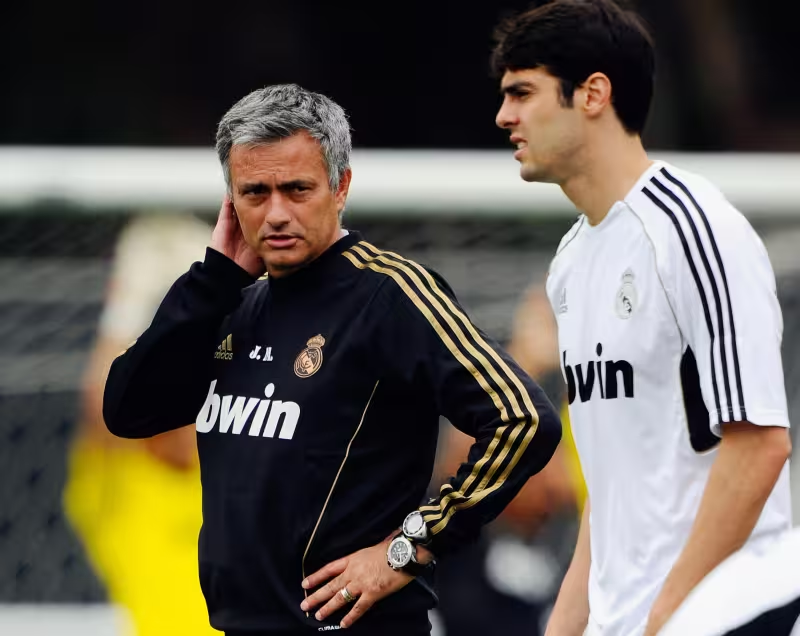
Kaká told Rio Ferdinand on his podcast that the four years he spent at Real Madrid after arriving in 2009 were defined less by failure than by forces beyond his control: injuries and the coach’s choices.
The former Ballon d’Or winner said he arrived from AC Milan as one of world football’s biggest stars — he won the Ballon d’Or in 2007 and lifted the Champions League with Milan — but found himself battling for one of "two spots in the starting eleven" under José Mourinho. "My problems in Madrid were, firstly, injuries, and secondly, the coach’s decisions," Kaká said. "Mourinho preferred other players: Özil, Di María, Benzema, Cristiano... There I was."

That admission carries weight because it comes from a player who left Milan with the game’s highest individual honour and stepped into Real Madrid’s spotlight in 2009 expecting to be a central figure. Instead, the statistics — minutes, starts and the simple fact that he and several teammates were competing for just two attacking positions — show why expectations and reality diverged.
After making that point, Kaká moved to the personal: he described an identity crisis that mixed professional disappointment with spiritual grounding. "Who am I: the best in the world or one of Real Madrid’s worst signings in recent years?" he asked on the podcast, a sentence that captured both the public narrative and his private reckoning. He said faith helped him through that period: "I was a child of God. My identity was defined by faith. God loved me in every situation."
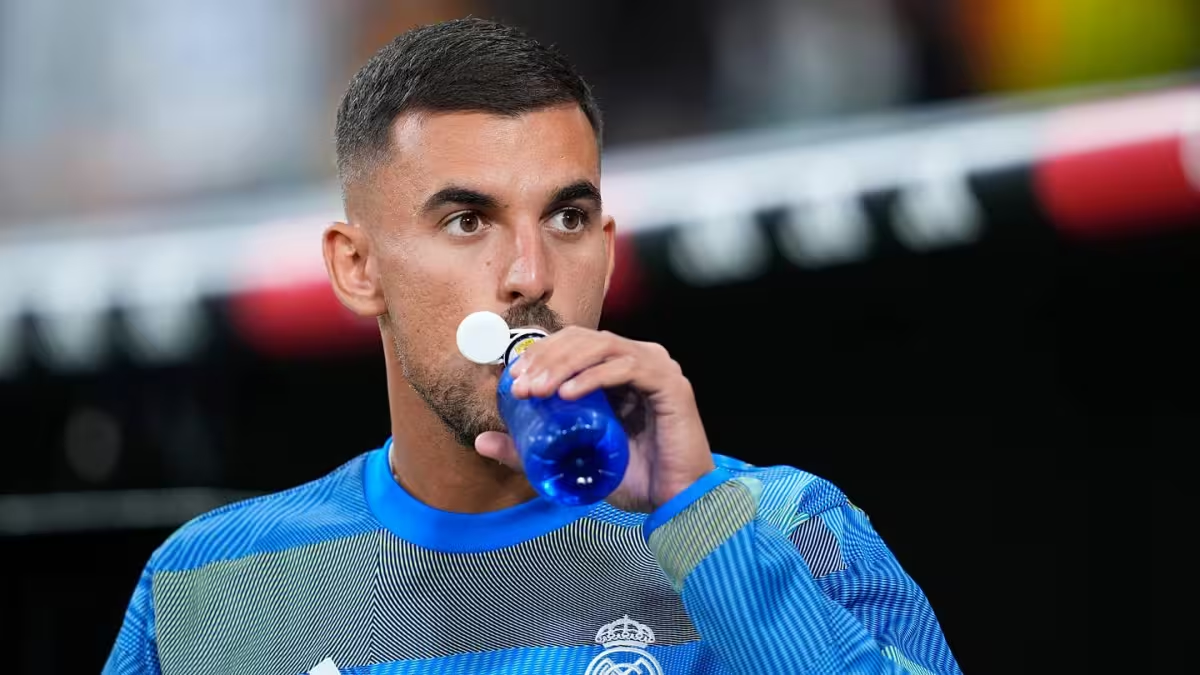
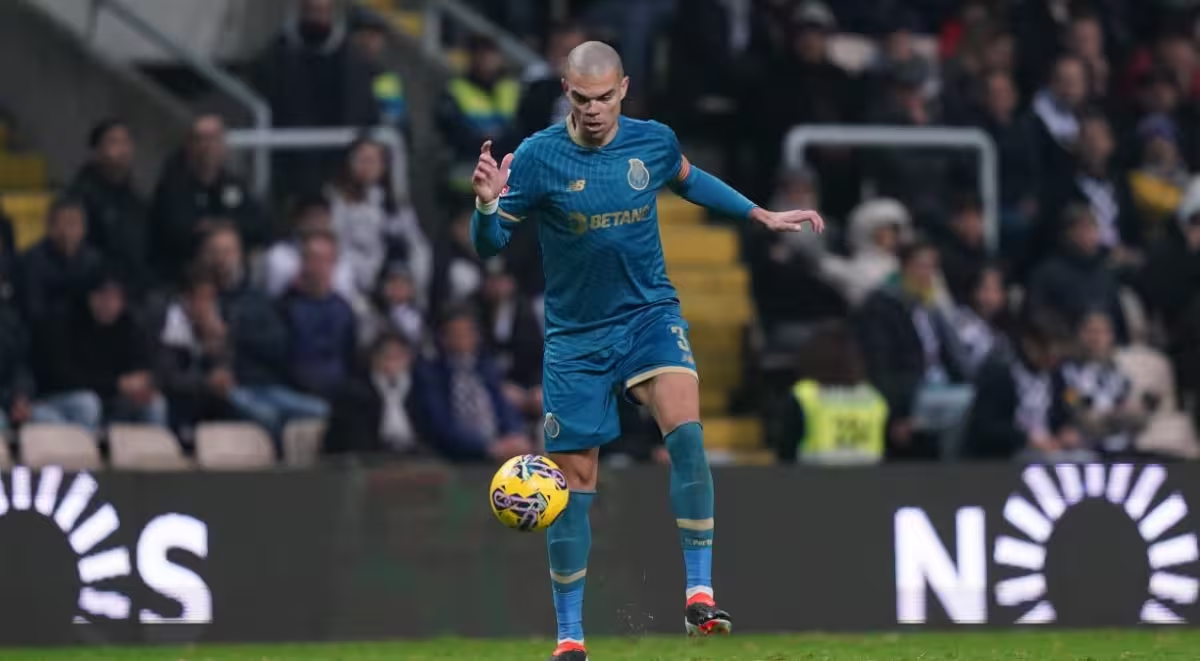
Kaká did not frame Mourinho as the sole author of his Madrid arc. He acknowledged injuries repeatedly and said he "tried to show him, I did everything I could" to earn more consistent playing time. At the same time, the players Mourinho preferred — Mesut Özil, Ángel Di María, Karim Benzema and Cristiano Ronaldo — were established parts of a forward line that gave the Portuguese coach tactical clarity and reliability.
The episode also underlined how personal relationships survived a rocky exit. Kaká recalled the day he left the club and said Florentino Pérez called him into his office. "Look, it didn’t go as we all wanted, but I’m very happy that you played for us. You’ve always been professional and had integrity," Kaká quoted Pérez as saying. He added that he remains welcome at the club and speaks warmly of his four years with Cristiano Ronaldo, describing Ronaldo as "a great guy, a great teammate."
Context sharpens the picture: Kaká arrived in Madrid as a two-time headline-maker — Ballon d’Or in 2007 and Champions League success with Milan — but left carrying a mixed legacy. Public debate later grouped him with other high-profile signings that failed to transform the team, a narrative Kaká acknowledged even as he rejected its moral finality. He insisted he was neither the greatest of his generation nor the worst transfer in Madrid history; he said the truth sat inside his faith and experience.
The friction in Kaká’s recollection is clear and unavoidable. He presents two causes — injuries and Mourinho’s selections — and both can be true without a neat split of blame. Did chronic injuries prevent him from providing the form Mourinho needed? Or did tactical preference and squad dynamics shut the door before form could return? Kaká’s account gives weight to both explanations but does not, and cannot, quantify their relative contribution.
The most consequential unanswered question is exactly that: how much of Kaká’s curtailed influence was the result of physical decline and how much was the product of Mourinho’s tactical blueprint and personnel choices? Kaká’s podcast answers the emotional question — he emerged intact and spiritually fortified — but leaves the technical one open, a gap that will invite fresh scrutiny from analysts and fans who still debate what might have been when a Ballon d’Or winner moved to the Bernabéu in 2009.