



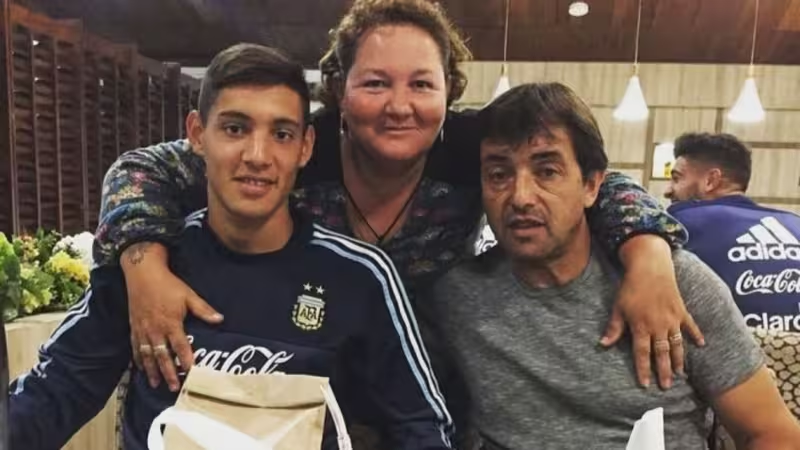
"Lo de Boca fue muy duro, lo dejaron libre, que no se cumpliera la palabra," Laila Lucero told an interviewer, naming the moment she still regards as the worst in her son's early career. The remark — delivered on the program Al horno con Maru, edición Mundial — arrives while Nahuel Molina is being remembered as one of Argentina's Qatar 2022 heroes and prepares to rejoin the national setup this month.
Lucero did not dwell on headlines or trophies; she described a specific blow. Molina left Embalse, Córdoba, for the Barcelona academy in San Justo at 11 years old, later trained at La Masía, and debuted in Boca Juniors' youth categories at 17. Then, during the pandemic, he was left out of the Boca team — a cutoff Lucero framed as a breach of a promise and the hardest episode she endured as his mother.

She balanced criticism with gratitude. "Tengo que agradecer y eso si lo quiero recalcar, es a la pensión de Boca," Lucero said, naming Casa Amarilla as more than a dormitory. "Casa Amarilla para Nahuel fue su casa," she added, and recalled that Molina "los visita cada vez que puede. Sé que la última vez que estuvo con las cocineras." The detail underlines a split reality: a club that she says let her son go also provided the day‑to‑day care that steadied him when she could not be there.
The specifics matter because they complicate the tidy success story. Molina's route — Córdoba to San Justo, then La Masía, then Boca's youth system — reads like the resume of a top prospect. Yet Lucero's account places a rupture in that path at the pandemic's low point for clubs and families. Her words give that rupture emotional weight: the family's sense of abandonment and the practical shelter Casa Amarilla supplied in its stead.


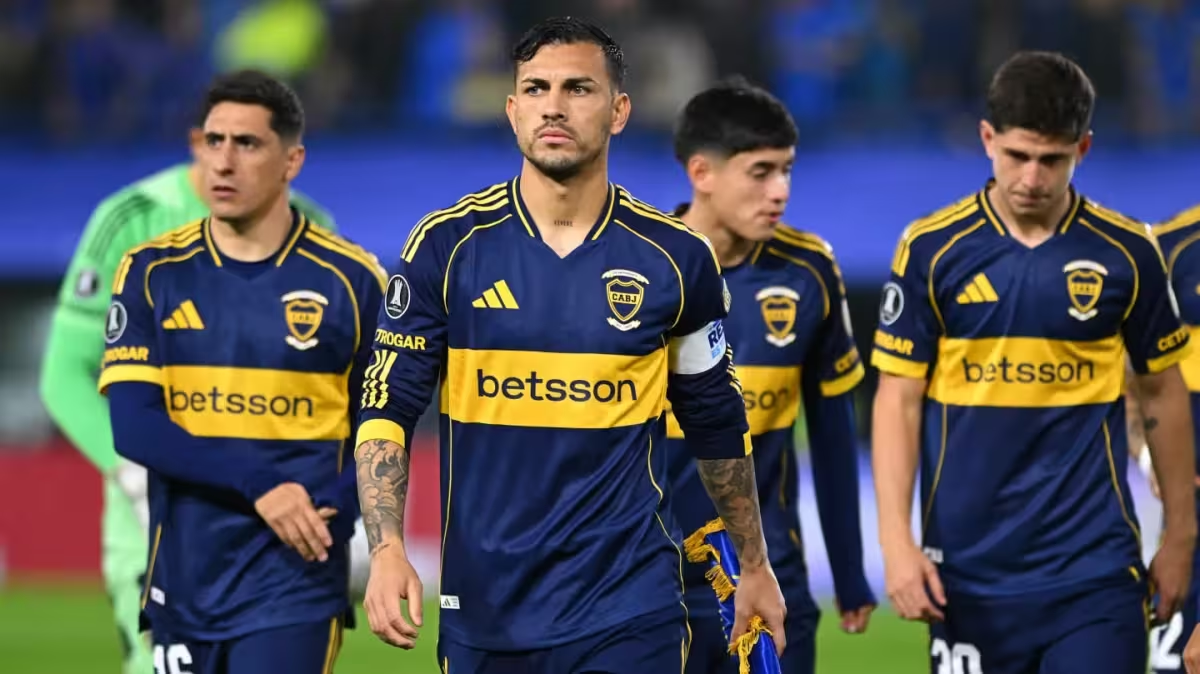
Lucero gave the clearest portrait of who kept Molina afloat. "La verdad que había gente ahí muy linga, gente que lo contuvo en su momento y bueno, yo tengo que agradecer a esa gente porque estaba en el momento que la mamá no estaba," she said, naming staffers — cooks, caretakers, coordinators — as the figures who supported her son when she was absent. Her gratitude frames Casa Amarilla less as a corporate program and more as a surrogate household for a teenager uprooted by football.
There is a second, sharper note to her story. The coordinator who brought Molina into Boca's youth setup had previously worked on the Barcelona project in San Justo and took Molina with him; Lucero implies that an expectation of continuity was broken when Boca released the player during the pandemic. That gap — what exactly led Boca to let him go, and whether a verbal commitment was ever formalized — remains the central unanswered fact in her account.
The timing of Lucero's comments is not accidental. They surfaced as Molina is being discussed again on the international stage: he was part of Argentina's squad after Qatar 2022 and, on June 16, was described as set to live another World Cup with the national team. Her recollection reframes a familiar name: not only as a World Cup winner but as a player who weathered institutional setbacks and whose family felt the cost personally.
What happens next is unclear. Lucero's interview laid out the emotional ledger — pain at Boca's decision and gratitude toward Casa Amarilla — but it did not produce a response from Molina or from Boca Juniors. The most consequential unanswered question, now sharpened by a mother's testimony, is straightforward: why did Boca release a teenager during the pandemic despite the promise she says existed, and what records or witnesses can explain that decision? An answer could change how the episode is read by supporters who now celebrate Molina as a World Cup hero.



