



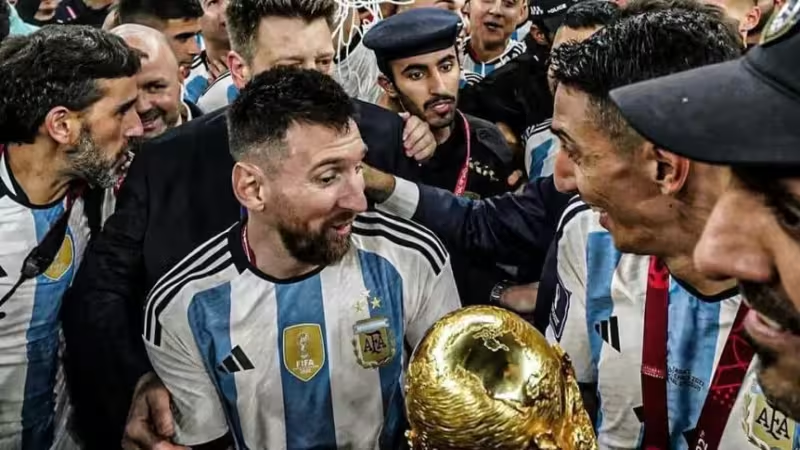
Ángel Di María took to Instagram Tuesday afternoon to tell the Argentina squad he would be with them “hasta el fin del mundo” as they opened their World Cup campaign against Algeria, writing: "Hoy arranca una nueva ilusión y solo quiero decirles, con la mano en el corazón, que estamos con ustedes hasta el fin del mundo."
Di María followed the opening line with what may be the clearest sign of how his relationship with the national team has shifted: "Sé lo que se siente estar ahí y ahora sé lo que se siente ser solamente un hincha." He closed the short post with a national note — "Puedo decirles que esa ilusión que hoy tienen la tenemos todos los Argentinos" — and a simple send-off: "Los quiero mucho y vamos por todo. Vamos Argentina!"

The message landed on match day. Argentina were set to face Algeria in Kansas City, and the post framed Di María not as a strategist or captain but as one among the crowd, a voice meant to steady the players before kickoff.
Those words carry weight because Di María leaves behind a career few Argentine players have matched. He debuted for his country on September 6, 2008, against Paraguay and finished with 145 caps and 32 goals; he played in four World Cups and helped Argentina collect four major titles. He retired from the national team after winning the Copa América 2024 and received a farewell tribute at the Monumental.


That history is the reason a short Instagram note matters. Di María is not just any supporter — he is a recent architect of Argentina’s biggest wins, a player whose presence in the dressing room, on the pitch and in the stands has been a constant for 16 years. His choice of language — "con la mano en el corazón," "hasta el fin del mundo" — turned routine encouragement into a public passing of the torch and a reminder that the emotional labor of national football extends beyond contracts and caps.
There is a friction in the moment. Di María explicitly declared he now knows what it is to be “solamente un hincha,” yet the tone of his message treats him like an engaged member of the current project rather than a removed admirer. Retirement after the Copa América should mark a clear break; instead, his post reads like the kind of pep talk a teammate or close confidante might give before a big match. That blend of distance and intimacy is what makes the note more than a social-media gesture.
Practically, the next thing to watch is the match in Kansas City. The squad Di María addressed will attempt to translate that shared “ilusión” into a result on the field. The unresolved question he leaves behind is concrete: will he watch from a seat in the stadium or follow from afar as one more fan? He said he now understands being a fan — but whether he intends to live that new identity in person at the World Cup remains unspoken.
For supporters, the message will do what it set out to do: bind the present team and the country’s recent past together. For Di María, it marked the first World Cup day since 2008 that he announced publicly he would be on the outside looking in, and he chose to do it with an appeal that sounded less like retirement rhetoric and more like a promise to keep feeling, and to keep rooting, as only someone who has given everything for the shirt can.



