



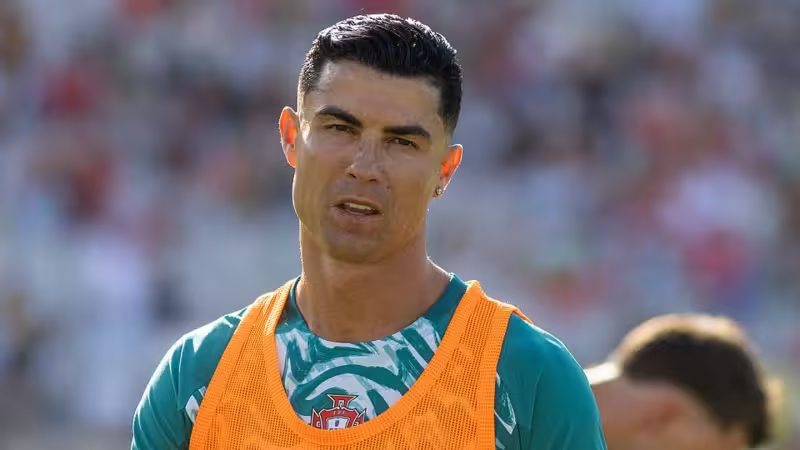
Portugal will begin its 2026 World Cup campaign in Group K and will play three scheduled group-stage matches to open the tournament, a placement that fixes the first stretch of its path in the expanded 48-team field.
Cristiano Ronaldo, 41, will be part of that opening run; the captain is set to play in his sixth World Cup and the 2026 tournament is most likely his last realistic chance to capture the trophy.

The headline numbers underline the scale: the 2026 World Cup expands to 48 teams, Portugal has qualified for a seventh straight World Cup, and the national side will play three group matches under the Group K label before the tournament shifts to single-elimination rounds.
Portugal’s recent form in qualifying offered a reminder of the team’s firepower — a 9-1 win over Armenia highlighted their dominance in UEFA qualifying — but placing in Group K now frames those performances into a fixed opening schedule rather than a projection.
Under the tournament’s advancement rules, two teams from each group will progress automatically, and an additional eight teams — the next best records and tiebreakers across groups — will also advance to the knockout stage, giving Portugal multiple routes out of Group K if results go its way.
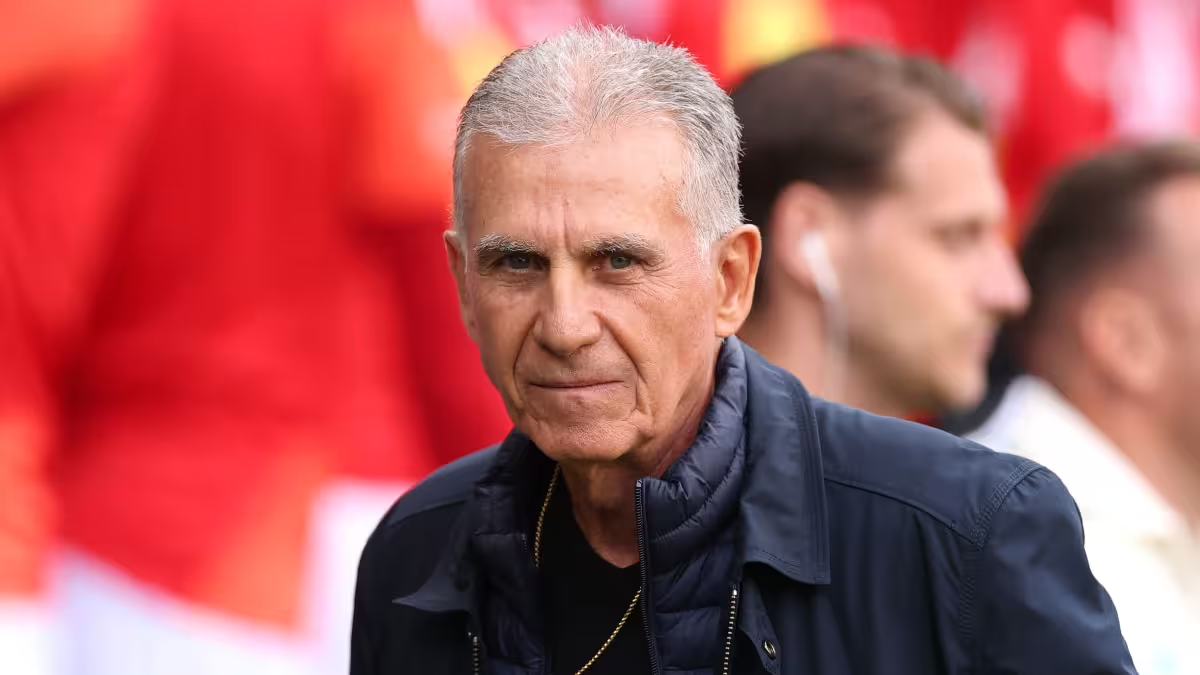

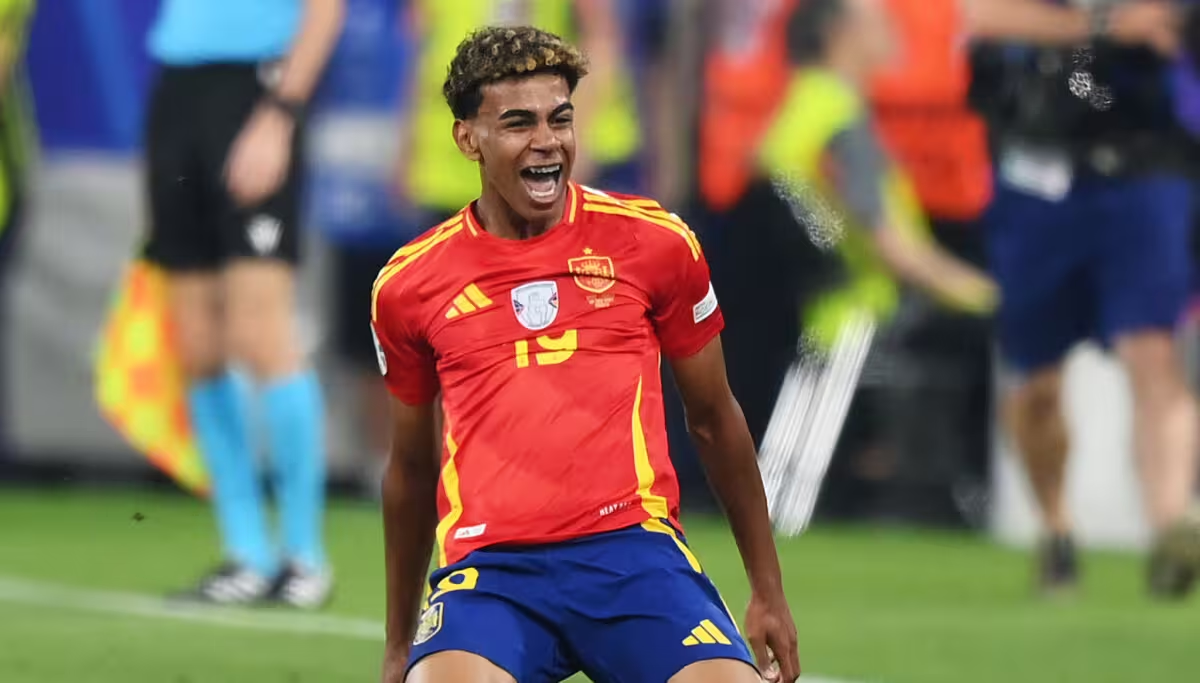
Context matters: Portugal seeks its first World Cup title. The nation has reached seven straight World Cups but has never gone beyond its best finish, third place in 1966. At the last tournament Portugal was knocked out in the quarterfinals in 2022, a result that left the team short of the deeper run it wants in 2026.
The friction in this picture is simple. Portugal arrives in Group K as a consistent presence on the global stage, yet the country’s World Cup record still peaks at 1966’s third place. That gap between regular qualification and major tournament success frames every match Portugal will play in Group K: strong qualifying results and a star-studded roster have not translated into a title run.
What the Group K placement does not deliver yet is Portugal’s specific opponents or the dates and venues of its three group matches. Those details remain the outstanding element of the team’s opening schedule: Group assignment fixes the bracket section, but the identity of the teams Portugal will face inside Group K has not been provided in the available material.
What happens next for fans and planners is clear in shape if not in detail: Portugal will prepare for three group fixtures under the Group K banner, leaning on a deep qualifying performance and the experience of a veteran core that includes Ronaldo, while the federation and coaching staff await the full match list that will show whom the team must beat to reach the knockout phase.
The literal schedule gap is the story’s unresolved piece: until the tournament’s match calendar and Group K opponents are announced, Portugal’s opening path beyond the simple label of Group K remains open. The relevant next announcements to watch are the draw’s remaining allocations and the official fixture release, which will convert Group K from a bracket label into an exact sequence of opponents, dates and venues.



