



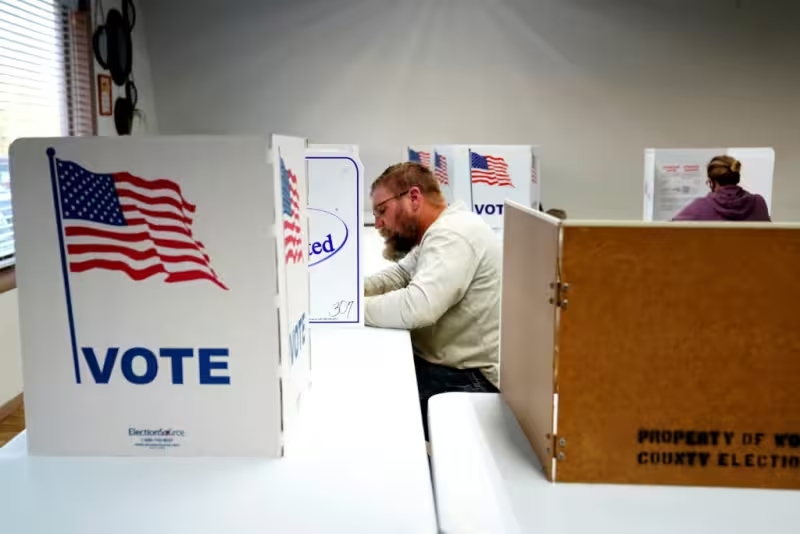
Oklahoma held its state primary on Tuesday, sending voters to crowded Republican and Democratic contests for governor and U.S. Senate while also asking them to decide a statewide minimum wage measure.
The ballot put several open seats in play at once, including the race to replace term-limited Republican Gov. Kevin Stitt and the contest for a U.S. Senate seat that opened after President Donald Trump named Republican Sen. Markwayne Mullin to a federal post and Alan Armstrong declined to seek a full term. Voters also were choosing nominees for lieutenant governor, attorney general, state legislative seats and other offices, along with some incumbents seeking renomination.

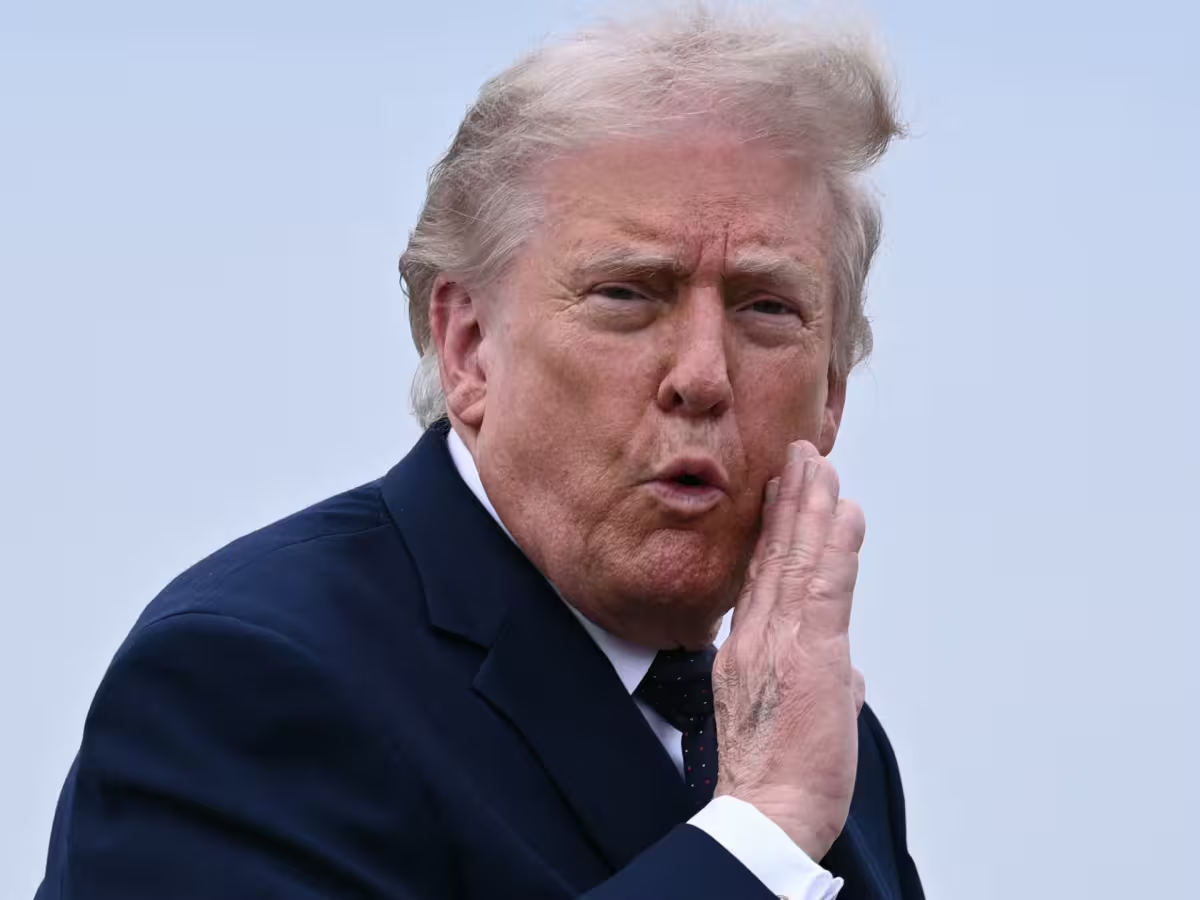
In the Republican governor's primary, the field included Attorney General Gentner Drummond, former state Secretary of Public Safety Chip Keating, former state Sen. Mike Mazzei and former House Speaker Charles McCall. The Democratic side featured House Minority Leader Cyndi Munson and former state Sen. Connie Johnson. Trump endorsed Mazzei for governor and Kevin Hern for the Senate race.

The Senate primary drew five Democrats and a Republican field that included Hern and four others. Hern's campaign reported $6.8 million in available cash as of May 27, far more than the $118,000 reported by attorney and minister Jim Priest, one of the Democrats in the race. The money gap underscored how much of the contest remained unsettled even in a state where Democrats have struggled for decades.
Oklahoma is solidly Republican in general elections. Trump won the state's fifth highest vote share of any state in 2024, and all 77 counties went for him. A Democrat has not carried Oklahoma in a presidential race since 1964, the state last elected a Democrat for governor in 2006 and last elected a Democrat to the U.S. Senate in 1990. Even so, Democrats were still fielding candidates for governor and Senate, and voters were also weighing State Question 832, which would raise the minimum wage from $7.25 to $15 an hour by 2029 and then link future increases to cost of living changes starting in 2030.
Nothing about the primary ended the story on Tuesday. Candidates had to win a majority to claim their nominations outright, and if no one crossed that line, the top two vote-getters would move to an Aug. 25 runoff. That makes the first count important, but not necessarily final, in several of the state's biggest races.



