



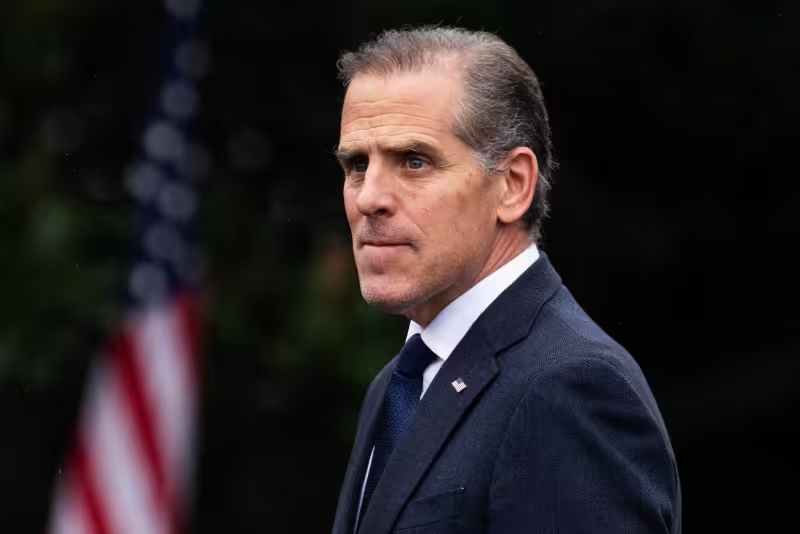
Hunter Biden used a nearly 1 hour and 50 minute appearance on Candace Owens’ podcast on Thursday to relaunch old grievances, defend his father and reopen a set of political and personal fights that have shadowed him for years. He said Joe Biden was crushed by the D.C. elite and was never part of the “Epstein class.”
Owens began by saying she would not ask him to say anything bad about his father. The conversation still moved quickly into raw material. Biden said, “D.C. is corrupt, politics is corrupt,” and accused the people around power of driving his father out once they saw their opening. He said Joe Biden was not part of that club, adding that he was never part of the “Epstein class.”

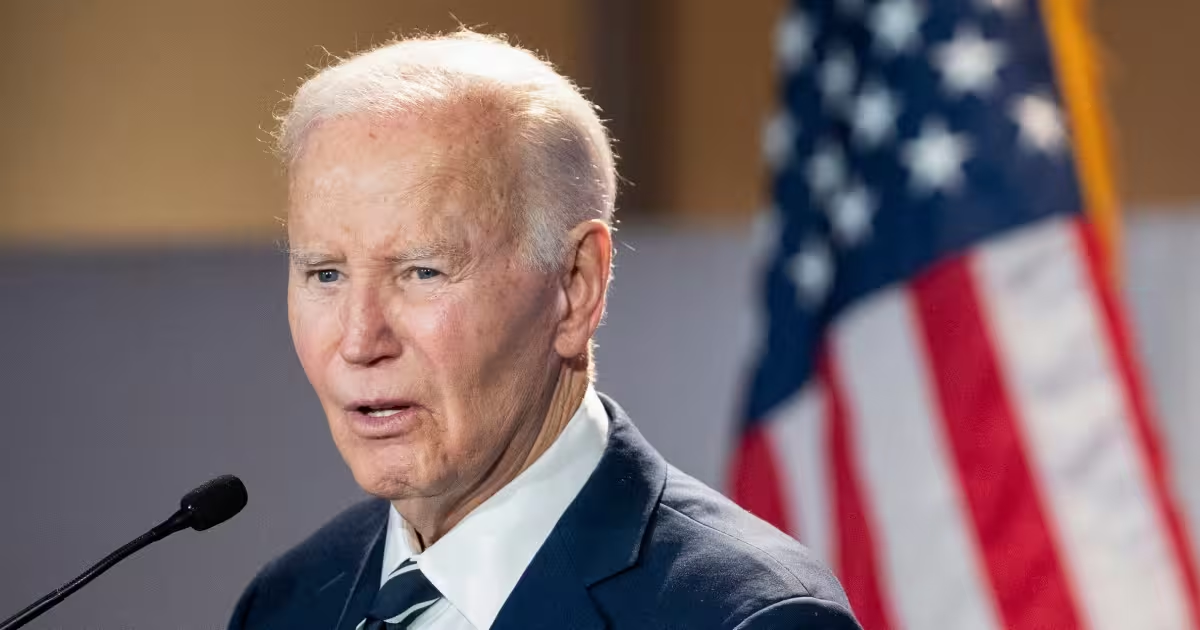
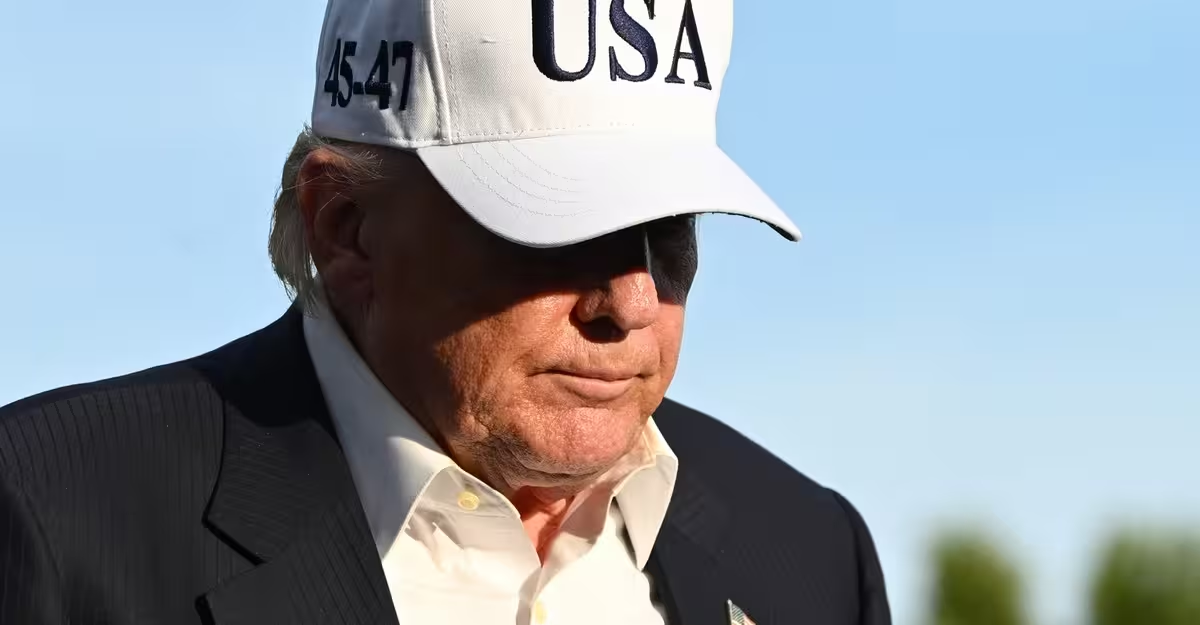
Biden also widened the attack to Donald Trump, saying the president had posted images of himself as a king about half a dozen times and questioning who surrounded him. “You want to figure out why they don’t want to release all the Epstein files?” he said, before tying that question to a crowd shot from Trump’s inauguration. Owens pushed back, calling the dynamic “demonic” and saying, “He’s protecting his donors without question.”
The interview landed because Biden did not keep to safe ground. He said he had been “verifiably” sober since 2019 and said he had been randomly drug tested for two years as part of his probation deal. He also returned to the laptop controversy, describing it as a hard drive of stolen and hacked material that was misrepresented. Then he leaned into the language of self-destruction, saying he was prepared to take ownership of the fact that he was not a “good guy,” and referring to leaked photos of him “smoking crack in a motel room with a prostitute.”
That detail matters because Biden’s public image has been shaped for years by addiction, relapse and the fights that grew around them. His appearance on Owens’ show was not a retreat from that history. It was an attempt to use it, speak plainly about it and force the conversation onto terrain he chose.
He also used the interview to make the case that the political system rewards the wrong people. Biden compared government deals that have enriched Donald Trump Jr. and Jared Kushner, saying, “Don Jr. got the single largest loan guarantee from the Department of Defense ever handed out of over $600 million for an energy company, a fusion energy company, of which he has zero experience.” He added that Trump had not, in his view, “greenlighted” turning Gaza into a Trump golf course “with the maître d’ being Jared Kushner.” Biden said, “I think we all can agree is that we need to stop the wholesale murder of a population in Gaza.”
That Gaza line is the kind of remark that can drive a day’s news cycle on its own, and it sharpened the broader point he was making: that power protects its own. He repeated the theme when he said, “He didn’t greenlight to turn Gaza into a Trump golf course,” and later broadened it into a direct question about the Trump orbit and the Epstein files. For Biden, the argument was not just about policy or scandal. It was about who gets insulated when money, influence and access overlap.
There is, however, a hard edge to the backlash already around him. In August 2025, after Biden said, “Epstein introduced Melania to Trump – the connections are so wide and deep,” Melania Trump’s legal team threatened to sue him for more than $1 billion. Her lawyers accused him of making false, disparaging, defamatory and inflammatory claims. That threat hangs over his latest round of comments and shows how quickly Biden’s off-the-cuff attacks can turn into legal and political fallout.
What comes next is likely less about the podcast itself than about the fights it rekindled. Biden has again put his sobriety, his family’s name, Trump’s circle and the Epstein files into the same public frame. That is the point of the interview, and the risk of it: he is no longer trying to stay out of the story.



