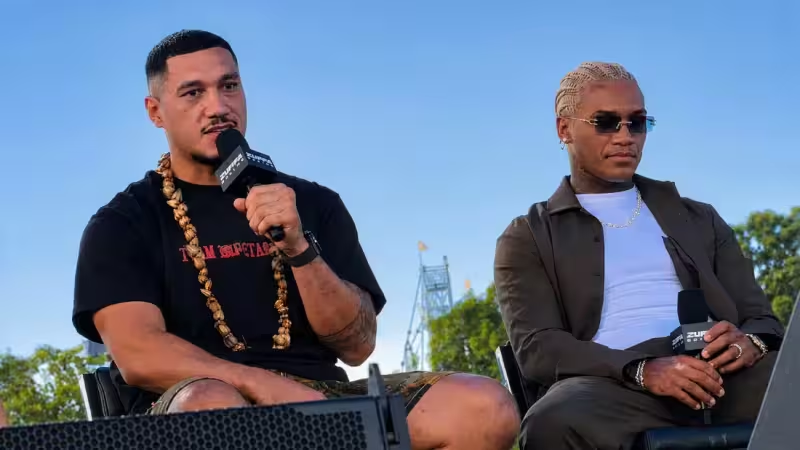
At a fan event in Washington, D.C., Jai Opetaia put his cards on the table: "Man, I would love that fight. I have been chasing these unifications for such a long time now, so to get one over the line would be awesome," he said, then flattened any doubt about his aim — "undisputed is what I want."
Opetaia did more than talk. He insisted the matchup with David Benavidez is ready on his side and that he is waiting for a response: "I am just waiting, that fight is easy to make on our side, so I don’t know what the hold up is on theirs." The remark arrived as Benavidez is the most recent major arrival at cruiserweight, having stopped Gilberto 'Zurdo' Ramirez in six rounds in May to claim the WBA and WBO belts.

The stakes are immediate. Both men enter this conversation unbeaten — Opetaia arrives with a 30-0 record and 23 knockouts, the same numbers listed for Benavidez — and a unification would reshape title lines across the division. Opetaia has boxed only once this year, outscoring Brandon Glanton in March, and he framed his public push as more than showmanship; it was a candid invitation to settle a title race in the ring.
Benavidez’s May victory carries its own aftershocks. It answered whether he could carry power and speed up to cruiserweight, but it also reopened questions about his immediate plans: remain at 200 pounds to chase unification, or return to his light-heavyweight roots. If he stays, Opetaia argued, the fight is obvious — a big, marketable clash between two unbeaten champions that fans and networks would embrace.
That neat projection runs headlong into the sport’s mechanics. The WBC has ordered its cruiserweight champion, Noel Mikaelian, to make a mandatory defense against Benavidez. Mikaelian’s team has publicly expressed interest in facing Benavidez, and that directive is a live procedural hurdle. It gives Benavidez a clear, sanctioned path that could delay or preempt a fight with Opetaia even if Benavidez wanted the bigger unification sooner.
Opetaia acknowledged those forces without conceding them. His question was aimed less at the governing bodies and more at Benavidez’s camp: why the delay if his side is ready? The answer could be logistical — timing, promotional alignment, network windows — or strategic, with Benavidez weighing the WBC mandatory against a potentially more lucrative unification. Opetaia declined to supply details beyond his public remarks; he framed the choice in simple terms: make the fight or explain why not.
The friction is as much political as it is athletic. Unifications require two promoters, sometimes three networks, and at least one belt’s sanctioning criteria to fall into place. Opetaia’s intervention forces those conversations into the public square, where pressure can speed negotiation or harden positions. He has the record and the rhetorical momentum; what he does not have is control over the WBC mandate sitting on Benavidez’s desk.
For Benavidez, the calendar is the immediate decision point. He holds the WBA and WBO titles and now faces a choice that will define the next 12 months: answer Opetaia’s challenge and chase an undisputed path, or accept the WBC’s mandatory framework against Noel Mikaelian. Either route reshapes the cruiserweight map; neither is automatic.
The unresolved question is raw and specific: will David Benavidez reply to Opetaia’s public push and pursue a unification, or will he clear the WBC-mandated hurdle first? Opetaia has signaled readiness and impatience. The ball is now unmistakably in Benavidez’s court.