




A Russian frigate, the Admiral Grigorovich, fired warning shots near a UK-registered yacht in the English Channel on Tuesday morning after the two vessels came into close contact, British authorities said.
The episode took place around 11.40am about 20 nautical miles (roughly 23 miles) south of the Isle of Wight, less than 40 miles north of Normandy. The yacht’s occupants reported that shots were fired from about 500 yards (around 457 metres) away; no one was injured and no damage was reported.

The Russian Defence Ministry said the yacht had been on a "dangerous approach" and that its crew had fired into the yacht's path with rifles only after "several attempts were made to contact it" over the radio and after "signal rockets were fired." The ministry added the action was taken in "strict accordance with international shipping regulations."
British sources described the vessel involved as a small, motor-less pleasure yacht that had drifted towards the frigate in foggy conditions after setting off from the UK. A UK government source said a couple in their 60s were on board at the time and that they did not hear the Russian frigate sound its horn.
The friction between the two official accounts is central: Russian statements say warning fire and flares followed repeated efforts to warn the yacht off a "dangerous course." British accounts say the shots were fired near the pleasure yacht and were not aimed at it. British authorities also received reports from the yacht's occupants that the shots came from about 500 yards away; initial indications suggest more than one shot was fired.
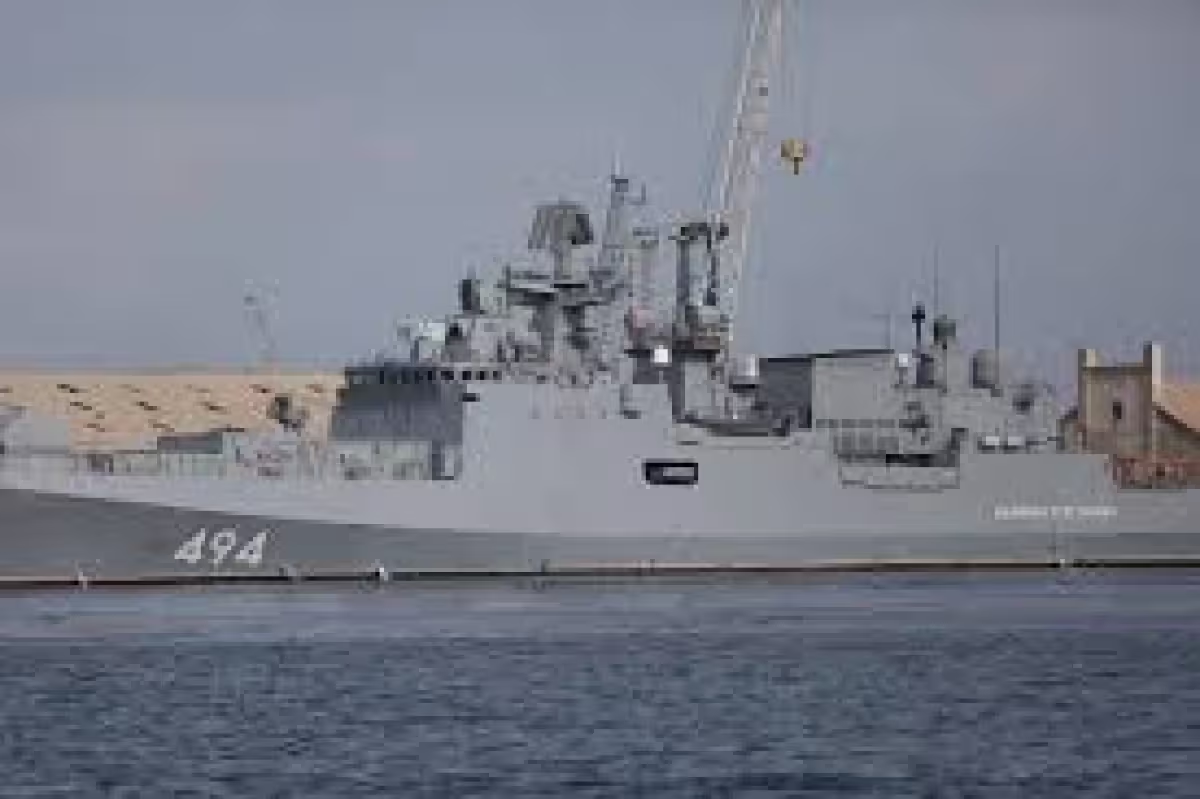
A Royal Navy patrol vessel, sent from HMS Tyne, visited the yacht’s crew after the incident to gather details and check they were safe. The Royal Navy had already been monitoring the Admiral Grigorovich: over the weekend HMS Tyne and HMS Mersey tracked the frigate after it was spotted off the coast of Brest, and one of those patrol vessels was shadowing the Russian ship when the incident occurred.
Officials said the yacht continued its journey after the encounter. Press reporting identified the private vessel as Bright Future.
The location of the firing — about 20 nautical miles south of the Isle of Wight and therefore outside UK territorial waters — is legally significant because Russian warships regularly transit the Channel in international waters and are routinely monitored by the Royal Navy. The Admiral Grigorovich has recently been reported escorting so-called shadow-fleet vessels through the waterway while being tracked by British patrols.
British foreign and defence officials were notified and the Ministry of Defence confirmed it is investigating. "We are investigating reports of an incident in the Channel," the ministry said. A Royal Navy statement said patrols had kept the Russian frigate under observation and that a vessel was dispatched to speak with the yacht’s occupants.
The central unresolved question is straightforward and consequential: what caused a small, motor-less yacht to drift so close to a 125-metre Russian frigate and whether the warnings given — and the shots that followed — complied with established rules for merchant and naval encounters at sea. Investigators will examine why the yacht closed the distance in foggy conditions, what warnings were broadcast from both vessels, and whether the firing met international norms for warning shots.
For now the incident has prompted an investigation rather than a diplomatic escalation. How the Ministry of Defence classifies the firing — as a legitimate defensive measure or as reckless conduct in international waters — will be the key outcome of that inquiry and likely shape any response from British authorities.



