



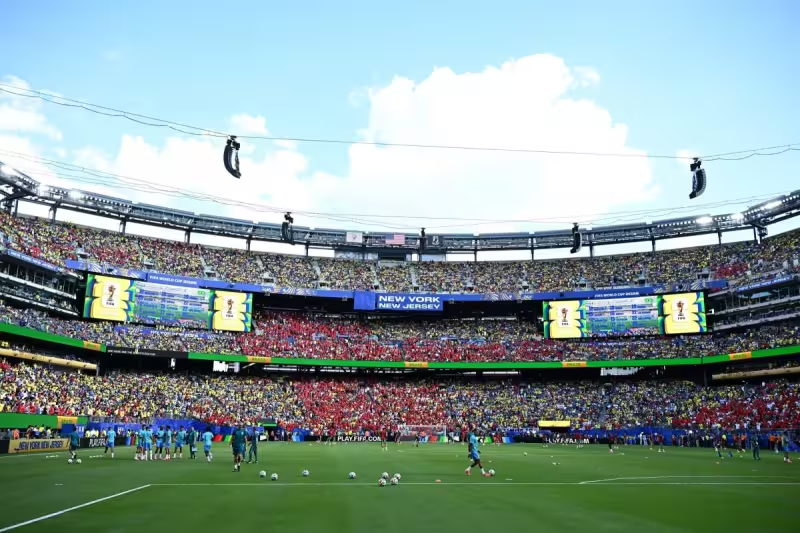
The forecast for France’s opening World Cup match against Senegal was revised downward on Sunday: temperatures at kickoff on Tuesday are now expected to be between 21 and 26°C as the teams meet at MetLife Stadium in East Rutherford. The fixture is listed for 21 hours and will start at 15 hours local time in New Jersey.
The updated range is a small but meaningful move from earlier Sunday predictions, which had put match temperatures at 25 to 27°C. For a France side that has been training in the United States in much hotter conditions — reports list training sessions between 28 and 34°C since arrival — that drop will be noticed, if not decisive.

France opens its campaign against Senegal in a repeat of the 2002 tournament opener, when France lost 1-0. That history gives extra edge to a match that already carries the weight of group-stage positioning; France will want to avoid a similar shock on a stage that is measured in margins as much as atmosphere.
Logistics sharpen the stakes. The match is at MetLife Stadium in East Rutherford near New York; the national side then moves on to Lincoln Financial Field in Philadelphia for a game against Iraq on Monday at 23 hours, before finishing the group in Foxborough at Gillette Stadium on 26 June at 21 hours against Norway. Few teams will have to manage as much travel and variable conditions over the first block of fixtures.
The practical detail for fans and teams is simple: kickoff will be in the mid-20s Celsius at most. That is cooler than the training heat France has endured but still warm by match standards, and the forecast leaves room for late shifts. A 21–26°C range will change hydration windows and perceived exertion compared with the 28–34°C sessions the squad has used for preparation.



The friction is real. The forecast has improved slightly, but France remains listed among the teams expected to suffer most from the heat. A few degrees do not erase the physiological toll of consecutive days practicing in the high 20s and low 30s, nor do they remove the need for careful rotation and in-game cooling strategies.
Readers should watch how France manages tempo and personnel in the first half. If the team presses early and expends energy in the opening 30 minutes, the substitute pattern and visible signs of fatigue will matter more than usual. Senegal’s approach — whether to force a high pace or to sit and exploit late exhaustion — will be one of the tactical matchups shaped by conditions.
For broadcasters and traveling supporters the timing is fixed: 15 hours local at MetLife, a Tuesday evening kickoff listed at 21 hours on the schedule used by the squad. The slightly milder forecast should ease some travel and fan-comfort concerns, but it will not convert the match into cool-weather football.
The unresolved question is sharp: will a drop from an earlier 25–27°C prediction to 21–26°C be enough to blunt the heat’s edge on a French team that prepared in 28–34°C? That is the single match-level variable most likely to affect selection, substitution timing and the style of play France chooses in the opening 90 minutes.
What comes next is set: France must regroup quickly after East Rutherford and head for Philadelphia on Monday at 23 hours, then meet Norway in Foxborough on 26 June at 21 hours. How the team fares against Senegal under these conditions will shape both immediate tactics and the light the coaching staff casts on fitness and rotation for the remainder of the group stage.



