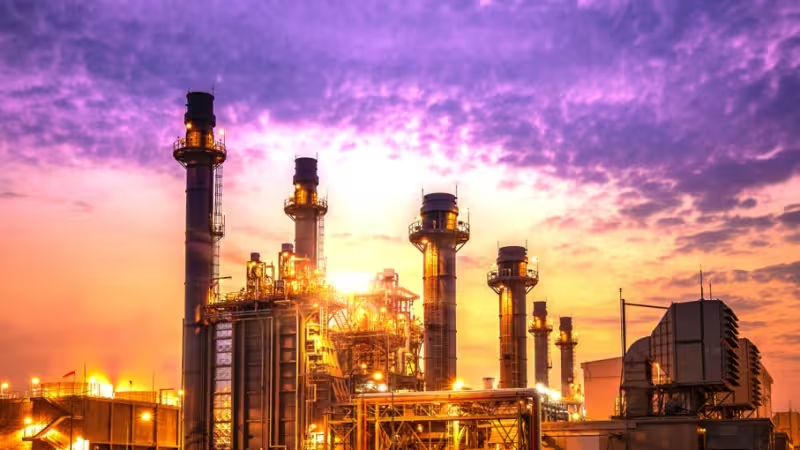
Russian officials have now said out loud what the fuel market has been showing for weeks: Ukraine’s intensified strikes on Russia’s oil industry are cutting production and tightening supplies at gas stations. On June 9, the Energy Ministry said companies in the fuel and energy sector had faced a rise in enemy air attacks that caused temporary complications in supplies.
The acknowledgment matters because it goes beyond a generic security warning. Russian authorities are linking the shortages to damage in the refining system itself, not just to disruption around it. That is a sharper admission than the explanation offered by Deputy Prime Minister Aleksandr Novak on June 4, when he said oil output had fallen because of unscheduled maintenance at refineries.

The two explanations do not sit neatly together. Novak pointed to maintenance, while the ministry later said the supply problems were caused by enemy air attacks. For a government trying to project control over energy output, the shift is telling: the strain is serious enough that officials are no longer treating it as routine downtime.
The difference is in what is being hit. Energy analyst Nikhil Dubey said the key change is not only attacks on refineries, but attacks on specific parts of them. A refinery is made up of several units, he said, including the distillation column and secondary units such as hydrocrackers. The first step turns crude into streams that are then processed further. Those secondary units are the problem, because they are specialized equipment that is not easy to replace once damaged.
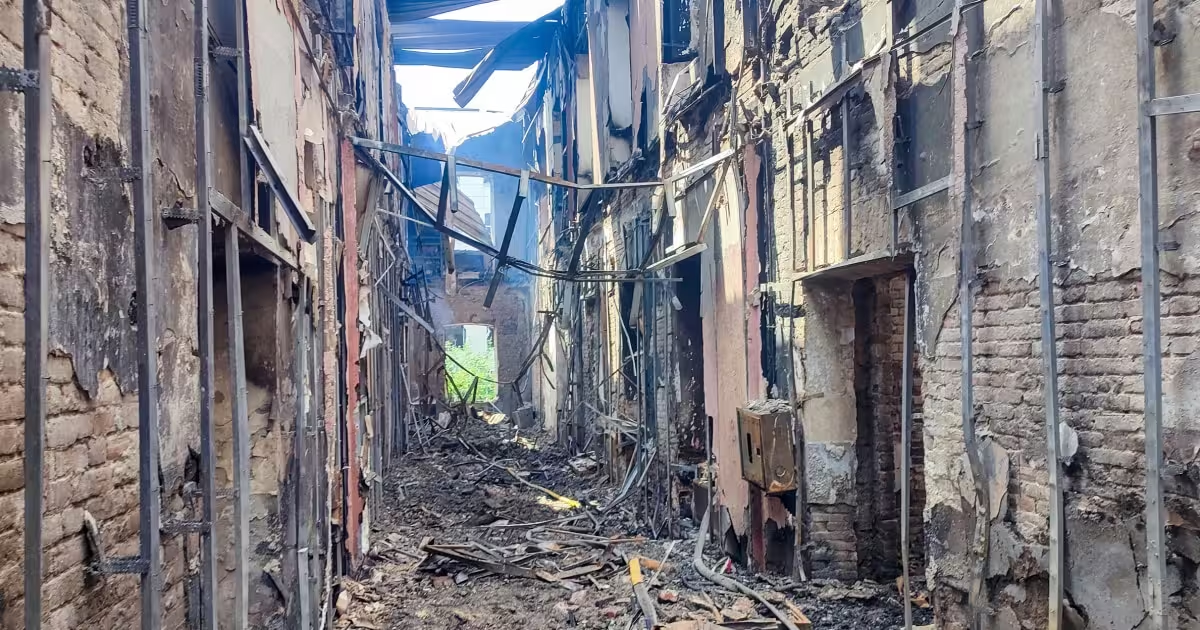
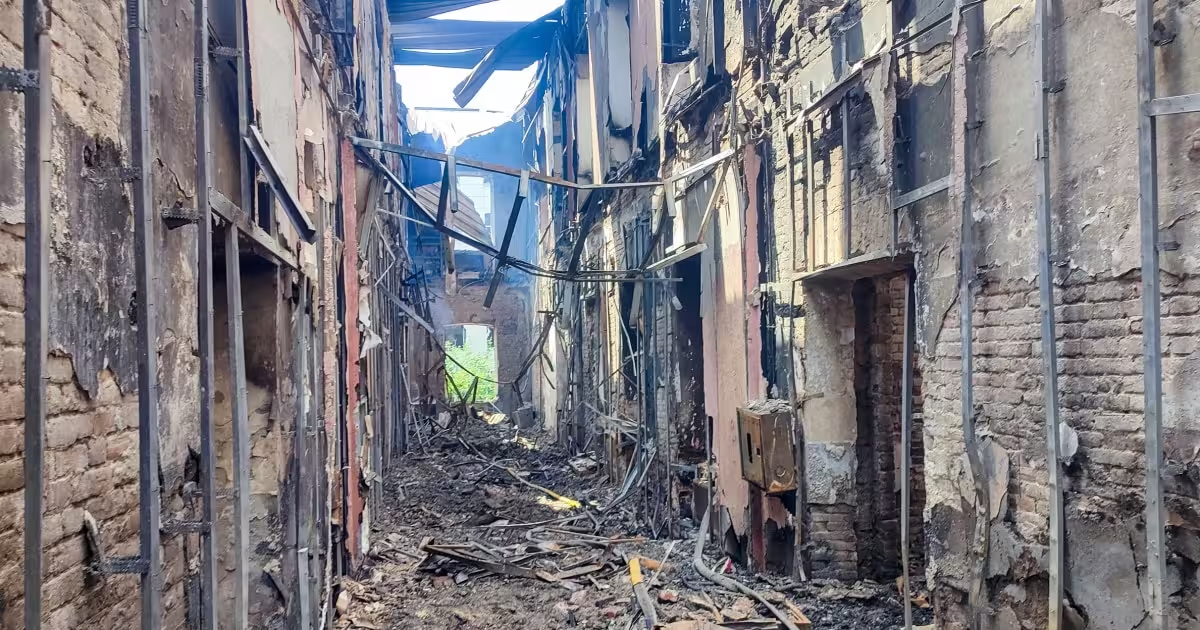
Dubey said those replacement lead times can run weeks or months, and Western sanctions on components have made them longer. In plain terms, that means a strike can keep a unit offline long after the blast is over. Russia can patch visible damage quickly enough to keep the story moving, but replacing the machinery that does the deeper work is slower and more expensive.
That is already showing up in the numbers. Kpler data showed Russia’s offline capacity of secondary processing units in May was around 1.2 million to 1.3 million barrels per day, with a significant share tied to drone strikes. Hydrocrackers alone accounted for 250,000 barrels per day of offline capacity in May, compared with 50,000 to 60,000 barrels per day a year earlier. also reported on June 1 that Russian diesel production fell by 10 percent in May after a 10 percent drop in April.
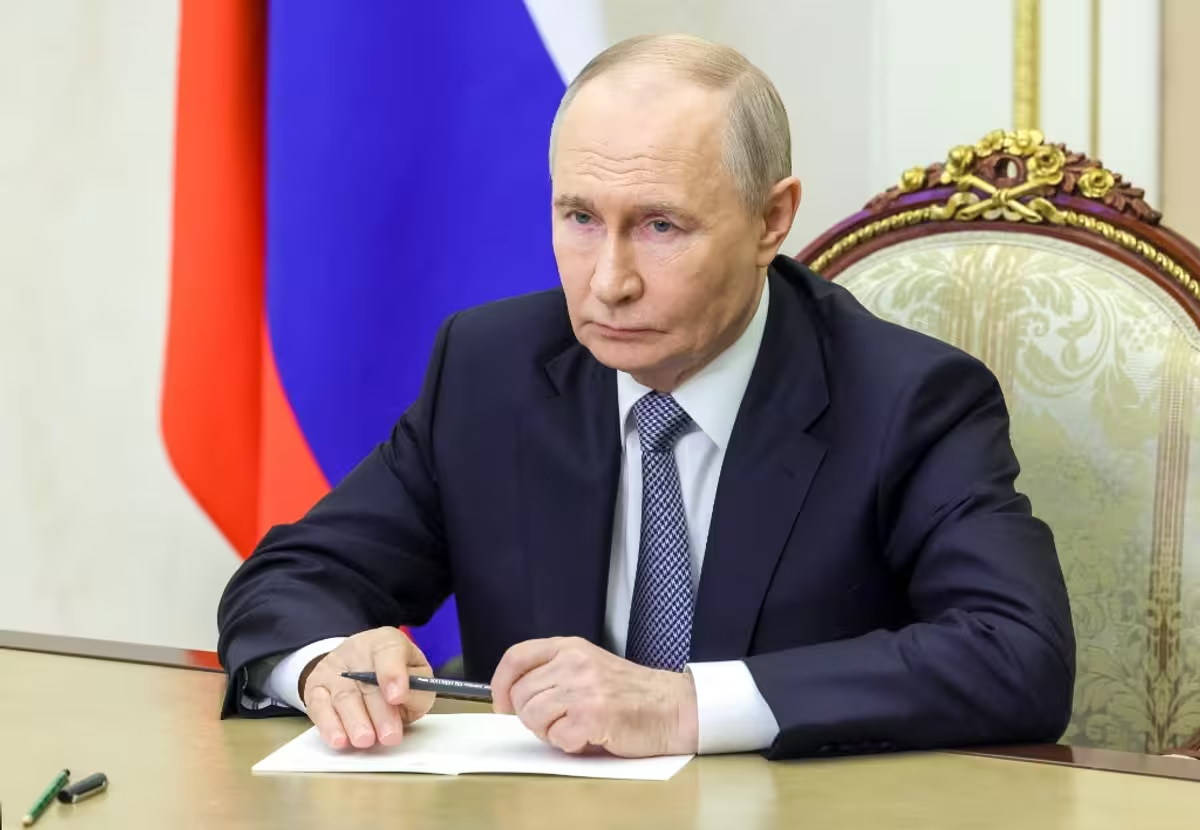
The broader pattern is what gives the issue its weight. Ukraine has ramped up attacks on Russia’s oil sector in 2024, and Russian officials have now acknowledged that the campaign has led to production cuts and shortages. President Vladimir Putin has said Russia needs better air defenses, which is another way of saying the current ones are not stopping the damage fast enough.
Tatiana Mitrova, an energy analyst, said repeated strikes on equipment of this kind have a much larger economic effect than attacks on storage tanks or primary refining units alone. The reason is simple: if tanks are hit, fuel can be moved or stored elsewhere. If secondary units are knocked out, the plant itself loses the ability to make the products the market needs.
What remains unresolved is how long the disruption lasts. If damaged hydrocrackers and other secondary units take weeks or months to replace, the pressure on Russian fuel supplies could outlast the headlines, and the shortages at gas stations could deepen before they ease.