



A prediction preview published ahead of Monday's session at the Bett1open pins Madison Keys against Xinyu Wang on June 15, setting the two players' showdown as part of the tournament's opening-week schedule in Berlin.
The preview offers a forecast for the matchup but stops short of a scoreline: it lays out which player is favored going into Monday's match while providing no match result, leaving the outcome unresolved until play concludes.

That matters for anyone following the Bett1open this week because previews shape what viewers watch for and where bettors and fans focus attention on match day. The story is specific to Monday, June 15 — the published forecast is built around that scheduled pairing rather than a broader tournament projection.
Context is simple: the event in question is the Bett1open in Berlin, and the piece is a prediction-style preview, not a report of finished play. Those distinctions matter for readers who track form and headlines differently: a preview anticipates answers, it does not provide them.


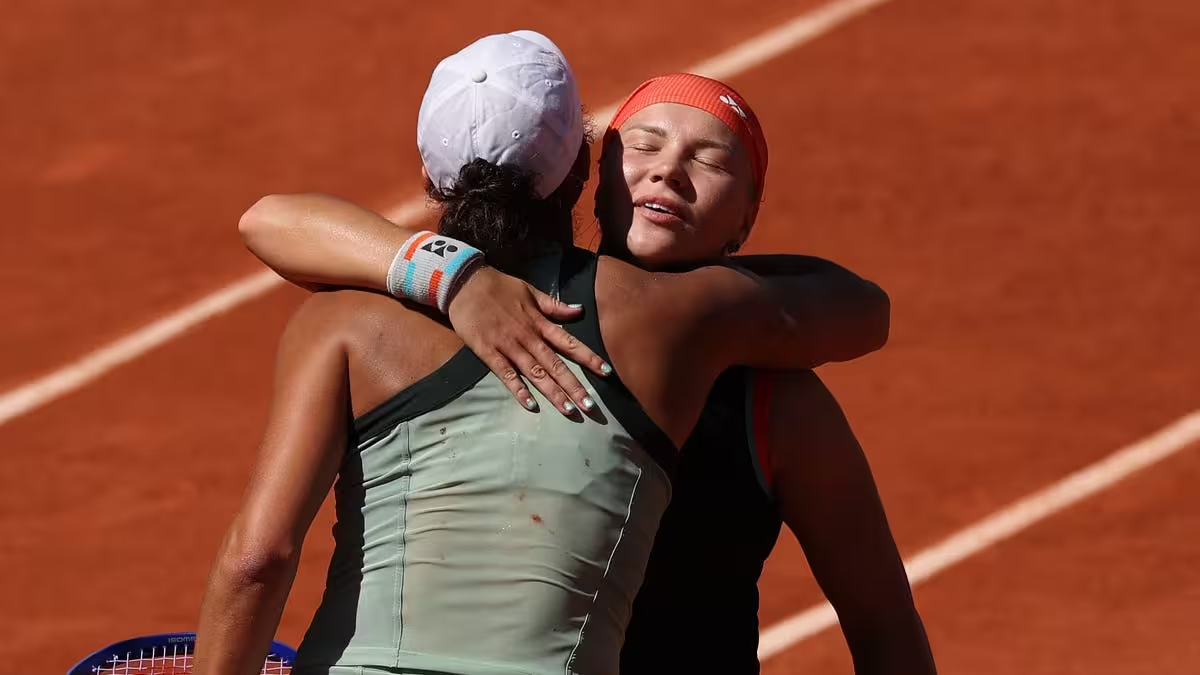
The immediate friction is the gap between forecast and fact. The preview outlines expectations — who might have the edge on paper — but it cannot resolve how Keys or Wang actually perform on court. That unresolved outcome is the story’s central tension: a clear, dateable prediction exists, and the match itself is the single, imminent test that will confirm or contradict it.
Practical details for readers: the match is scheduled for Monday, June 15 as part of the Bett1open program in Berlin; beyond that date the preview provides context but no live score. If you want to follow the result, monitor live coverage on match day or check updates from tournament feeds and FilmoGaz after play ends.
What to watch when play begins is a matter of confirmation. The preview frames the contest so readers can identify the decisive moments to follow — whether the prediction holds through a straight-set finish, gets stretched to a deciding set, or is overturned entirely. Because the preview offers a forecast rather than a conclusion, the most consequential metric is simple: does the match outcome match the prediction?
Related coverage traces the same threads elsewhere; for instance, readers tracking Madison Keys’ recent schedule can find her Roland Garros pairing noted in Hanne Vandewinkel makes Roland Garros main-draw debut against Madison Keys — which places Keys’ appearances across clay and grass events in a single frame.
The next, unequivocal step is the match on Monday, June 15. The prediction preview has done its job by setting expectations; the unresolved question it leaves behind — which player wins — will be answered on court, and that answer will determine whether the forecast was prescient or premature.



