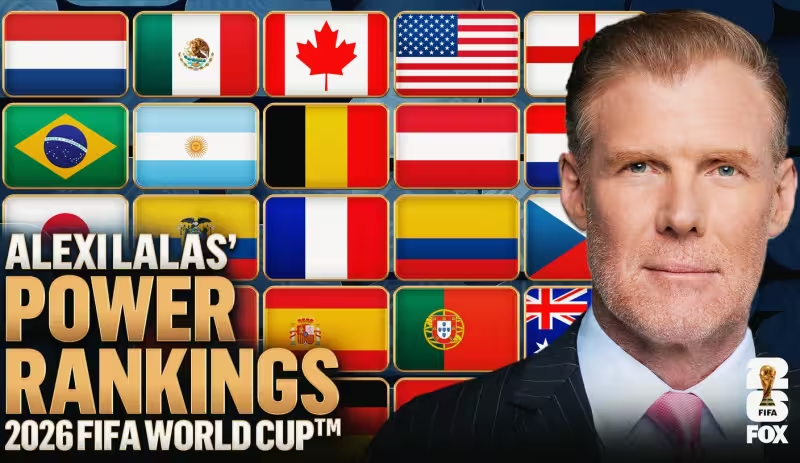
FIFA's June rankings put Argentina at No. 1 after a two-place climb, left Spain at No. 2, dropped France to No. 3 — a notable fall for a team that once topped the list — and moved the United States down one spot to No. 17.
The timing matters because the 2026 World Cup is already under way and FIFA's rankings can serve as the final tiebreaker if two or more teams finish deadlocked following group play. That single rule turns a monthly list of points into a potential decider on tournament nights.

Put plainly: these rankings are the last resort. If teams cannot be separated by the tournament's on-field criteria, FIFA's ordered list is the fallback. Argentina's jump of two places to the summit makes its standing the strongest among all teams in the June list; Spain's hold on No. 2 keeps it directly behind; France's slide from the top to No. 3 is the clear disruption in this month's pecking order. The United States dropping one spot to No. 17 lowers its position should a ranking-based comparison become necessary.


What that looks like in practice is straightforward: a higher ranking on the June list would be decisive when all other group-stage measures have been exhausted. That elevates the practical value of small movements in the table. A two-place rise or a one-spot fall is not just a statistic on the day it is published — it is a possible tournament swing if a group ends in an exact deadlock.
The most striking element of this month's list is the reversal for France. Previously the top-ranked team in FIFA's standings, France now sits third. That shift is the tension behind the numbers: a side that has occupied the summit has been overtaken, and its fall tightens the margins for how rankings might split teams later in the competition.
Fans who check national positions — for example those searching “Uruguay FIFA ranking” — should understand which list matters and why. Independent outlets also publish assessments; Sports, for instance, maintains its own World Cup power rankings. Those alternative tables serve journalistic and analytical purposes, but the June FIFA list is the official reference for the final tiebreaking step outlined by the tournament rules.
What remains unsettled is not the list itself but where it will actually be used. The June rankings are in place now; the next time they become operational is conditional. Only if teams finish group play completely level will this list be applied to separate them. The single consequential unanswered question is which, if any, World Cup groups will reach that precise impasse and hand the June standings the job of deciding who advances.