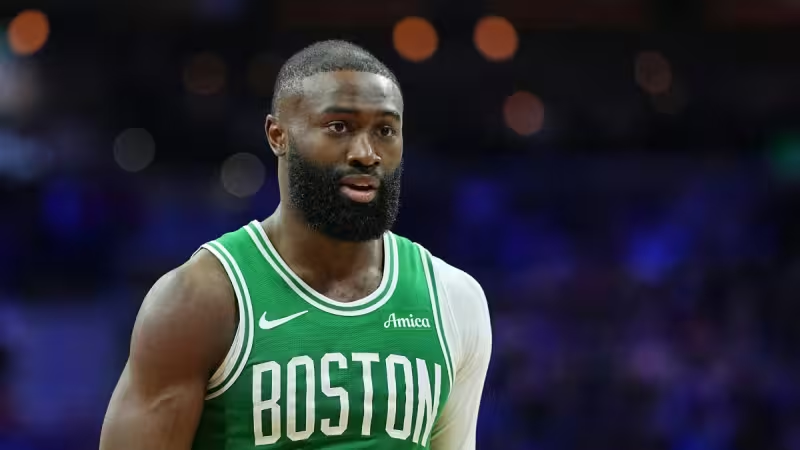
Sources told Dallas Hoops Journal that one modeled multi-team framework would send Jaylen Brown to the Los Angeles Clippers, route the Clippers’ No. 5 overall pick to the Milwaukee Bucks and deliver Giannis Antetokounmpo to the Boston Celtics.
The concrete elements make this more than idle chatter: Brown averaged 28.7 points, 6.9 rebounds and 5.1 assists in 71 games this season and has five All-Star appearances over 10 seasons in Boston; Antetokounmpo, 31, averaged 27.6 points, 9.8 rebounds and 5.4 assists in an injury-shortened 36-game campaign as the Bucks fell to 32-50 and missed the playoffs.

Under the framework described, the Clippers’ No. 5 selection — a pick they acquired from the Indiana Pacers in February’s Ivica Zubac trade after it conveyed in the 5–9 range on lottery night — would be part of Milwaukee’s return, reflecting the Bucks’ clear priority of clawing back draft capital in any Antetokounmpo deal.
The immediate consequence would be seismic roster churn for the three franchises: Boston would take on an MVP-caliber wing in Antetokounmpo but would almost certainly have to move Brown to create the fit and payroll space; Milwaukee would receive top-end draft currency; and the Clippers, who have not been a regular name linked to Brown, would pick up a 29-year-old primary scorer.
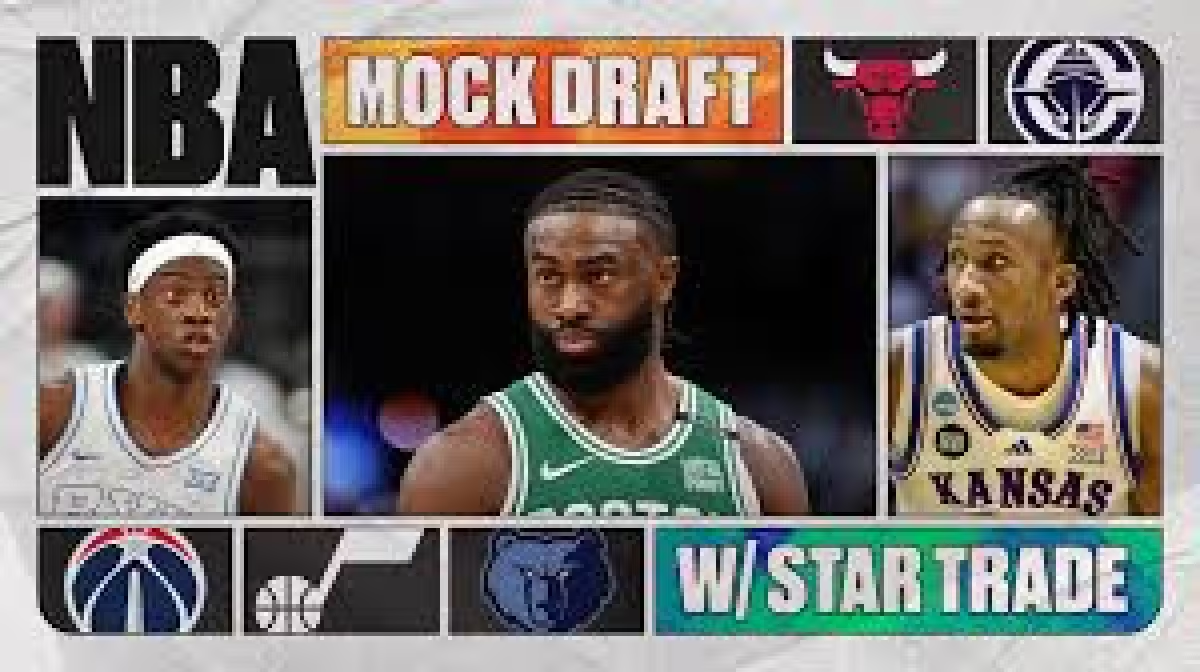

League sources stressed the caveat that matters: the structure is one of several being modeled around a possible Antetokounmpo move, not a deal that is close. That friction — heavy modeling in league circles despite no near-term agreement — is why the framework is newsworthy now but still speculative in practice.
Other teams remain involved in the calculus. The Atlanta Hawks, Houston Rockets and Portland Trail Blazers have all been mentioned as suitors for Brown, and the Miami Heat continue to be linked to Antetokounmpo; a Boston-area outlet separately floated a three-team scenario that would send Brown to Miami while sending a bundle of young players and future firsts to Milwaukee and landing Giannis in Boston.
The Clippers’ control of a top-five pick gives the framework practical legs: a team that collected a lottery asset via a February trade can now use that pick as immediate currency in a high-profile exchange. Milwaukee’s willingness to accept draft capital — including a No. 5 — matches the Bucks’ stated push to retrieve younger pieces or picks in any return for their 31-year-old star.
Timing is sharp. Sources said an Antetokounmpo decision is expected before the NBA Draft and that Bucks ownership is pressing to settle the matter by then. That deadline is forcing clubs and advisors to model permutations fast, which is why specific three-team sketches are circulating even where the parties are far apart on valuation.
The central unanswered fact that will determine whether this framework moves from model to reality is simple and specific: what exact package of players, picks and protections would satisfy Milwaukee in return for Antetokounmpo and persuade Boston to part with Brown. Until that calculus is resolved, the modeled framework remains an actionable idea — one that would reshape rosters and the draft — but not a finalized trade.