



On June 11, 2026 at 10:00 pm, ’s Tim Bontemps and Bobby Marks laid out 10 teams they believe will define the 2026 offseason: the Celtics, Cavaliers, Pistons, Clippers, Lakers, Bucks, Nuggets, Wolves, Heat and Thunder.
The timing matters. Their breakdown landed as the NBA Finals push toward a conclusion, when franchises finish playoff evaluations and begin making salary and roster calls that will shape how the free-agent market looks when teams can actually transact.

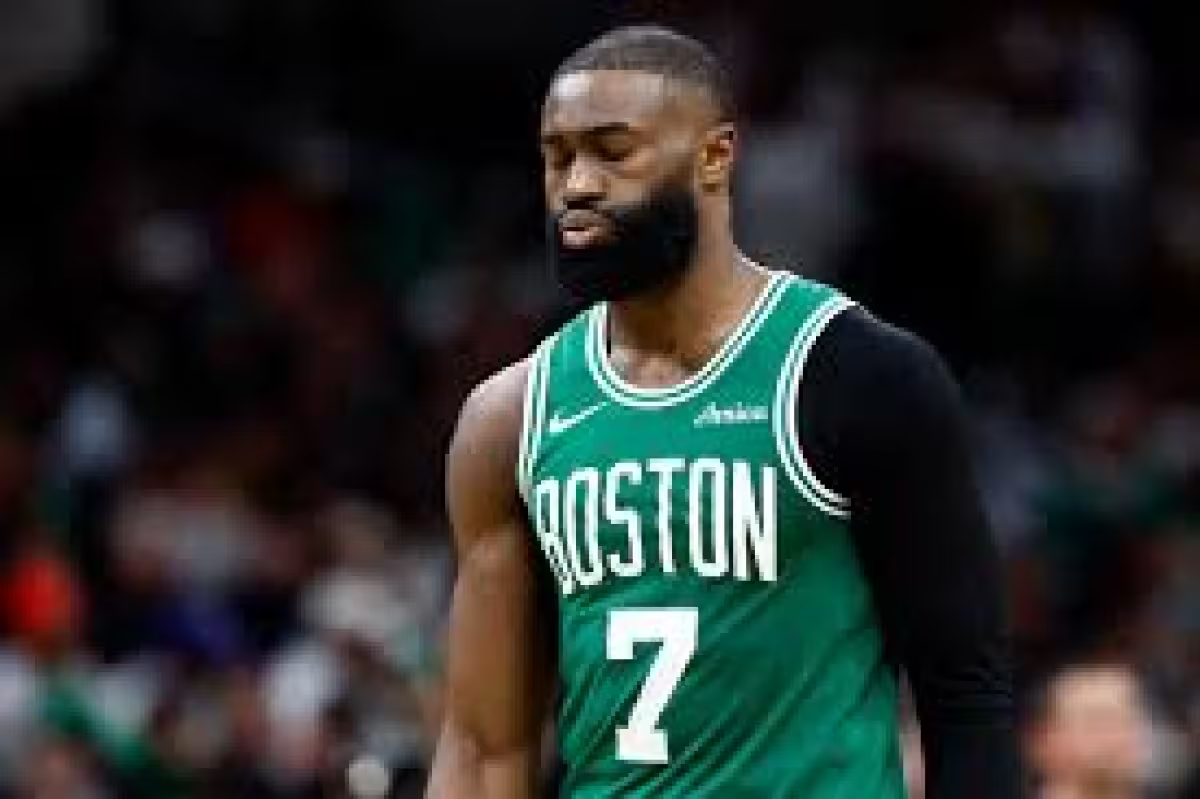
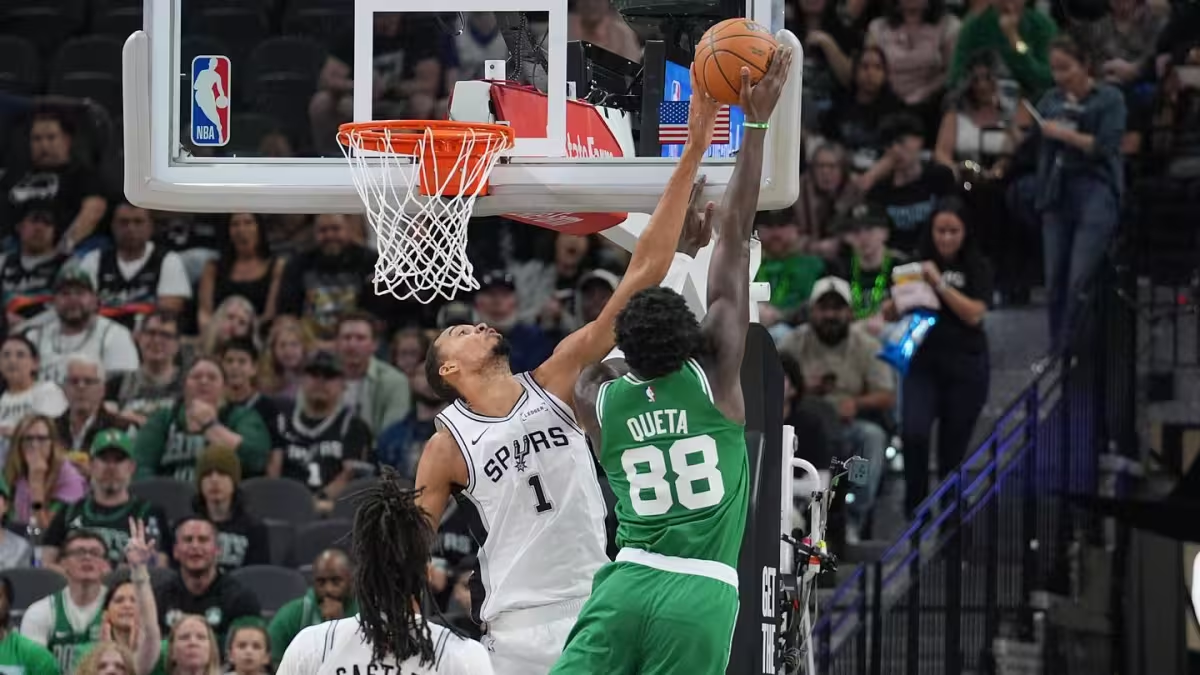
Those ten teams are on the list for distinct reasons. Boston is explicitly trying to keep building a contender around a healthy Jayson Tatum but lacks the bigger-dollar contracts needed to add a true top-tier outside piece unless the front office moves Jaylen Brown or Derrick White. That tight decision point is paired with a more granular one: whether to decline Nehemias Queta’s team option and sign him long-term, or pick up the option and revisit his contract next summer. Cleveland faces its own hinge moments — Donovan Mitchell is extension-eligible, and James Harden will be negotiating a new deal at 36 years old. Detroit must choose between continuing a slow, steady rebuild or taking a large swing. The other seven clubs round out the group because each carries a transaction driver that could alter who is available and who becomes untouchable next summer.
Numbers and shopfront details give the list weight. Ten teams were named. Harden’s age — 36 — is a contractual variable flagged as consequential. The Celtics’ two wing pieces and their salary structure are the practical constraint Bontemps and Marks identified. Defensive metrics also surfaced in the reaction: fans noted that Derrick White and T.J. Pritchard finished the season among the league’s top 25 in defensive rating, a fact teams will consider as they decide whether to move proven on-ball defenders to create cap space.
That is where the friction sits. Boston is presented as a contender built around Tatum, yet the pathway to upgrade around him may require dismantling parts of the current core. Moving Jaylen Brown or Derrick White would create the salary room to chase a difference-making name, but it would also alter the identity of a team being sold as title-ready. Fans’ reactions underline the split: some expect Boston to pursue an established big like Miles Turner over a superstar swap, while others bristled at that suggestion; opinion ranged from Turner being steady and content with his career to critics saying he had a poor season and looked mismatched. Those divided takes illustrate how uncertain evaluations will shape trade conversations.
Practical consequences are immediate. Boston’s choice on Nehemias Queta’s option is a discrete cap-and-roster move that can be executed quickly and either preserve flexibility or lock in an internal young piece. Cleveland’s timetable rests on whether Mitchell signs an extension and how Harden’s contract request shapes his willingness to stay. Detroit’s posture — conservative growth or bold acquisition — will set a tone for midmarket bidding and trade aggression. Any one of those outcomes would ripple through the list of ten, changing who is available in free agency and who becomes a trade target.
The unresolved question is sharpened by that logic: which of the ten clubs will make the first major, league-altering move, and what will trigger it — Boston’s handling of Queta plus a possible Brown or White trade, or Cleveland’s decisions about Mitchell and Harden? That single choice will likely dictate whether the 2026 offseason opens with a big splash centered on a top contract or with a sequence of tactical moves that reshape payrolls and priorities before free agency officially begins.



