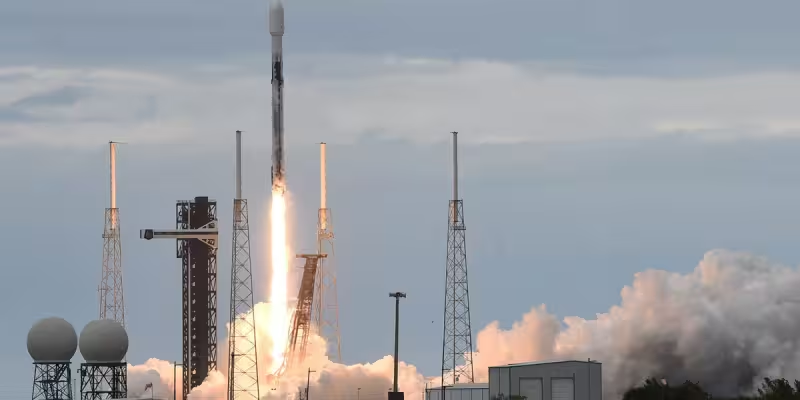
SpaceX's first day as a public company produced a headline number: the stock surged as much as 30% intraday and finished roughly 20% above its IPO price, after a debut wrapped in plenty of fanfare.
If you typed "what time does the stock market open" this morning to catch the action, the practical takeaway is simple — the debut created immediate upside for early holders and reset how investors value one of the most-watched private companies in tech.

The pop mattered at once because it established a market price on a company with a price tag already north of $2 trillion and because it made some people very rich, including Elon Musk. That opening-day move also set the stage for how supply and selling will be managed: SpaceX is using a staggered release schedule for shareholders rather than a single lock-up cliff, so some holders can begin selling around the company’s first earnings report in late summer while Musk himself must wait one year before he can sell shares under the schedule.
That market reception could ripple beyond SpaceX. Anthropic and OpenAI have both confidentially filed to go public, and although neither has a set timetable, SpaceX’s early success could expedite other planned listings as bankers and executives benchmark timing and pricing off this debut.

Yet the celebration on day one collides with a stubborn question: a valuation topping $2 trillion rests against concerns about long-term profitability and fundamental results. The debate is not over. For a company that has attracted nontraditional investors and mixed signals about when it will deliver sustained earnings, a strong first trading day does not erase doubts about whether the underlying business can justify that price over the quarters ahead.
The staggered release schedule matters in practical terms. Instead of a flood of shares hitting the market at once, the rollout paces selling and can help support the share price by limiting immediate supply. But it also introduces predictable checkpoints — the first earnings report in late summer, for example — when new selling becomes possible and investors will get their first public read on SpaceX’s financials. Those points will be the first tests of whether the initial enthusiasm holds.
For peers and would-be entrants, the immediate consequence is calendar risk: some companies that had been planning to wait may speed theirs up if they think demand and valuations are more favorable now. For investors, the consequence is a trading environment where the debut price is only a starting line; near-term liquidity and headline momentum are governed as much by the release schedule and shareholder selling windows as by the business’s performance.
The clearest unresolved question is whether SpaceX can translate an opening-day surge into sustained market value. The company’s first earnings report in late summer will be the first concrete checkpoint for that answer, and the staggered selling plan ensures more price-sensitive moments to come. Until those figures arrive, the IPO will be remembered for its dramatic start — and for raising a more consequential question about whether a $2 trillion-plus valuation on a company still facing profitability questions can hold up under public-market scrutiny.