



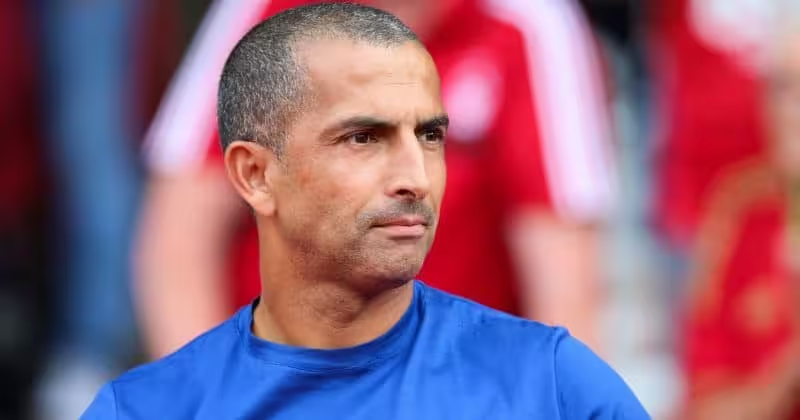
Tunisia fired Sabri Lamouchi on June 15, 2026, hours after the national team’s 5-1 opening loss to Sweden at the 2026 FIFA World Cup, and immediately appointed Mondher Kebaier as his replacement.
Lamouchi had been hired on January 14, 2026, signing a two-and-a-half-year contract, but lasted five months before his dismissal following the heavy defeat that saw Tunisia concede five goals in a single World Cup match.

Federation officials installed Kebaier on the same day Lamouchi was sacked; Kebaier previously managed Tunisia from August 2019 to January 2022 and returns with World Cup matches still ahead for the team.
Those sequence-of-events facts underline the scale of the response: a 5-1 loss in Tunisia’s opener, followed within hours by a coaching change that comes against the grain of the mid-tournament continuity most teams seek.

Context matters here. Sami Trabelsi had been the coach prior to Lamouchi, departing after Tunisia’s round-of-16 exit at the 2025 Africa Cup of Nations, and the national side has qualified for the World Cup multiple times without ever advancing beyond the group stage.
Internal pressure inside the Tunisian Football Federation surged after the Sweden match, and that pressure translated into the immediate removal of a coach who had been on a 30-month deal only five months earlier.
The decision exposes a clear tension: a federation willing to override contract length and tournament stability after a single fixture, rather than backing a coach through the group stage. That move breaks with the more common pattern of evaluating a manager over several matches or campaigns.
What matters next is straightforward and unresolved: how Mondher Kebaier will manage the squad for the remainder of Tunisia’s World Cup campaign. The federation has closed the chapter on Lamouchi; it has not, in public, answered whether the change will produce the immediate tactical or psychological turnaround needed to escape a history of group-stage exits.



