



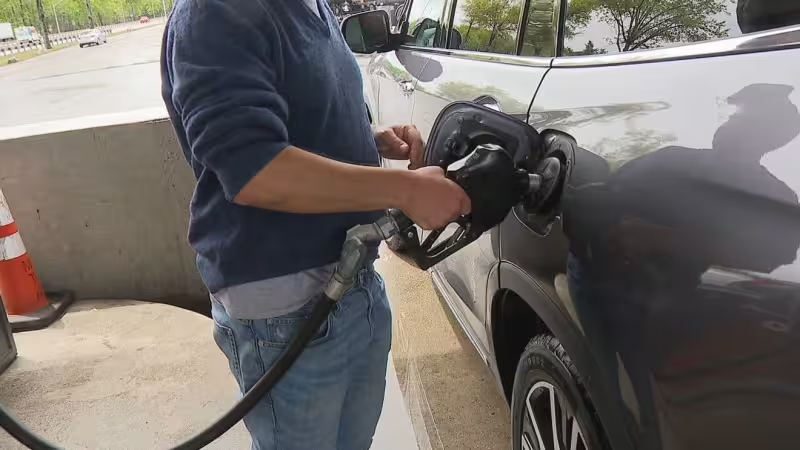
The national average price for a gallon of regular gasoline fell to $4.07 this week, down 9 cents from last Monday and marking a third straight week of declines in gas prices; drivers in New York State are seeing an average of $4.36 per gallon, also down 9 cents from last week.
The drop coincides with news of a U.S.-Iran agreement to reopen the Strait of Hormuz, a vital waterway for oil shipments through the Middle East, a relationship AAA identifies as the immediate trigger for the current slide.

Because the Strait of Hormuz is a key route for the movement of oil, reports that it will reopen reduce a major supply risk for global markets. AAA said the downward trend in pump prices is occurring alongside that diplomatic breakthrough, and the timing has shown up in national averages over the past three weeks.
The scale of the move is small but meaningful at the pump: the national average is 9 cents cheaper than it was seven days ago, and New York State drivers are seeing the same one-week change. The three-week slide has nudged averages down across the country, offering drivers modest relief after earlier price pressure.

That relief may be fragile. AAA cautioned that oil prices may not stabilize right away and that it could still take months to get back to what the organization considers normal. In practical terms, drivers should not expect a rapid return to significantly lower prices; market shifts tied to geopolitical developments often unfold unevenly and can reverse if conditions change.
To stretch the relief while it lasts, AAA recommends a handful of straightforward steps: map routes to avoid unnecessary miles, travel outside peak traffic windows, combine errands into single trips, and use cruise control where possible to steady fuel use. Those are short-term measures drivers can control while broader market forces settle.
The unresolved question now is timing. When the Strait of Hormuz actually reopens for regular traffic and how quickly safer shipping conditions translate into sustained lower crude prices at refineries remain open. Until that sequence is clear, price swings can continue even as weekly averages inch down.
For drivers, the practical takeaway is simple: enjoy modest savings at the pump but plan on relief arriving gradually rather than instantaneously. AAA’s forecast that it could be months before conditions feel normal means budgeting for continued volatility is prudent, and following basic economy-driving steps can make that volatility more manageable.



