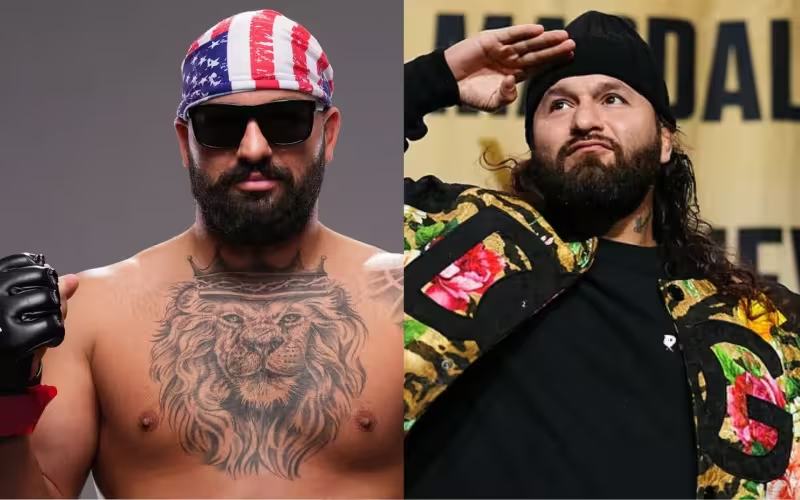
Curtis Blaydes told listeners he thinks Josh Hokit might be better served moving down to light heavyweight after their three-round fight, and he didn’t hide the reason: “He has a good young, jaw.”
Blaydes followed that blunt compliment with a warning about durability in the heavyweight ranks: “You do that three or four times, that jaw is going to be gone. I don’t think he do that at heavyweight a bunch of times. He might better served going down to light heavyweight because they don’t hit as hard. Yeah, they’re faster but he’s got the wrestling. I don’t know if he can maintain, especially if he wants to fight the way that we just did, like if he uses the wrestling more and relies on that yeah, but then again he’s a smaller heavyweight.”

The comments arrive with stakes on the calendar. Hokit accepted a bout with Derrick Lewis at UFC White House on June 14 just two months after his bruising, three-round battle with Blaydes — a fight many called a potential Fight of the Year. Blaydes pointed out plainly that Hokit is not entering that match at full health: “Hokit entering [the fight], his jaw is not going to be 100%.”
Blaydes framed the Lewis matchup as one of versions. He reminded listeners that Lewis is 41 years old and has gone 3-5 over his past eight fights, and that motivation looks different from night to night: “That’s scary going against a guy like Derrick Lewis but then again, the Derrick Lewis that we just saw against Waldo [Cortes-Acosta], he looks like the motivation is gone.”
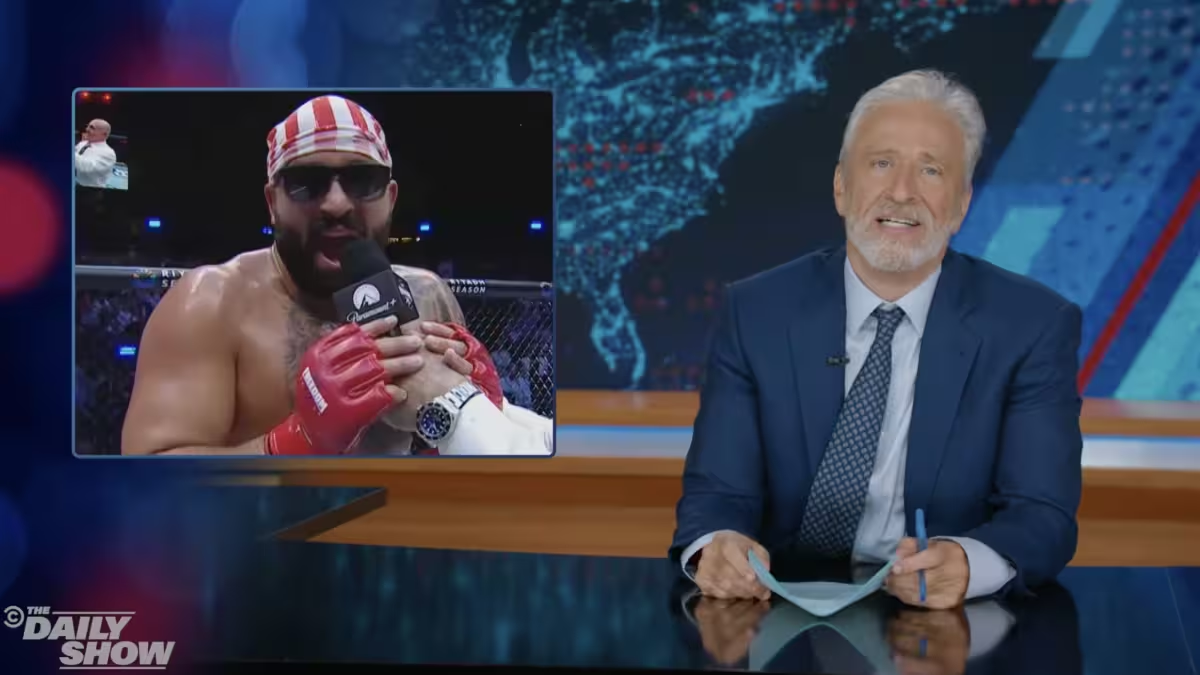
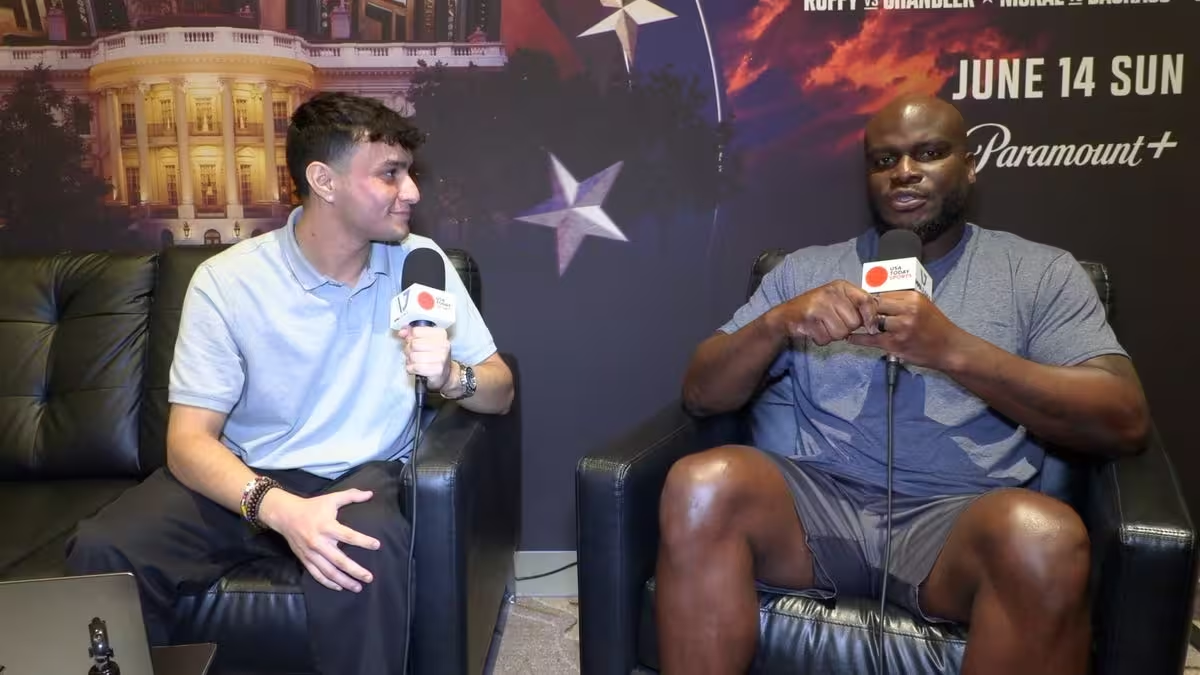
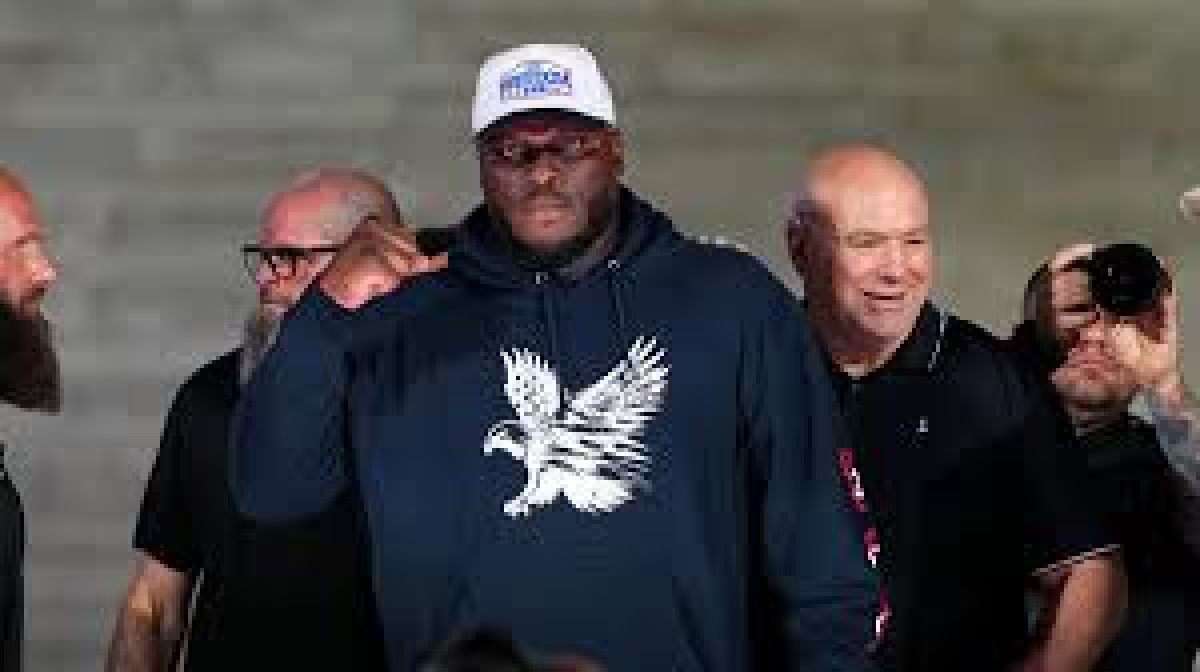
On who he would pick, Blaydes refused a simple answer. “If you get a Derrick Lewis that doesn’t really care and just allows you to take him down at will, he can win like that,” he said. “If he gets a motivated Derrick Lewis that comes in hunting the big, heavy knockout … I’m going back and forth because we don’t know the version of Derrick Lewis that we’re going to get. If we get the version that I had to fight, I’d go with Derrick. But if we get the one that showed up against Waldo, I go Hokit.”
That uncertainty sits at the center of Blaydes’s advice about Hokit’s path. “I just think long term, if I was his manager or his brother or whatever, someone in his circle, I would be having serious discussions about let’s give it a year but let’s think about going down to light heavyweight,” he said, naming 205 pounds as the alternative where shots don’t carry the same finishing power.
The assessment drew sharp contrast from other voices on the same podcast. Jorge Masvidal, while praising Hokit’s athletic pedigree, offered a far more bullish take: “So we know he could wrestle. He All-American'd at a tough weight and then f**king played football at a high level. So we're dealing with a high-level athlete that actually is a fighter. He's going to be dangerous.” Masvidal closed with a prediction that Leans optimistic: “I can see this guy becoming champion, brother. Believe it or not. I think he has that, at heavyweight. Not right now, today, tomorrow -- but he's got a gas tank on him.”
That tension — a veteran heavyweight urging caution while a former rival imagines a championship future — is the friction Hokit now walks into the June 14 cage with. Not everyone agrees with Masvidal’s timeline; former lightweight champion Eddie Alvarez added a blunt counterpoint about Hokit's vulnerabilities: "But remember the shots that he took from Curtis, and how vulnerable he makes himself, makes me scared for him in the heavyweight division." Blaydes himself was succinct when asked whether he would crown Hokit a future champion: "Not yet."
Hokit arrives at UFC White House undefeated in the promotion and facing a one-time title challenger in Lewis. The immediate question — which will be decided on June 14 — is which version of Lewis shows up. The longer one is the one Blaydes kept returning to: can Hokit absorb repeated heavyweight wars and still have a long, healthy run, or will his team heed the suggestion to test 205 within a year? Hokit will answer the first in the cage; the second will be his camp’s next, consequential decision.