The new moon for June 2026 arrives at 10:54 p.m. EDT on June 14, and it gives skywatchers a short stretch of moonless nights that should improve views of planets and bright star fields. Around that time, Venus and Jupiter sit low in the west after sunset, Mercury is nearby, and Mars, Saturn and Neptune are spread across the early morning sky.
The lunar disk passes between the sun and Earth during the new moon, which is why the moon disappears from view and the sky darkens enough to make faint objects easier to pick out. The nights surrounding June 14 are described as the best time in late spring to hunt for planets and sparkling constellations, and the timing matters because Mercury is still elusive even in a strong showing, with a clear western horizon needed to catch it before it sets less than two hours after the sun.




On June 14, Venus stands a little over three degrees above Jupiter on the western horizon at sunset, a close pairing that follows their June 9 conjunction. Mercury sits about 10 degrees to the lower right of Jupiter at sunset and reaches greatest eastern elongation one day later, which should make it one of its best displays of the year. Even so, the planet will remain a quick target, and observers will need a low, unobstructed horizon to get it in view.
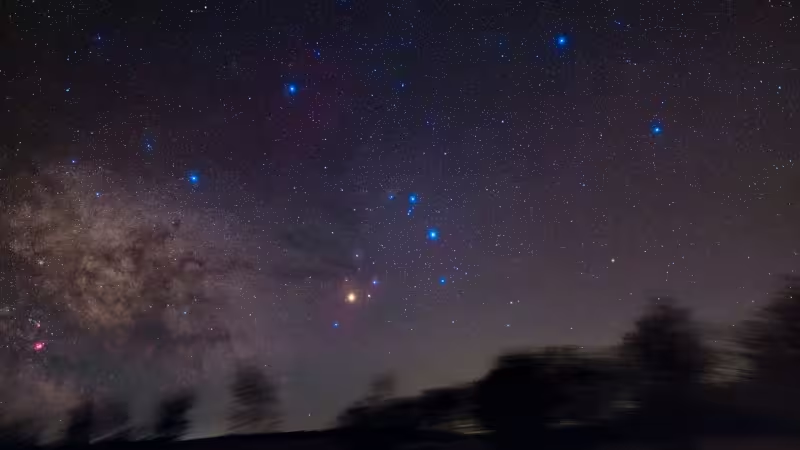
Before dawn, Mars glistens less than 10 degrees above the eastern horizon on the nights around the new moon, while Saturn shines higher to the east among the stars of Pisces. Neptune is tucked a little under 10 degrees to the upper right of Saturn, and an 8-inch telescope should be enough to show it as a small blue dot from a dark-sky site. In the southeast after sunset, Antares glows between 10 and 20 degrees above the horizon, with Dschubba, Pi Scorpii and Acrab marking the claws of Scorpius nearby.
The cleanest view will belong to places with dark horizons and little light pollution, but the exact best locations are not given. What is clear is that the new moon’s timing gives observers a narrow window before moonlight returns and the sky brightens again, with Mercury’s elongation on June 15 adding one more reason to look west at dusk.