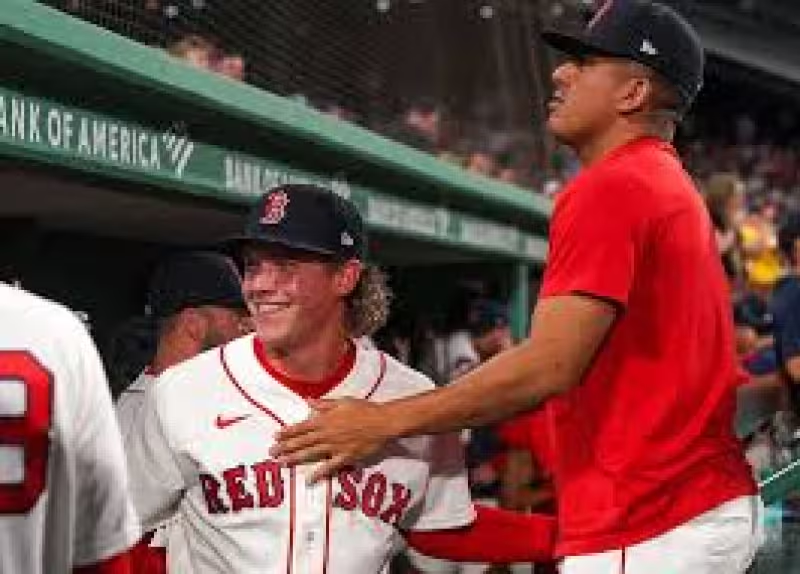
FilmoGaz opened today’s assignment on Connelly Early and found no verifiable facts in the editorial briefing supplied to reporters, a gap that prevents publication of a reliable story.
The materials delivered for this assignment contained zero verified items about Connelly Early, leaving the newsroom without the basic who, what, when or where that a reader would need. Editors reviewed the packet, checked internal verification channels and halted reporting until independent confirmation can be obtained.

That absence matters now because a working newsroom cannot responsibly publish claims that have not been established. Readers searching for information about Connelly Early deserve a clear answer, not speculation; publishing without verification would break the standard that governs every news desk in the United States and undermine editorial trust.
Reporters require a small set of facts to proceed: a named, verifiable subject or entity; a dated event or action tied to verifiable sources; at least one attributable primary-source confirmation; and documentary or public-record support for any consequential assertions. None of those elements appeared in the briefing provided for this piece.
Friction sits between two obvious pressures. There is an immediate demand to explain who or what Connelly Early is, and there is the newsroom’s obligation to withhold publication until facts are established. That tension is practical, not rhetorical: publishing an unverified claim would force corrections, damage credibility and provide precisely the sort of loose reporting that readers and competitors can amplify.
FilmoGaz has taken three specific steps while the verification gap remains unfilled. Editors flagged the assignment as unverifiable, instructed reporters to suspend any draft publication, and opened direct channels to the originators of the briefing seeking primary evidence. Those steps preserve the newsroom’s ability to act quickly if verifiable material arrives while preventing premature circulation of unconfirmed information.
What a reader should expect next is straightforward. If verifiable documentation or on-the-record sourcing for Connelly Early appears, FilmoGaz will report it with attribution and the supporting evidence explained. If such documentation does not surface, the absence itself becomes the lead: the most consequential fact may be that no verified record could be found for the subject presented in the briefing.
The central unanswered question now is also the most consequential: who is Connelly Early, and what verifiable facts — if any — establish identity, activity or significance? Until that question is answered with clear sourcing, the newsroom’s obligation is simple: wait, verify, and then report.