



Takefusa Kubo will mark his second World Cup when Japan faces the Netherlands in its Group F opener at Dallas Stadium on June 15, the start Japan wants to use as a launchpad for a title bid.
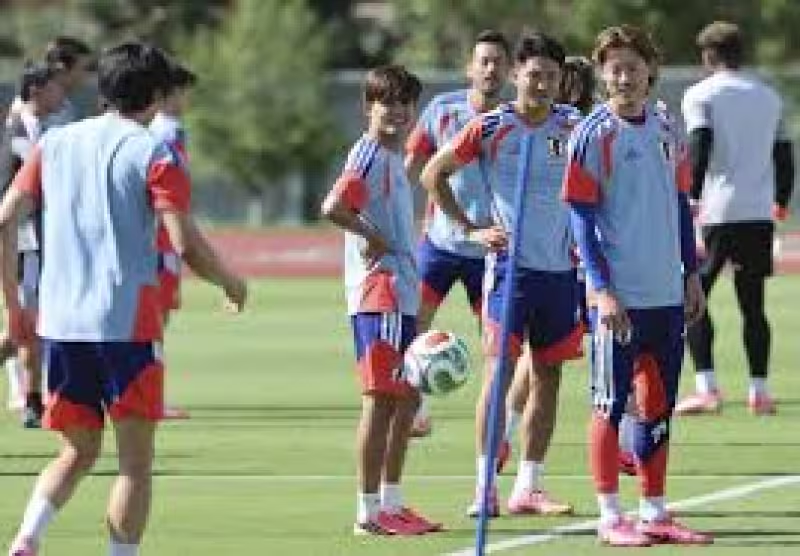
The squad trained at its Nashville base camp on June 13 for an open session before moving to Dallas, where attention will focus on whether Kubo can carry the increased attacking burden created by Kaoru Mitoma’s injury. Japan’s stated goal for the tournament is winning, and the team views an opening victory as both practical and symbolic.

Kubo, who was the youngest member of Japan’s 2022 World Cup squad, says his mindset has changed since Qatar. "I had a feeling that it was my first time at the last World Cup. Now I've become a player who can think it's natural to play in the World Cup," he said, underlining why he is now regarded as the national team’s ace. He added that "three points in the first game and three points in the third game look the same, but psychologically, they are completely different. Three points in the first game are important."
The numbers give weight to that priority. Japan has qualified for seven consecutive World Cups since its debut in France in 1998; this North American tournament is its eighth attempt at the finals. The team advanced from the group stage in 2010, 2018 and 2022 — results that make opening matches especially consequential for manager and players.
That history sits beside fresh pressure. Mitoma’s absence elevates Kubo’s responsibilities on and off the ball. Coaches will need him to deliver creativity and finishing while also helping shape how neutral crowds perceive Japan’s play — a task Kubo has flagged as important to the team’s plan. "I want to get neutral fans on our side. If you show attractive soccer, it will be possible," he said.
Yet the same player who says he is calmer now also warned of a force outside the tactical brief: atmosphere. Kubo called the World Cup "special" and recalled being overwhelmed in 2022, but said the United States brings a different scale of entertainment. "I think the United States is the best in the world for entertainment. We need to make sure we don't get swept away by the atmosphere," he said, noting that neutral fans visiting the stadium could tilt momentum if Japan fails to control the rhythm.
Practically, Japan’s preparation timeline is compact: a final tune-up in Dallas follows the June 13 training in Nashville, and then kickoff against the Netherlands on June 15. The match will test whether the experience Kubo gained in Spain’s Primera División and at his first World Cup converts into leadership on the biggest stage.
The single most consequential question before kickoff is simple and sharp: can Kubo, now the team’s acknowledged ace and carrying extra responsibility after Mitoma’s injury, deliver the opening three points in Dallas that Japan has historically turned into deeper tournament runs?



