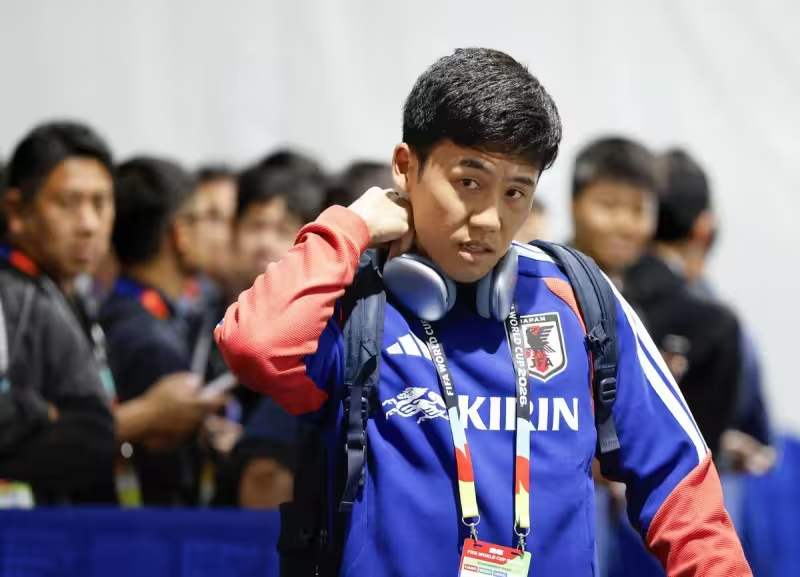
Japan captain Wataru Endo withdrew from the Japan World Cup squad on Thursday because of a foot injury and announced his retirement from international football, three days before the national team’s Group F opener against the Netherlands.
Endo, 33, posted that decision on his X account after surgery on his left foot in late February and a string of fitness checks at Japan’s base camp near Nashville, Tennessee. He had trained separately from the squad until making a partial return to full-team training on Wednesday, but manager Hajime Moriyasu — acting on a report from the medical team — ruled him out the following day.

Ajax defender Ko Itakura was named Japan’s new captain immediately after the squad change, and Borussia Monchengladbach forward Shuto Machino was called up as Endo’s replacement. Itakura said the squad felt the loss keenly: "It really hurts to lose our captain at this stage." He added, "I don't think it's easy to accept a decision like this...(but) he didn't show it and was staying calm."
Endo has worn the armband since the last World Cup and had been a central figure in Japan’s buildup to the tournament. His timeline in the lead-up to Thursday’s announcement included surgery in late February and an early substitution at halftime in Japan’s send-off game against Iceland on May 31 in Tokyo. Despite stepping back into some group work in Nashville on Wednesday, the medical conclusion and Moriyasu’s assessment left no room for Endo to travel with the final 26-man squad.
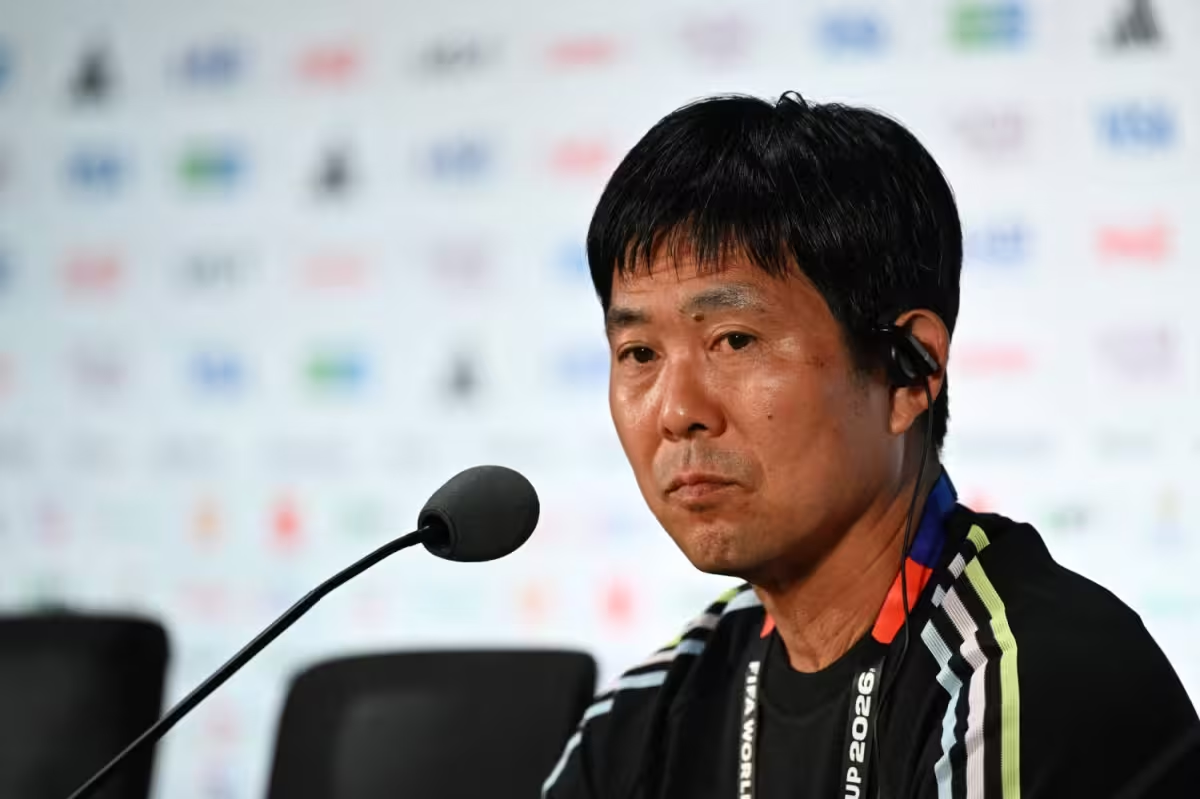
Endo framed his withdrawal as a finished chapter rather than an unfinished regret. "Since getting injured and up till this point, I've done everything I could and I have no regret," he posted, adding that there was frustration at missing the tournament but pride in what he had helped build: "I'm proud to have led and developed together with a team who can naturally talk about our goal being winning the World Cup." He closed his message by announcing his retirement: "With this, I am retiring from the national team. Hence, I'll be supporting Japan as a fan from now."
The substitution of Machino for Endo is a direct roster move; the larger challenge is tactical and psychological. Endo’s presence had been both a midfield anchor and the team’s leadership spine. Moriyasu and his coaching staff must now settle who fills those defensive-midfield minutes and how the on-field captaincy will function under pressure in a Group F opener scheduled three days from the announcement.
There was a brief, private exchange after the decision: Itakura visited Endo’s room and spoke with him personally once news of the withdrawal was known. The gesture underlined the abrupt shift in dressing-room dynamics — a change that arrives at a particularly sensitive, narrow moment in tournament preparation.
Japan will start its World Cup campaign against the Netherlands with Itakura wearing the armband and Machino added to the squad. The single most consequential unanswered question now is tactical: how will Moriyasu reconfigure his midfield and leadership on the pitch without Endo’s minutes and temperament when the team faces one of its toughest opponents in three days?