



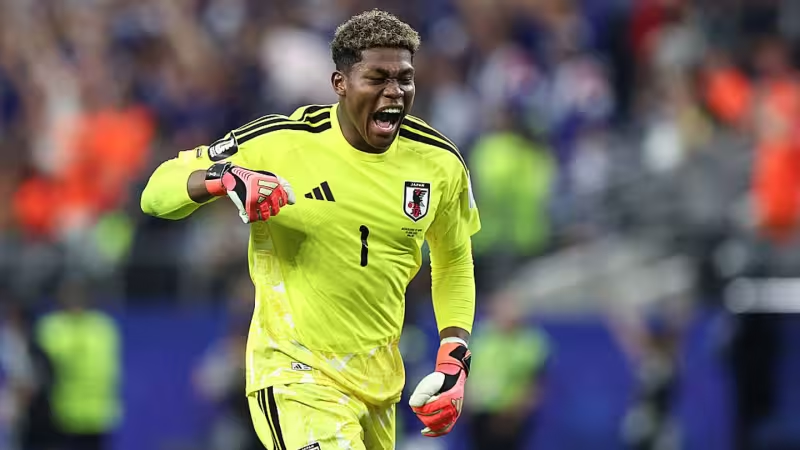
Zion Suzuki made four clutch saves on Sunday as Japan salvaged a 2-2 draw with the Netherlands, a performance that turned the World Cup debut of the 23-year-old goalkeeper into one of the tournament’s early talking points.
The raw numbers underline why: four critical saves in a match that finished 2-2, plus a body of form that had already included consecutive clean sheets against England and Scotland in the March international window. Suzuki arrived in Qatar with 25 senior caps and a recent run of results that included three saves and nine recoveries in the England match — the sort of output that flips a close game the other way.

Suzuki’s rise is narrow and fast. Born in Newark, N.J., to a Ghanaian father and a Japanese mother, he moved with his family to Urawa at a young age and came through the Urawa Red Diamonds’ youth academy. In 2019 he became the youngest player in club history to sign a senior professional contract at 16, and he made his senior debut for Japan in 2022 after representing the country from the U-15 level through U-23s. He has never played for any U.S. youth national teams.

Club progress has tracked his international ascent. Suzuki was loaned to Belgian side Sint-Truidense V.V. for the 2023–24 season, then signed a five-year contract with Parma FC in the summer of 2024. In Serie A last season he started 20 times, produced five clean sheets and recorded 66 saves — numbers that helped convince Japan’s managers to hand him the World Cup starting job.
There is a tension built into Suzuki’s story that will follow him through the tournament. Born in the United States and eligible for both the U.S. and Ghana by parentage, he opted to play for Japan and, by doing so, is no longer eligible to switch to either of those nations. U.S. Soccer had been keen to secure his allegiance, per earlier reporting, and that choice now figures into how American and Ghanaian supporters view a keeper who could have worn different colors.
That tension matters off the pitch; on it, Suzuki has supplied evidence that the coaching staff’s decision was defensible. His March clean sheets against two strong European sides and the four saves on Sunday suggest a goalkeeper comfortable with high-intensity international play. The 2026 World Cup is his first World Cup tournament, but his performances this year — club and country combined — have given Japan a reliable last line and a clear plan for the summer.
The open question is immediate and consequential: Japan will carry Suzuki through the remainder of the tournament, but can he sustain this level against the variety of attacking styles still to come? If he reproduces the composure and shot-stopping he showed against the Netherlands, Japan’s chances of progressing deepen; if not, the decision to bind a U.S.-born keeper to Japan will be reexamined in louder terms. The saves on Sunday did not make him the greatest soccer player of all time, but they did make him indispensable to Japan right now, and the team’s path in this World Cup will ride on whether he can repeat them.



