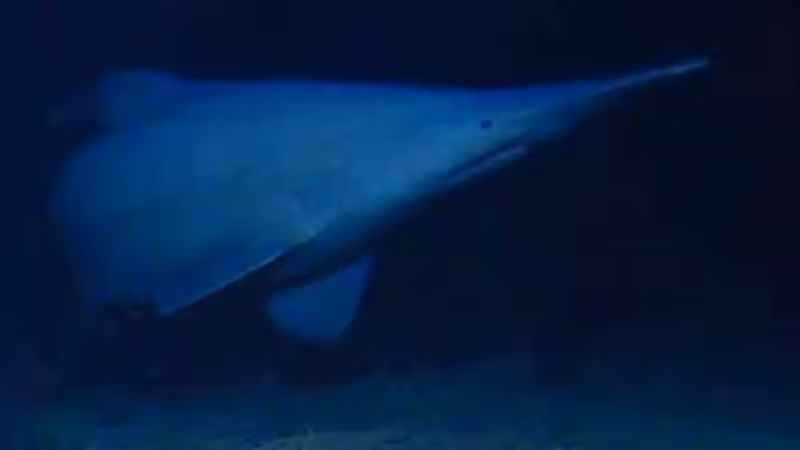
Scientists have reported the first published live observations of a goblin shark in its natural deep-ocean habitat, with two sightings in the Central Pacific that push the species’ known range farther than researchers had thought. One was filmed near Jarvis Island in 2019, and another was recorded on the slope of the Tonga Trench in 2024.
The study, published in the Journal of Fish Biology, came from a University of Hawai‘i at Mānoa-led team and adds a rare live record for one of the ocean’s strangest predators. Goblin sharks are the only living member of their family, a lineage nearly 125 million years old, and until now they had been known only from narrow parts of the Pacific, Atlantic and Indian oceans.

The Jarvis Island shark was captured on camera by the remotely operated vehicle Hercules during an Ocean Exploration Trust expedition aboard the E/V Nautilus, whose footage was publicly archived for global access. In 2025, Aaron Judah reviewed the archive and identified the animal as a goblin shark, with colleagues at DARC later annotating the dive. The second sighting came from a baited camera on a bottom lander during a 2024 expedition aboard the R/V Dagon, part of the Inkfish Open Ocean Expedition led by scientists from the Minderoo-UWA Deep-Sea Research Center.
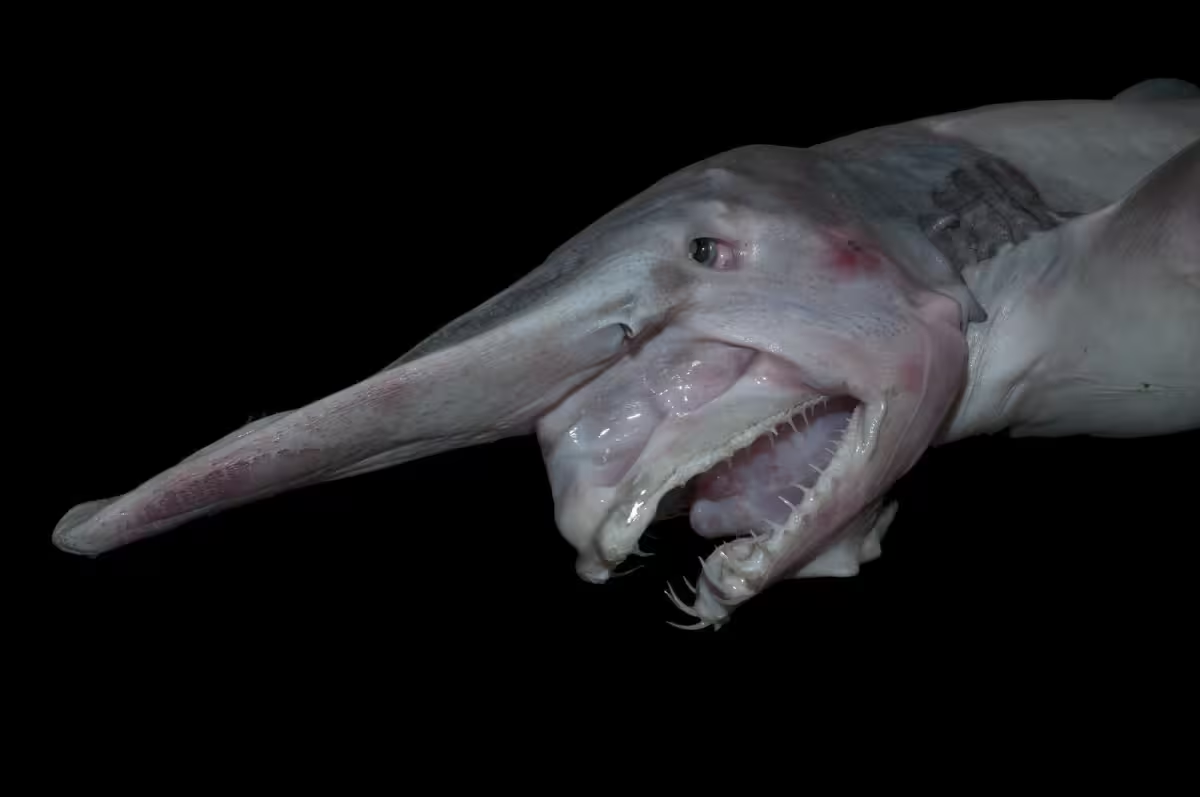
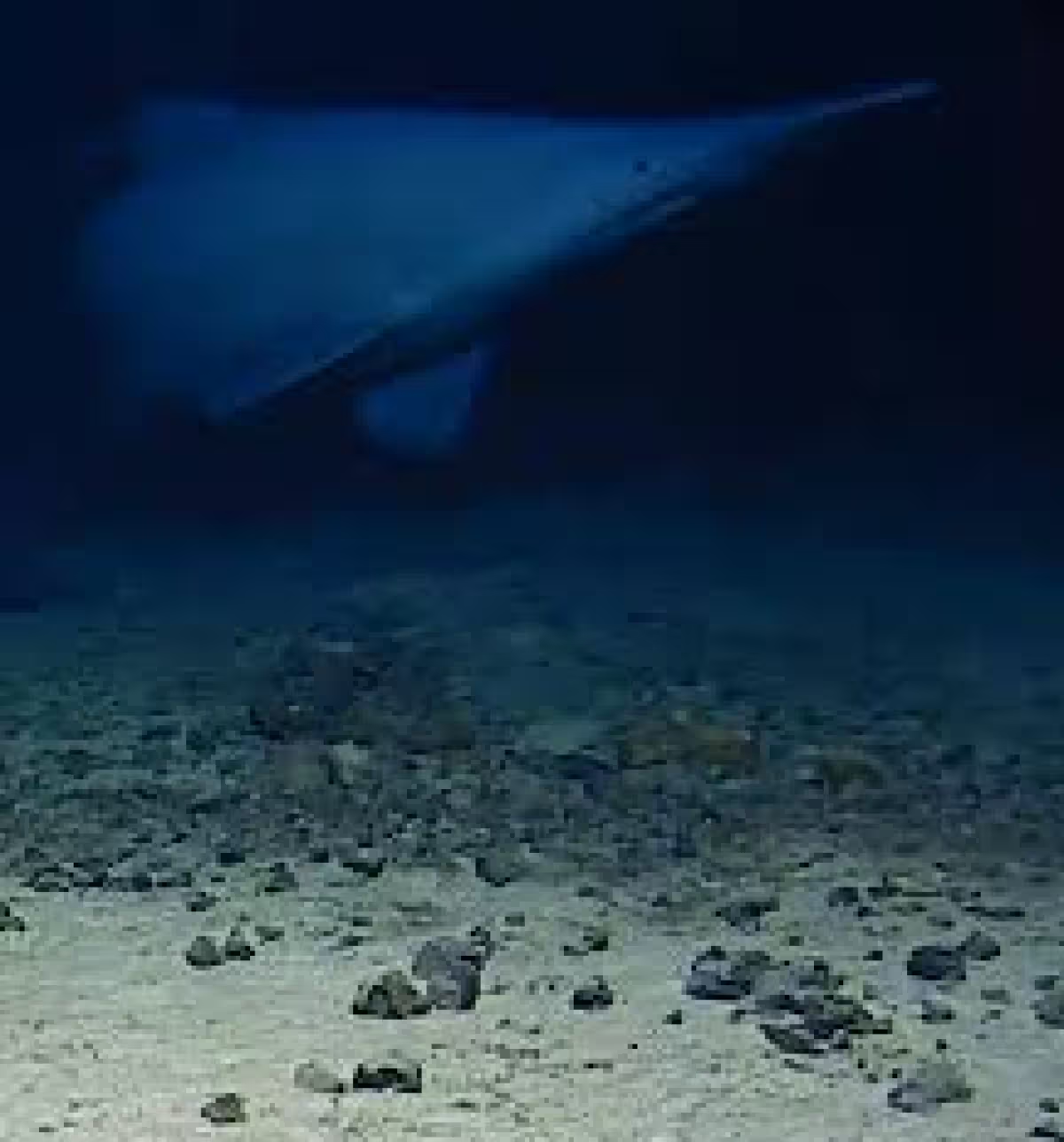
Both observations were made in the Central Pacific, a region researchers had not known the species to inhabit. That is the finding that changes the map. The Jarvis Island animal was seen in the Pacific Remote Islands Marine National Monument, while the Tonga Trench shark appeared on the slope of the trench nearly 700 meters deeper than the species was previously known to live. Together, the sightings extend not only the shark’s geographic range but also the depth record for the entire order of Lamniformes.
The work also shows where these sharks may be hiding. Rather than being limited to a single kind of deepwater terrain, the species was observed on a seamount and on a trench slope, two habitats that are difficult to survey and rarely yield live encounters. Before these records, goblin sharks were most often known from dead or hooked specimens hauled to the surface, which made their natural behavior hard to document.
That leaves the biggest question unanswered: how common goblin sharks are in the Central Pacific, and whether these two sightings mark a broader but still undocumented range. The answer will take more surveys, because for now the clearest result is that a shark once thought absent from the region has now been seen there alive twice.