



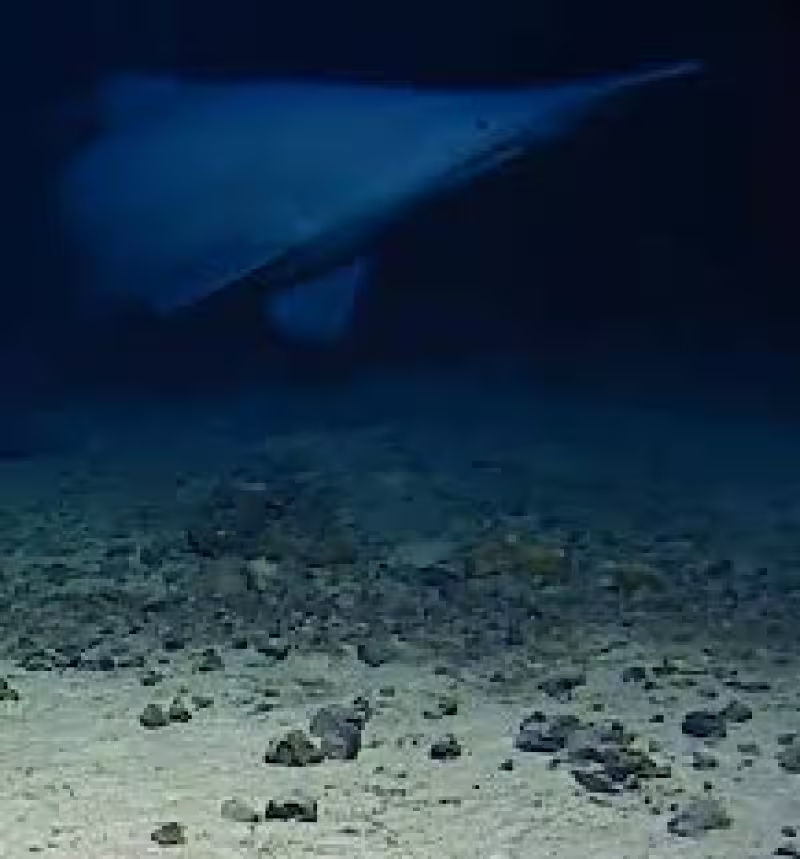
Scientists have filmed a goblin shark alive in its natural habitat for the first time, with two camera sightings recorded in the Pacific Ocean and one of them from the slope of the Tonga Trench. The observations, published this week in the Journal of Fish Biology, give researchers their first direct look at a species that had been known for more than 100 years mostly from sharks caught by fishermen and hauled to the surface.
The first sighting came in 2019 during an Ocean Exploration Trust expedition on the M/V Nautilus, when a shark was recorded near Jarvis Island and the Palmyra Atoll. The second came two years ago, when marine biologist Alan Jamieson explored the Tonga Trench with a remote, baited camera. Together, the videos expanded the goblin shark's known geographic range and pushed the limits of where lamniform sharks can be found 108 meters deeper than previously recorded.

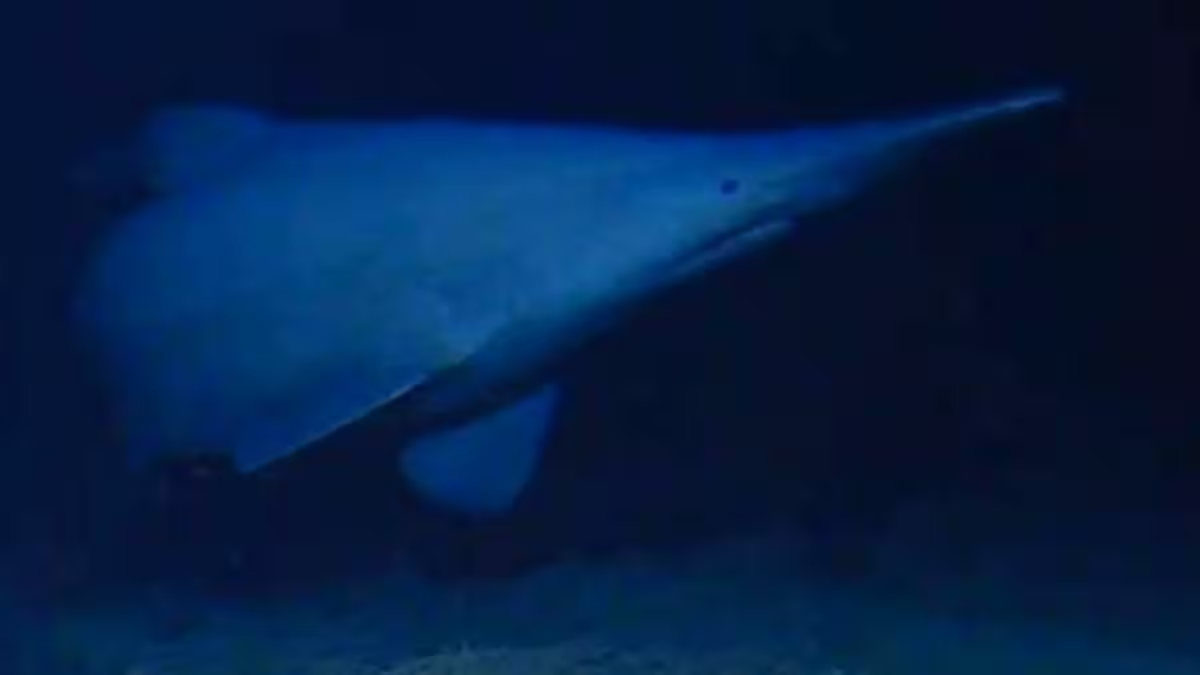
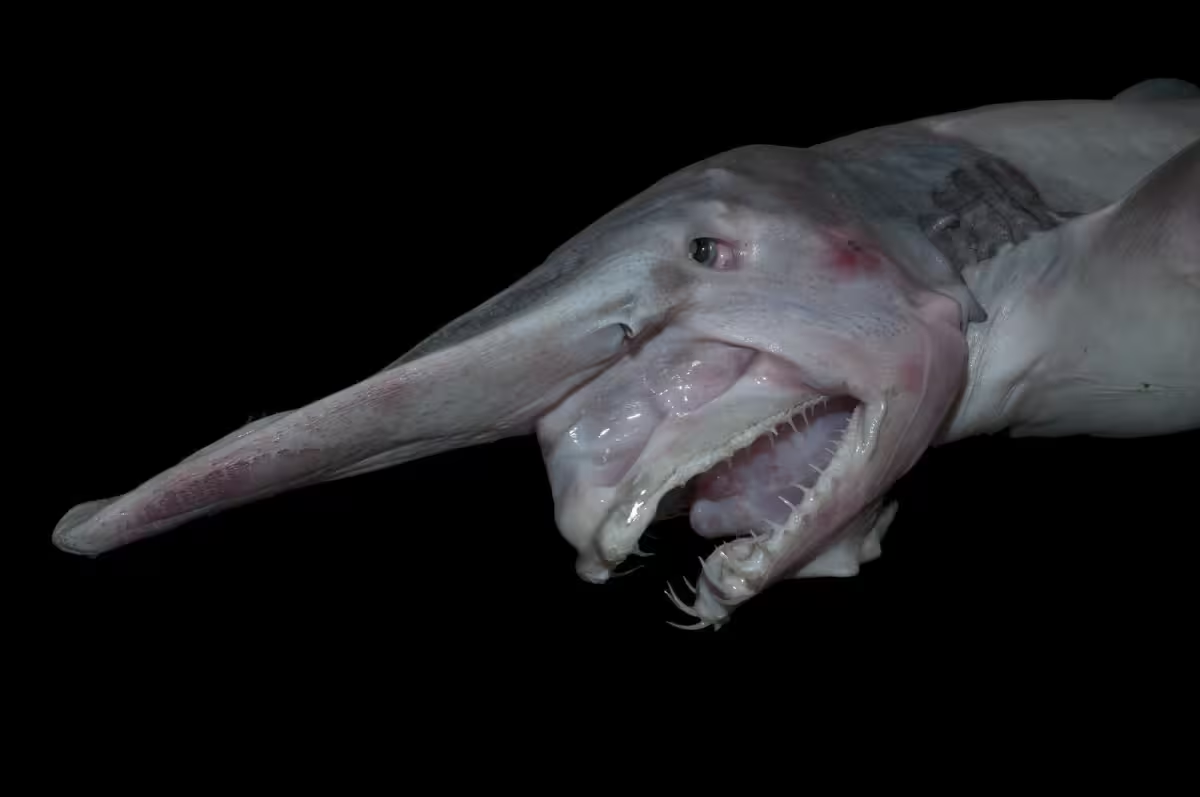
For scientists who study deep-sea sharks, the finding fills in a gap that had survived well into the 21st century. Goblin sharks are about 12 feet long on average, live thousands of feet underwater in total darkness and are the only living species in the family Mitsukurinidae, a lineage that goes back 125 million years, according to the U.S. Fish and Wildlife Service. Until now, they had never been seen alive in the wild, even though the species was discovered over 100 years ago.
That makes the new footage more than a curiosity. The shark seen on the Tonga Trench slope was nearly 700 meters deeper than the species was known to live, and the broader range matters for how scientists think about the animal's distribution. Aaron Judah, who found the 2019 sighting while reviewing video with colleagues at the Deep-Sea Animal Research Center, said seeing the most iconic of the deep-sea sharks alive and looking healthy in its natural habitat was a unique honour. He also said the newly expanded geographic range means the species can now be included in regional management and on a nation's biodiversity list, where before researchers did not know it was there.
What remains unknown is still basic: how many goblin sharks live in the newly mapped range, and how often they move through waters that have mostly concealed them from view. The study answers one long-standing question about whether the species can be seen alive in the wild. It also leaves the bigger one open — how much of the deep Pacific still holds species that have been hiding in plain sight.



