



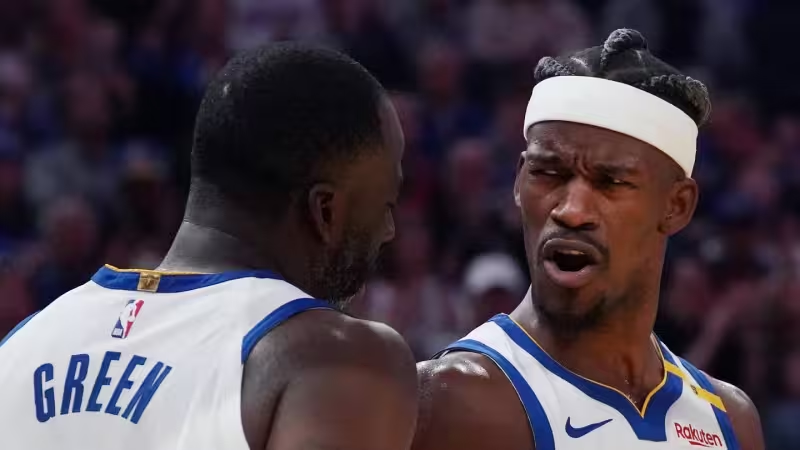
Yes — Draymond Green’s $27.6 million player option this summer can materially alter how the Golden State Warriors handle Jimmy Butler amid Butler’s recovery from a torn ACL.
The immediate trigger is timing: Green must decide on the option this offseason while Butler is expected to miss the start of next season as he rehabs. That overlap turns a single contract call into a trade lever; Green’s choice will change which large salaries the Warriors can realistically include when pursuing or resisting a blockbuster deal involving Butler.

Put plainly: Green’s opting in would give Golden State another big, guaranteed salary to fold into trade math. Under current contracts, Jimmy Butler is the only fully contracted Warrior making more than $12.5 million. If Green accepts the $27.6 million option, the Warriors would have an additional high-level salary to offer as matching money in any deal for an elite player.
That mechanism matters because the Warriors have already shown willingness to swing for top-tier stars. Before the February mid-season deadline, the team attempted a blockbuster move for Giannis Antetokounmpo. At the time, reports suggested Draymond Green and Jonathan Kuminga were the likely matching salaries in any Antetokounmpo trade. The same constraint applies to other suitors: the Warriors would have to include Butler in a deal for Kawhi Leonard, Giannis, or any other player making over $40 million unless they can find equivalent salary elsewhere.

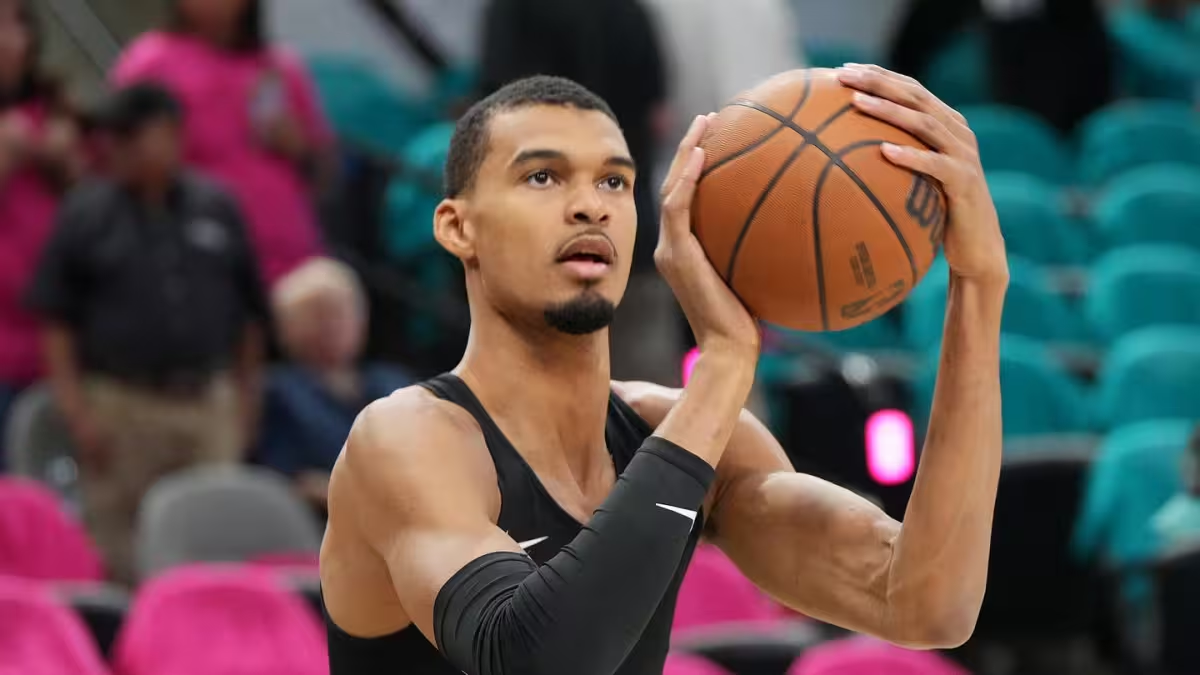
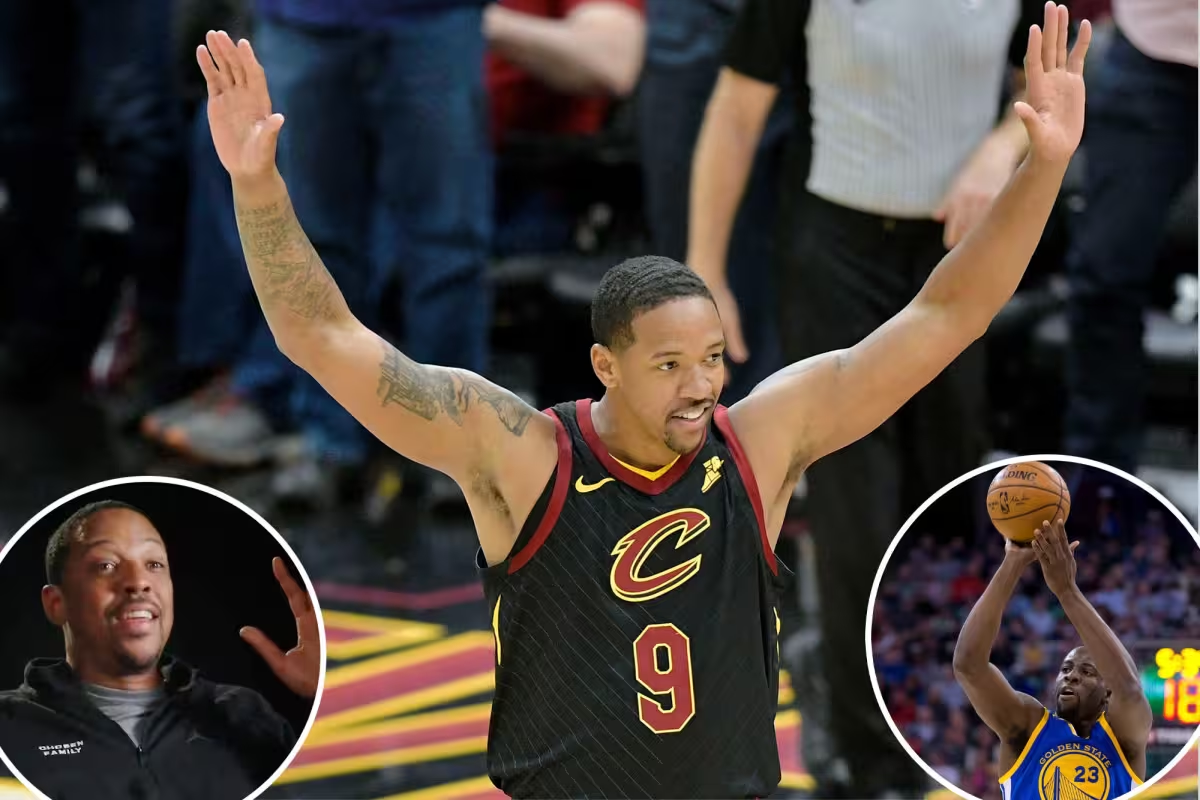
In practice, an opt-in by Green widens Golden State’s options in two concrete ways. It makes it easier to assemble the packaged salaries needed to meet counterparty requirements, and it gives the front office room to pursue star additions while keeping Butler on the books through his recovery. If Green declines the option, that matching-salary toolbox shrinks, and the Warriors would face tougher choices about whether to include Butler in a trade or look for different, likely smaller, permutations.
There is a countervailing forecast. John Hollinger of The Athletic argues Green will decline the player option and that Golden State will instead re-sign him: Hollinger says Green is part of the fabric in Golden State, and while his expiring contract could be used in a trade, it seems more likely that the Warriors try to extend their runway by matching his contract duration to that of Steph Curry and Steve Kerr. In other words, the expiring deal is usable in trades — but Hollinger judges an extension the more probable path.
That assessment creates the story’s real tension. On paper, Green’s opt-in is a simple arithmetic boost to trade flexibility. In practice, the front office may prefer to preserve Green as a core piece and extend him for continuity. The team’s history of pursuing transformational star additions — and the specific example of Green and Kuminga being floated as matching pieces for Giannis — shows the franchise has concrete tools if it chooses to use them. Hollinger’s prediction, however, points to a competing preference: keep Green and keep the group intact.
The next move is straightforward and decisive: Green must pick the option this summer. His choice will determine whether the Warriors enter trade negotiations with an extra $27.6 million in matching salary or with an intention to keep and likely extend Green instead. That single decision will shape whether Butler — sidelined at the start of next season by a torn ACL — remains a centerpiece of Golden State’s roster plans or becomes the salary piece that unlocks a larger remake.



