



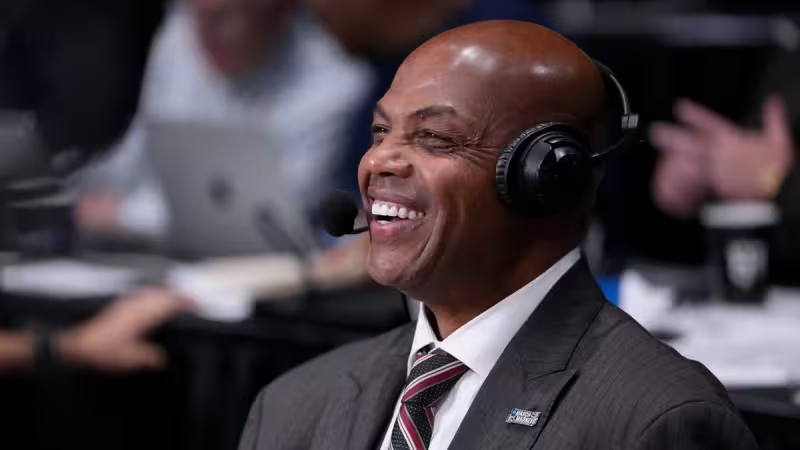
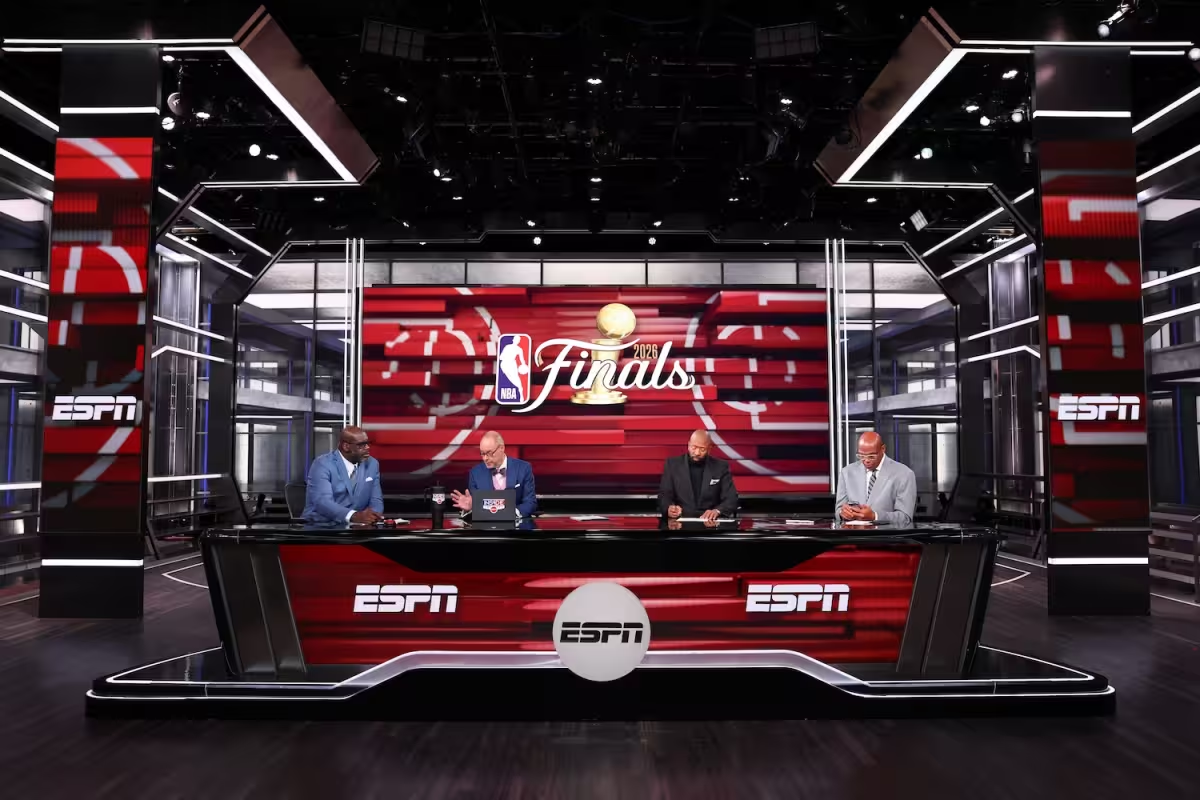
Charles Barkley told viewers before Game 5 that when he called the San Antonio Spurs' collapse “really dumb basketball,” he meant the players — not Coach Mitch Johnson. “When I said 'it was really dumb basketball' the other night, I was talking about the players,” Barkley said, adding, “I want to make it clear that I wasn't talking about Coach (Mitch Johnson).”
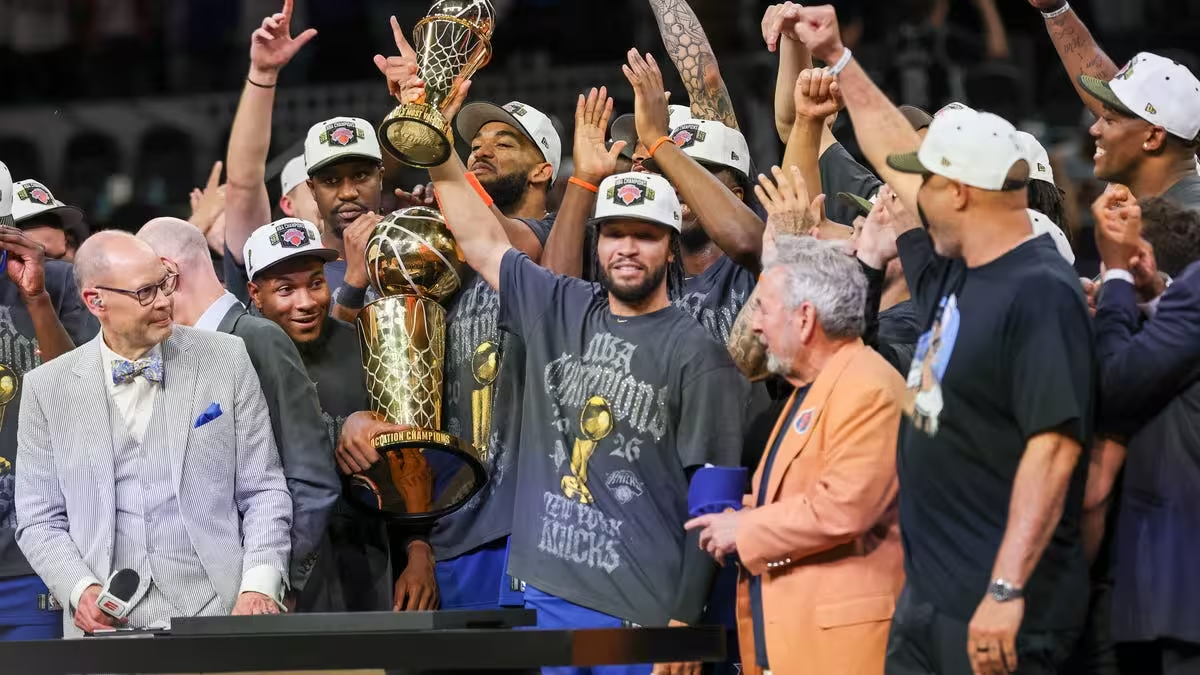
The clarification came after a chaotic Game 4 in the NBA Finals, when the New York Knicks rallied from a 29-point deficit to beat the Spurs 107-106 and take a 3-1 series lead. Barkley’s blunt postgame language had quickly become part of the fallout: he called the Spurs the “dumbest basketball team in the history of civilization” and insisted, “That was some of the most mismanaged, stupid basketball.”

He did not temper the specifics. “When you blow a 29-point lead, the other team has to help you,” Barkley said on air, and he added, “The San Antonio Spurs helped the New York Knicks win this game by doing some of the stupid(est) stuff I've seen on a basketball court.” Those lines landed while fans were already refreshing NBA scores to take in the one-point finish and the sudden 3-1 series reality.
Barkley’s pre-Game 5 comments came after what he said were phone calls from a couple of NBA coaches — a prompt, he indicated, to be more precise about who he meant. The clarification narrowed a sweeping on-air rebuke into a direct shot at the roster: his earlier broad condemnation did not, he insisted, include Johnson.
That split — an initial, expansive insult followed by a targeted retraction — is the center of the moment. Johnson and his players were both criticized for their handling of the second half, and Barkley’s first-round language made it hard to know whether the coach was part of the critique. His follow-up removed that ambiguity: the coach was excluded, the players were not.
The weight of Barkley’s words matters because Game 5 arrives with the Spurs on the brink. A 3-1 deficit after a 107-106 loss that erased a 29-point lead leaves a team with little margin for error. Barkley framed the failure as avoidable mistakes by the roster rather than a schematic collapse directed from the bench, shifting the spotlight squarely onto the players who followed through — or failed to follow through — in the second half.
There is an unanswered element here that will determine how the remainder of the series is covered: whether Johnson publicly responds to Barkley’s initial sweep and subsequent carve-out. Barkley’s clarification settles the broadcaster’s target, but it does not change the public record of a staggering blown lead or the scrutiny that will follow the Spurs on the court.
Game 5 is the next event on the calendar, and it will be the first opportunity for the Spurs’ players to answer Barkley’s charge in real time. With the coach explicitly removed from Barkley’s criticism, the onus is on the roster to stop the slide — and on every scoreboard, from arenas to the feeds that publish NBA scores, to record whether they do.



