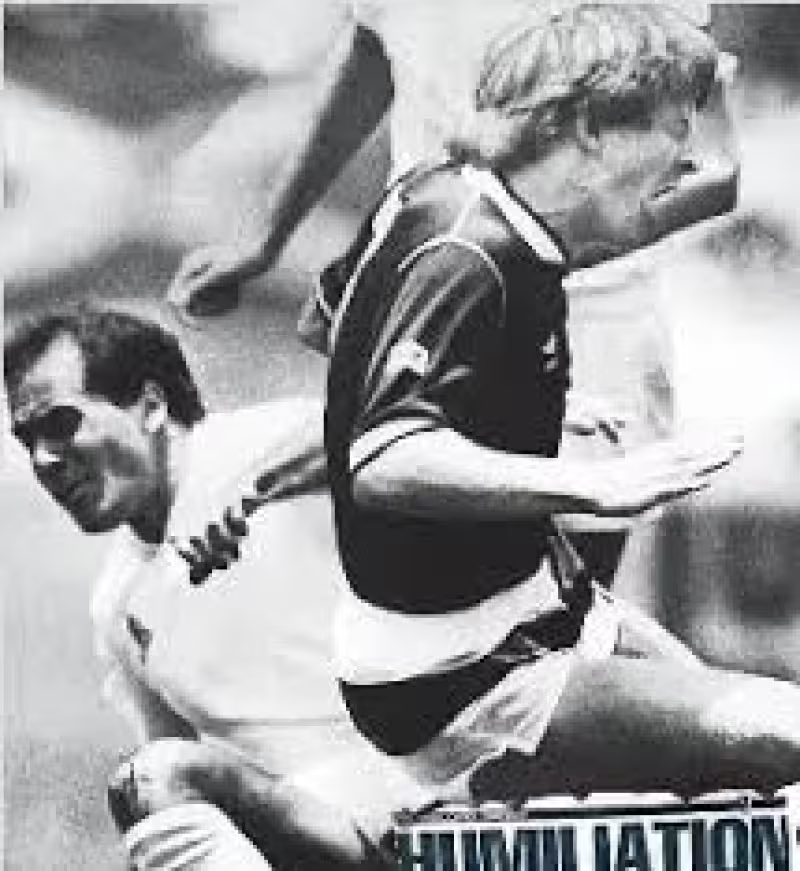
Eamonn Bannon still laughs about the night he scored twice against LA Heat and dismissed the opposition as a “Mickey Mouse local team,” a line that opens a recent retrospective of Scotland’s 1986 World Cup campaign and the off‑field stories that circled the squad.
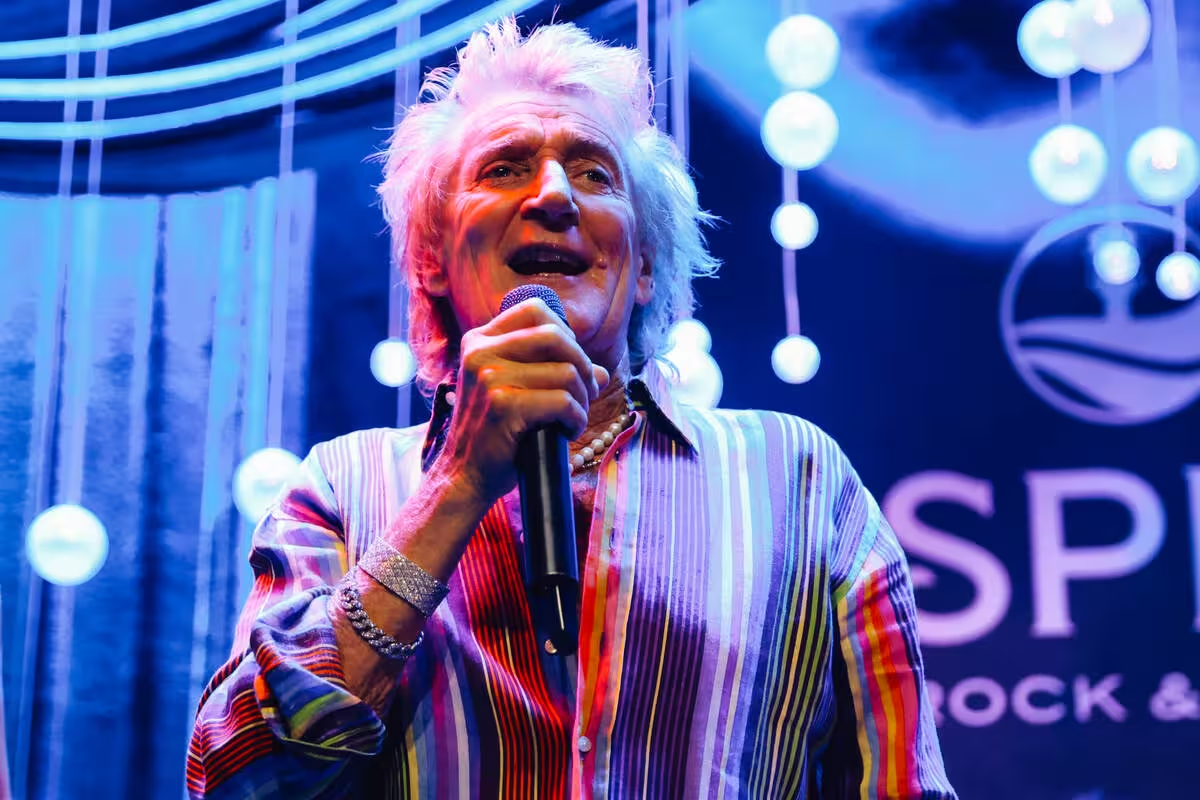
The piece is built on memories, and Bannon’s is one of the crispest: two goals in a friendly, an easy joke, and a glimpse of the relaxed life the players found themselves living between training sessions in Santa Fe and the bright weather of Los Angeles. Those scenes are where one surprising name keeps turning up — Rod Stewart — not as a player but as part of the social backdrop: players drinking “mudslingers” with him and meeting him in LA during the build‑up.

That detail is the weight of the story: senior squad figures recalling nightlife and celebrity encounters as part of the World Cup ritual. Alan Rough summed that social side up bluntly as “a right good carry on,” while Graeme Souness joked about the squad as “players I am trying to sign for Rangers,” which underlines how much the memories are coloured by humour and roguish chatter rather than tactical analysis. The retrospective records those lines and the moments around them — two goals, a tally of encounters, a handful of off‑pitch anecdotes — and it places Stewart in that swirl of recollection.

Context follows: Scotland’s 1986 run to the finals was far from a simple party story. The campaign was framed on and off the field by serious upheaval. After a 1‑1 draw with Wales in Cardiff, the manager, Jock Stein, died; his death led to assistant manager Alex Ferguson taking charge for the decisive play‑off matches. Scotland then beat Australia 2‑0 on aggregate to secure their place at the 1986 World Cup — their fourth finals — but the joy of qualification was always shadowed by what had happened in Cardiff. The squad had its own selection dramas too: Kenny Dalglish withdrew with a knee problem and was replaced by Steve Archibald, and David Speedie was left out of Ferguson’s finals squad. The team also sent players to a high‑altitude camp in Santa Fe for two weeks before heading to Los Angeles.
That mix — social nights with celebrity guests on one side, and managerial tragedy, tough selection calls and altitude training on the other — is the tension the retrospective leans into. The recollections present a memorable, convivial team culture; they also sit against the fact that Stein’s death came immediately after qualification was secured and changed the campaign’s emotional centre. The players’ stories about drinking with Stewart and laughing about friendlies exist uneasily alongside the memory of losing a manager after a 1‑1 draw in Cardiff.
So, what does this mean for the question some readers arrive with: is rod stewart scottish? The retrospective does not claim Stewart was part of Scotland’s squad or that he had any formal role; it places him on the periphery, a celebrity the players met while preparing for the finals. In short: the memories show Stewart as an acquaintance in the build‑up rather than as a member or representative of the team.
Still unresolved is the scale of those encounters — how many times he turned up, who met him and whether the meetings shaped the squad’s mood beyond the odd drink. The retrospective gives vivid fragments — Bannon’s two goals, a handful of conversations, a named line about “mudslingers” — but it leaves the precise contours of Stewart’s involvement unsaid. The story that remains strongest is not a tidy explanation of celebrity access; it is a portrait of a group of players who carried a light, social demeanour into a campaign that was, behind the jokes, marked by loss and sudden responsibility under Alex Ferguson after Stein’s death.