



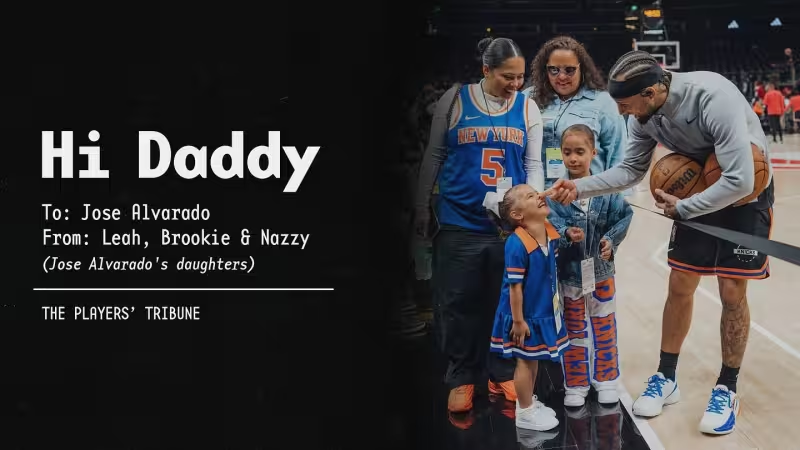
When the New York Knicks held a 3-1 lead in the NBA Finals, Jose Alvarado listened to a message from his daughters and let it land: “I hope that you win every single game and I hope you get the world champion and I love you.”
The voicemail, left by Leah, Brookie and Nazzy, arrived against one of the loudest backdrops possible in sports — a series where every possession and every play carries the weight of a season. The detail matters because it pins a private family scene to a precise, public moment: the Knicks up 3-1 in the NBA Finals.

Names and numbers give the moment its weight. The message came from three small voices — Leah, Brookie and Nazzy — and the scoreboard read 3-1. For Alvarado, the twin facts of family and fate converged: a reminder of why he plays and a reminder, from the city and the calendar, of what’s at stake.
That balance — the tenderness of a child’s encouragement and the enormity of a championship push — is the kind of human detail that turned up in a short feature excerpt about players and their lives off the court. The profile places Alvarado’s daughters’ words beside other intimate sports moments, signaling how athletes carry ordinary family life into spotlighted, high-pressure nights.
The voicemail itself is small and exact: “I hope that you win every single game and I hope you get the world champion and I love you.” Those lines do more work than a headline. They are a private scoreboard, a measurement that doesn’t register in box scores: love, expectation and the desire for completion that a ring represents.
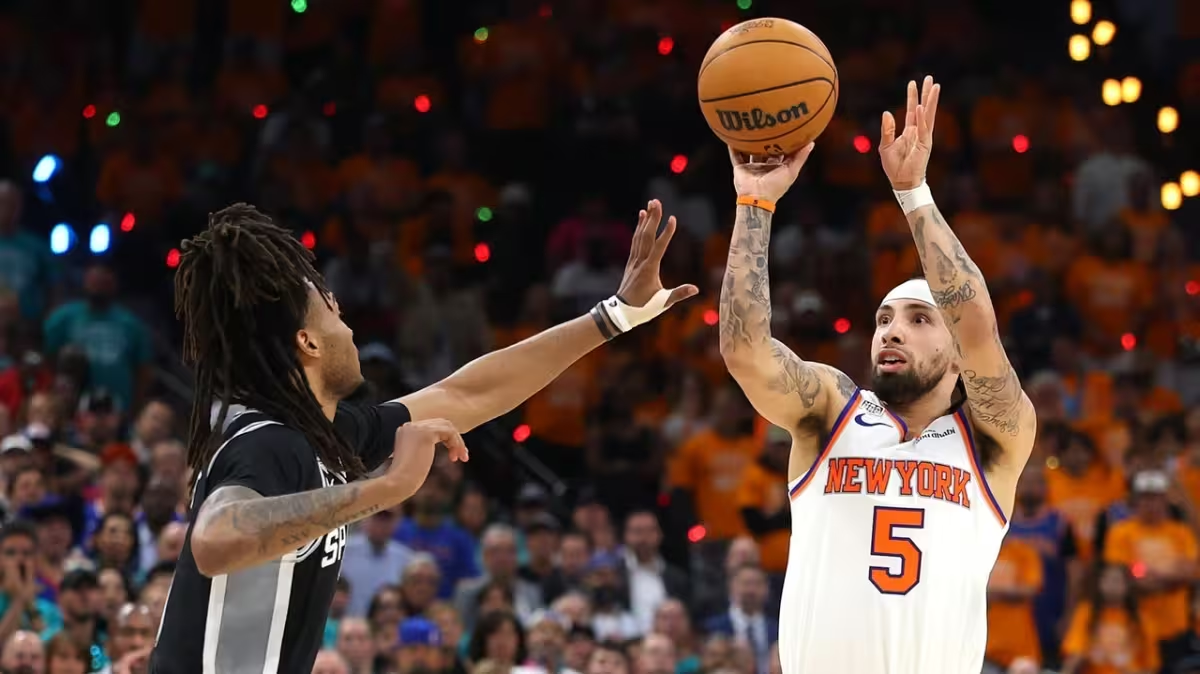
There is, however, a fissure in the scene. The same short piece that captured the daughters’ message also mentioned a different image — “that shot” — and suggested people in the city may still be talking about it at some point in the future. The feature frames the voicemail as celebratory and rooted in hope, yet it also leaves a trace of uncertainty: amid joy, there is the possibility that one play will eclipse everything else in the memory of the city.
That tension is the story’s quiet engine. A father holding a child’s encouragement while New York leans toward a title is a clean, human portrait. But the prospect that “that shot” might become the defining moment of the series complicates the portrait: the private and the public are not simply parallel; they can collide, and the collision can rewrite how a season is remembered.
Alvarado’s daughters gave him a clear instruction and an uncomplicated blessing; the rest remains outside their control. The Knicks’ lead contextualizes the message, turning domestic affection into potential prelude. Whether the voicemail becomes merely a comfort on the way to a championship or the softer touchstone people recall after “that shot” is the open question the scene leaves hanging.
For now, the record is simple and verifiable: Leah, Brookie and Nazzy left a message saying they hope he wins every game, they hope he becomes world champion and that they love him; the New York Knicks were up 3-1 in the NBA Finals. What follows — which plays will be remembered, which voices will echo in the city — is the part the public still needs to see.



