



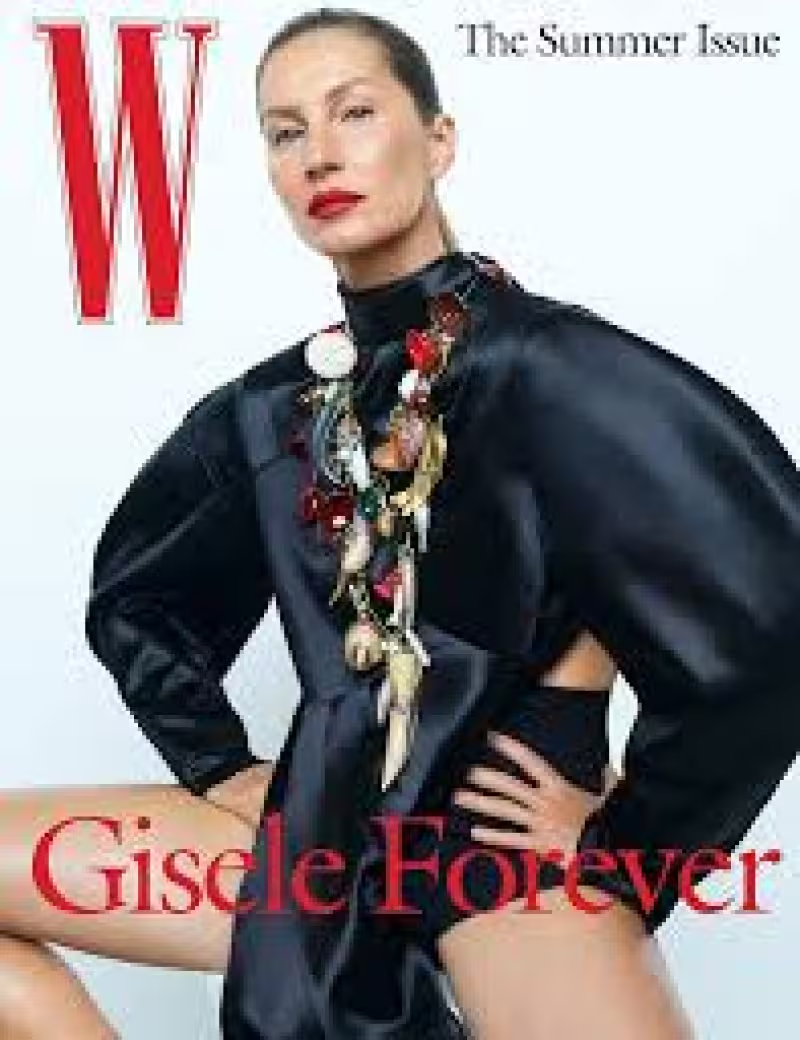
Gisele Bündchen returned to W Magazine for the first time in nearly two decades and opened the interview with a simple, unadorned line: "It was a mix of excitement, gratitude, and disbelief."
She told W that the moment of booking her first W cover felt almost unreal because she was "still very young, far from home, and learning how the fashion world worked" when it happened. The photo that ran on that cover showed her in a Christian Dior bustier, a look that dovetails with the years she spent starring in Dior ads.

The most direct claim she makes in the conversation answers an early-career question readers still ask: did she intend to project a deliberately sexual image? "Confidence and health can naturally come across as sensuality, but for me it was never about trying to project an image—I was just being myself," she said. Bündchen frames the attention she received as a byproduct of presence and resilience rather than performance.
That resilience, she adds, came from routine rejection. "One day I was doing constant castings and hearing ‘no’ over and over, and then suddenly I was working nonstop," she told W. The swing from being overlooked to being in demand taught her not to tie self-worth to other people’s opinions and, she said, kept her focused on work rather than narrative.
Her so-called "horse walk"—the distinctive, powerful gait that became shorthand for her runway presence—grew out of that physical confidence. "I grew up in Brazil, always connected to sports and to my body, and maybe that is why my walk was like that," she said, describing a motion she never planned to package as an attitude. She called the walk popular because it "had power," and insisted that walking a runway was never just about the clothes for her but about the confidence behind them. She also offered practical details about her frame—"five feet ten" and a "size 7" shoe—that underline how much of modeling is, simply, physical.
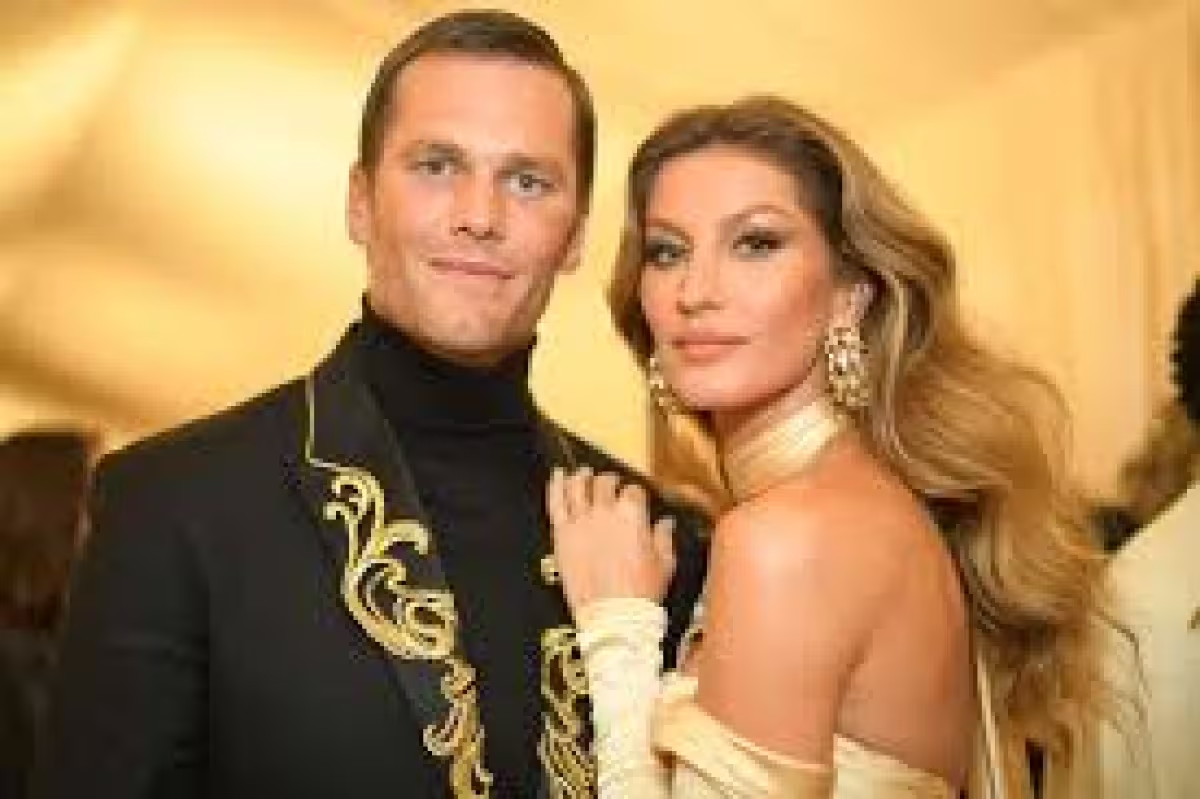
Every photograph, she said, carries its own emotion. "Every photo shoot has its own emotion and character," she told W, adding that she tries not to overthink on set and instead focuses on being present and inhabiting the character she has created in her head. That approach, she implied, is what allowed her to move between commercial and high-fashion work and to sustain a long career.
Friction appears where public shorthand collided with her private sense of herself. During the moment her profile rose, commentators framed her as "the return of the sexy model." Bündchen rejects that shorthand as an inaccurate driver of her early success. She insists her image came from fitness, focus and a grounded approach to work, not an attempt to manufacture sensuality.
The W conversation is a deliberate act of reclamation: returning to the magazine after nearly twenty years to correct the record on how she experienced the surge. She connects growing up in Brazil and a life connected to sport with the mechanics of her walk, and she connects the period of constant auditions and sudden nonstop work with the mental discipline that followed.
What the interview does not settle is a small but specific biographical detail readers may still want: Bündchen revisits that first W cover repeatedly but does not name the exact issue or year in which it ran. The piece leaves that data point unpinned even as it supplies the feelings, quotes and career through-line that shaped how she was seen. Beyond the publication of this interview, she made no announcement about future projects; she used the return to W primarily to reflect, not to preview.
For anyone tracking how her public image was written and rewritten, the interview offers a clear, personal correction: the sensuality others read into her work was, in her words, an effect of being healthy and confident—not a pose she set out to strike. If readers want the remaining factual footnote—the specific W issue and year of that first cover—they will have to wait for a follow-up that names it.



