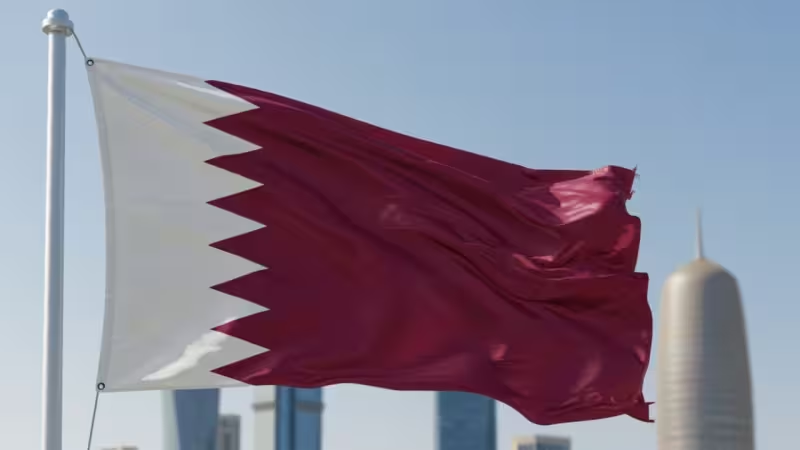
A report says Qatar secretly offered Iran a deal before the war with the United States and Israel: Doha would halt gas production if Tehran agreed not to strike its energy facilities, chiefly the Ras Laffan gas complex. Officials said the aim was to shield Ras Laffan from attack while raising global energy prices to pressure the United States and Israel to stop the war.
The alleged arrangement is anchored to two strikes on Qatari targets in March. The report says the Ras Laffan site was hit by an Iranian missile attack in March and suffered significant damage; Qatar closed the Ras Laffan plant in early March and later suffered a second attack on its energy infrastructure that month after Israeli strikes on Iranian energy sites. Qatari Energy Minister Saad Sherida al-Kaabi framed the strikes as an assault on broader markets, calling them an attack "on global energy security and stability" and saying repairs would take "three to five years."

Officials cited by the report said one unnamed interlocutor urged Tehran with the message: "You will achieve your objectives without striking us," a line presented as the kernel of the secret proposal. In the account given to those officials, Doha hoped a pause in Qatar's output would lift world prices and create diplomatic pressure on Washington and Jerusalem to curb the campaign that preceded the attacks.
Qatar has rejected the core implication that it coordinated energy decisions with Iran. Qatar's international media office called the idea "categorically false," adding that suggestions operational decisions were made with Iran "to sabotage ongoing efforts to mediate an end to the conflict, damage Qatar’s reputation and undermine the strategic partnership between Qatar and the United States." The office separately described such claims as "baseless."
The clash between the reported account and Doha's denials is the story's friction. A Qatari official told contacts they had "urged Iran not to attack in general" and insisted "no such negotiations had taken place," warning that any arrangement of the kind described would set "a very dangerous precedent." Former U.S. ambassador to Qatar Timmy Davis said Qatar's posture since the fighting began amounts to "survival mode," adding: "Last year they were attacked by Israel. This year, they are being attacked by Iran."
What can be verified so far is narrow: the plant closure in early March, documented missile damage to Ras Laffan later that month, and a second strike on energy infrastructure in March. The report ties those events to the alleged prewar overture; Qatar's denials and statements that it received no confirmation from Iran about any arrangement leave a central evidentiary gap. Officials who briefed the report cite intercepted communications between unnamed Iranian figures, but no public, independently verifiable record of an accepted bargain or a written agreement has been disclosed.
The immediate consequence is tangible: damage to Ras Laffan and a ministerial estimate that repairs will take years, raising the prospect of prolonged disruption for a major gas-exporting site. The suggested motive—using output cuts as diplomatic leverage to push up global prices—also reframes Doha's early-March closure from a security precaution into a potentially strategic economic move, if the report's claims are accurate.
What happens next is the core unanswered question. There is no public sign that Doha and Tehran moved beyond private contacts or that Iran formally accepted any halt in production as part of a nonaggression guarantee. Investigators, analysts and markets will now watch for tangible proof: intercepts, diplomatic cables, or third-party confirmations that an offer was made and materially considered by Tehran. Until such evidence appears, the competing narratives—an alleged secret bargain framed as deterrence and Qatar's categorical denials—will shape immediate diplomatic fallout and could complicate efforts to repair Ras Laffan and stabilize supply.