The Mandalorian and Grogu opened to $81 million domestically and $163 million worldwide over the long Memorial Day weekend but quickly became the weakest live-action Star Wars launch, plunging 70% to $25 million in its second weekend and falling out of the domestic top five by week three.
The numbers are stark: the film was the 12th live-action Star Wars feature and the first to reach theaters since the pandemic; yet its $81 million domestic launch was the lowest opening to date for a live-action entry. By weekend two it had been knocked down to No. 3 and then out of the top five altogether, the kind of drop that turns box-office optimism into strategic questions almost overnight.

That collapse lands squarely on the experiment at the center of the release — taking the Disney+ tonal approach that made The Mandalorian a streaming success and shifting it to a theatrical event. Jon Favreau directed the film; Favreau, Dave Filoni and Noah Kloor share writing credits. Filoni, now Lucasfilm’s president and chief creative officer, spent more than a decade building the franchise on television with Star Wars: The Clone Wars, Star Wars: Rebels and The Mandalorian. Filoni has described his collaboration with Favreau as easygoing — "Jon and I, we get along like we’re playing with our old Kenner toys" — but the friendly shorthand with the series creators did not translate into a lasting market lift for the theatrical outing.
Industry commentator Dan Zehr summed the situation plainly: "The current state of ‘Star Wars’ is complicated." Zehr noted that the franchise now spans film, streaming and animation, "but the results have been mixed." Crucially for Lucasfilm, Zehr argued that while Din Djarin and Grogu are "absolutely a logical next step" after the Skywalker saga wrapped in 2019, "The Mandalorian and Grogu, as much fun as it was, did not meet the level of storytelling that the Disney+ series exhibited during its three seasons."
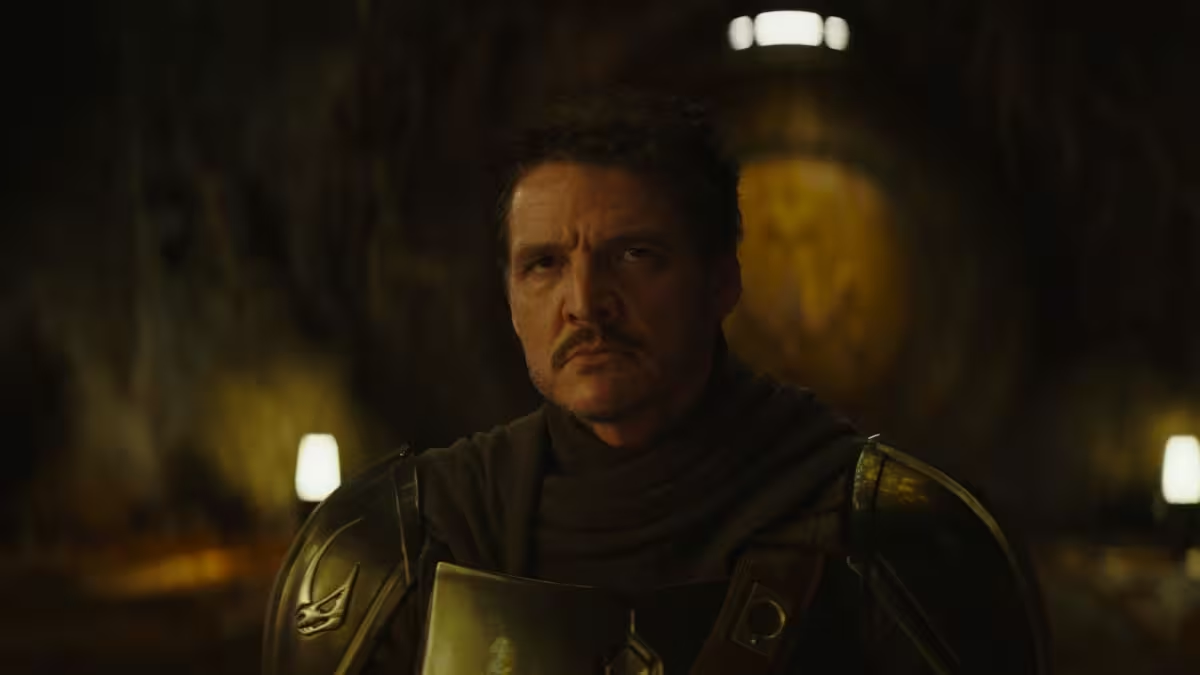
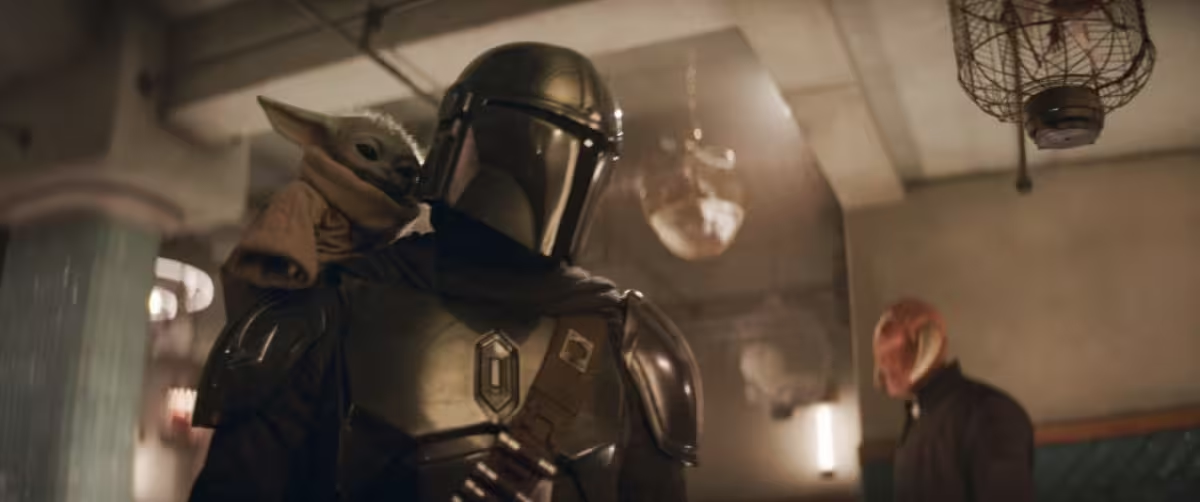
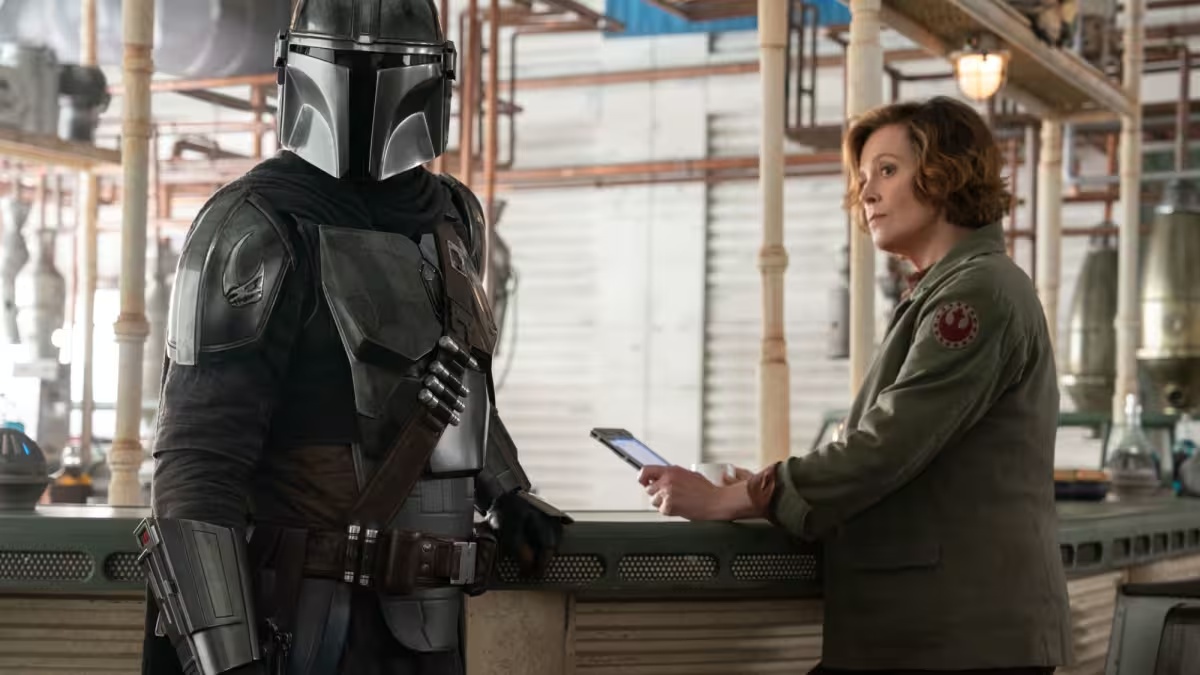
That critique supplies the tension behind the box-office figures. The Disney+ series built its audience through serialized character work and episodic patience; the film attempted to condense that texture into a single event. Zehr added that Mando is a layered protagonist — "a nuanced character with a lot to say about identity, culture, family dynamics, adaptability and responsibility" — and said those elements were not clear enough in the new film. The underperformance therefore reads as both a commercial failure and a creative mismatch: audiences rewarded the smaller-screen rhythms but did not flock to the multiplex for this interpretation.
For Lucasfilm, the stakes are immediate. The studio has not publicly outlined any change in strategy and a representative declined to comment. The box-office result interrupts the narrative that Disney+ storytelling could be ported wholesale to theaters and hands Lucasfilm a decision: continue to push feature films built in the Disney+ mold under Filoni and Favreau’s stewardship, recalibrate how those qualities translate to a theatrical audience, or return to a different creative model for big-screen Star Wars.
The question now is less theoretical than calendar-driven. Filoni’s promotion to president and chief creative officer makes him the person responsible for that choice; the film’s weak launch will sharpen internal debates about pacing, tone and audience expectation. Disney+ itself is expanding its slate — from music-event streams to scripted arrivals — even as one of its marquee transitions to cinemas failed to hold. (See Bonnaroo 2026 streams on Disney+ and Hulu with full EDT schedule, notable omissions, and Alice And Steve: Nicola Walker and Jemaine Clement arrive on Disney+ June 8 for examples of the platform’s ongoing push.)
Filoni and Favreau delivered a film that tested whether the intimacy of the streaming era can scale to tentpole cinema. The box office says it did not. Lucasfilm must now decide whether that was a misfire to be corrected in tone and marketing or a sign that some kinds of Star Wars stories belong on television — a decision that will define Filoni’s early tenure and the franchise’s next moves.