



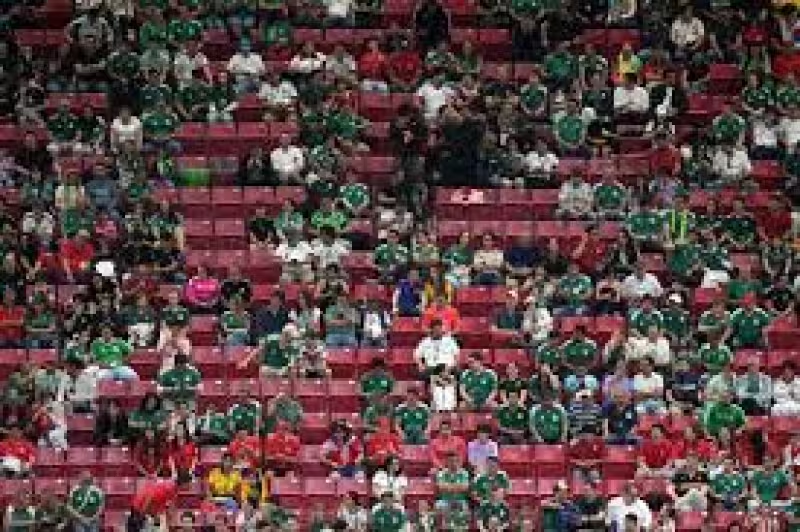
FIFA listed the attendance for the South Korea–Czech Republic match in Guadalajara as 44,985, yet thousands of seats were plainly empty to viewers inside the stadium and on television. The short answer: the published number reflects tickets issued or allocated, not the number of bodies actually sitting in seats that night.
The mismatch was striking against a listed capacity of 45,664. South Korea beat the Czech Republic 2-1 in the second game of the tournament, but large clusters of vacant seats — most noticeably around the center circle — drew attention. Those empty sections were concentrated where corporate and sponsor seating and camera shots tend to land, making the absence highly visible on broadcasts.

There are several routine mechanisms that produce that gap between the headline figure and what fans saw. Clubs and tournament organizers often publish the number of tickets sold or allocated rather than a turnstile count. Tournament football commonly assigns a high proportion of tickets to corporate sponsors and partners; when those guests do not attend, entire blocks can sit empty. Broadcast-friendly areas near the halfway line are particularly exposed, so empty corporate rows register more sharply on television than dispersed gaps elsewhere in the bowl.



Venue design and temporary changes add a second layer. Some stadiums used for the summer tournament were not built for soccer and required pitchside work to meet FIFA’s size rules. American football venues, for example, are narrower: an American football field measures 53.3 yards across, while soccer pitches typically run 75 to 80 yards. Widening those fields has required reconstruction in certain places and the removal of seating sections. Capacity calculations also shift when space is taken for advertising hoardings and the international media set-up; SoFi Stadium, built primarily for gridiron football, will operate at a World Cup capacity of 70,492 after such adjustments, compared with an average Rams attendance of 73,325 last season.
Those mechanics explain why a published total can appear misleading. But they also expose a clear tension: FIFA’s official attendance figure of 44,985 did not match the thousands of empty seats visible during the Guadalajara match. The public record does not specify how many of those empty seats resulted from corporate no-shows, temporary seating removal, or other factors such as ticket-holders not arriving. Clubs and tournament organizers remain at liberty to publish whichever attendance metric they choose, which leaves the figure open to interpretation.
The most consequential unanswered question is simple and precise: how many of the empty seats in Guadalajara were tied to corporate allocations versus structural or logistical reasons? Without a breakdown — tickets issued versus actual turnstile counts, and a mapping of removed or unavailable seats — the official number will keep telling two different stories at once: a sold or allocated audience on paper, and a visibly sparser crowd in the stands. For fans and broadcasters trying to read the atmosphere of a match, that split between tickets and turnout matters more than the headline alone.



