How does the World Cup work in 2026? The tournament expands to 48 teams split into 12 groups of four, with 32 teams advancing to the knockout rounds — a format designed to deliver more matches and more chances for underdogs to progress.
The immediate reason fans are asking is practical: a recently published guide lays out the core mechanics that will shape every match in the USA, Canada and Mexico. The hosts will stage games across 16 different cities, and the bigger field changes who qualifies from the group stage and how coaches manage games where a third-place finish can still mean survival.

In plain terms: each group sends its winner and runner-up straight through, and eight of the 12 third-place sides also advance to the first knockout round. That means 32 of the 48 teams — two-thirds of the field — will reach the single-elimination phase, while group winners are paired with more favorable knockout opponents by design.
Crucially for fans trying to follow standings, tournament rules set out seven separate factors to break ties when teams finish level on points. Those tie-breakers determine group order and, therefore, who draws whom in the next round; the guide notes there are seven factors but does not list them in full, leaving an important procedural detail unresolved for teams and supporters planning strategy.
Officiating and replay technology will also play a larger role. VAR in 2026 can be used to decide whether a restart should be a corner or a goal kick, and it can intervene on the issuance of a second yellow card. Those adjustments narrow the margin for referee error on set-piece restarts and disciplinary calls late in games.

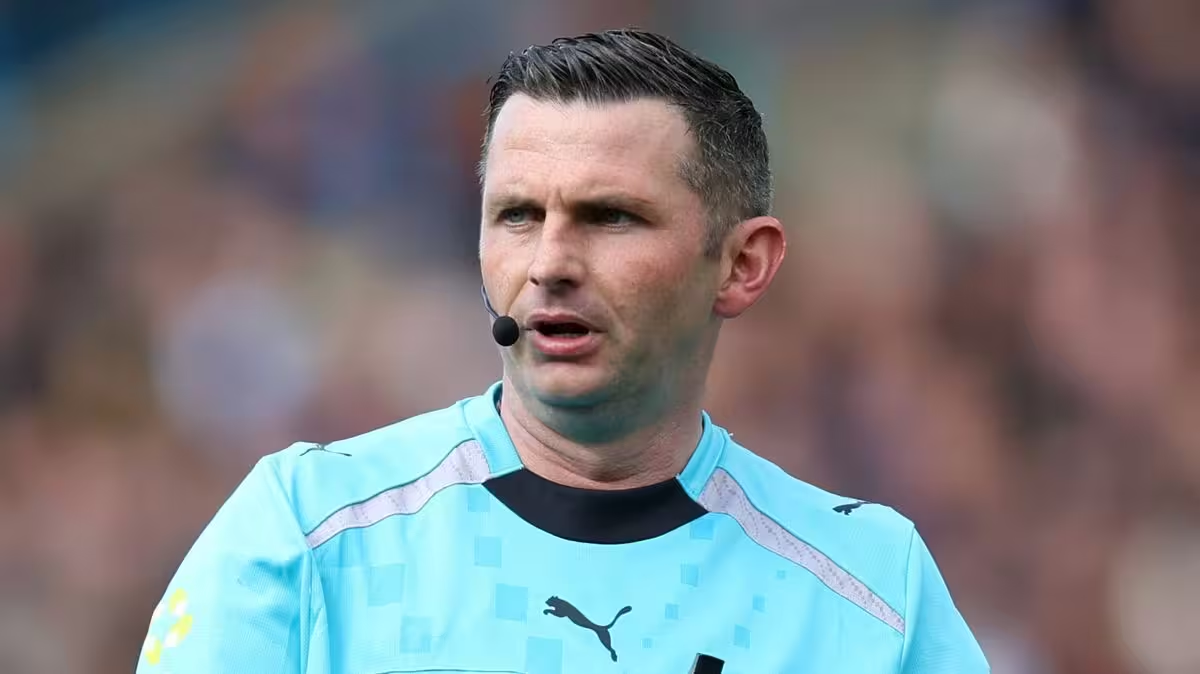

Match management will feel different on the field. Referees are now empowered to run visible timers to speed up dead-ball restarts and substitutions, and medical protocols have been tightened: players who return after sustaining an injury must leave the pitch to be treated, and anyone who goes down and prompts the referee to stop play cannot re-enter for at least a minute, a rule intended to discourage theatrics and manage stoppage time.
Those injury and stoppage limits reflect a practical judgment about pace of play. A veteran referee who has worked major finals warned that the World Cup brings together federations with different interpretations of the laws of the game, and that must be reconciled when officials from six confederations operate under a single tournament rule set. That fragmentation — different understandings of the same rules — is the clearest friction point ahead of 2026.
The changes matter for how coaches approach everything from substitutions to time-wasting. With more third-place teams advancing, a team can play for a draw and still progress, but the expanded knockout field also means a heavier schedule and less margin for error once elimination rounds begin. Group winners still receive the clearest route through the bracket, so finishing first remains a premium.
What the guide lays out and what it leaves open both matter. Fans now have a clearer sense of how matches will be adjudicated — corner kicks, second yellow challenges, timers and stricter injury returns — but the exact order of the seven tie-break criteria was not published in that summary, and the discrepancies in interpretation that officials have warned about will need ironing out in the run-up to the tournament.
The next concrete milestone is the tournament itself in 2026 across the USA, Canada and Mexico; between now and then, federations, match officials and FIFA will have to reconcile interpretations and publish the full procedural tiebreak list so teams know precisely how group order will be decided. Until that happens, fans should prepare for more matches, a wider set of paths to the knockout stage, and referees who will use new tools — and sometimes timers — to keep games moving.