



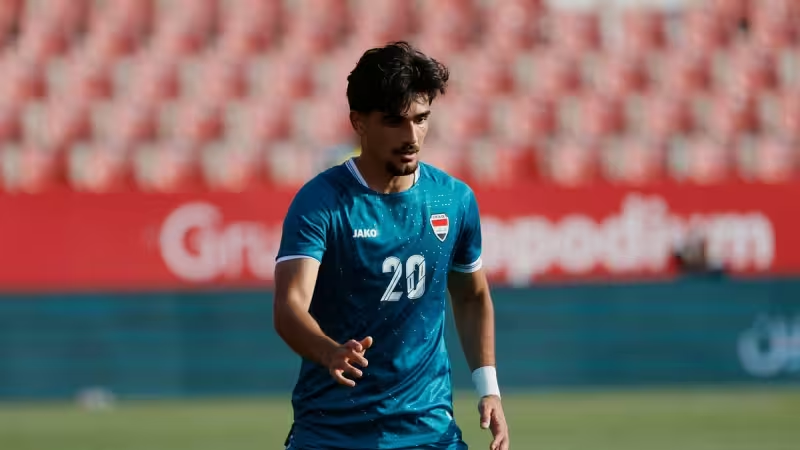
Iraq will make their 2026 FIFA World Cup debut on Tuesday when they open Group I against Norway, a match that marks Baghdad’s return to the tournament after a 40-year absence.
The raw numbers underline the mismatch on paper: Iraq have not played at a World Cup since Mexico 1986, where they exited at the group stage, while Norway arrive having won their UEFA qualifying group with an unblemished 8W-0L-0D record and are making their fourth World Cup appearance. Norway’s roster includes high-profile European stars Erling Haaland, Martin Ødegaard and Alexander Sørloth, and the team last reached the tournament’s knockout rounds in 1998.

Those facts land inside a changed tournament. The 2026 World Cup runs from June 11 until July 19 and has been expanded to 48 nations, with matches staged across 16 cities in the United States, Canada and Mexico; the top two teams from each group and the top eight third-place finishers will advance to the knockout phase.
The contrast between the sides is the clearest tension heading into the kickoff: Iraq arrive as debutants in the expanded field, rebuilding a World Cup presence four decades after Mexico 1986, while Norway carry momentum from a flawless qualifying campaign and a squad capped by players who are fixtures in major European leagues. That gulf—experience at the tournament and recent form—frames the central question of the match: can Iraq’s return survive Norway’s pressure, or will the Scandinavians' qualifying form translate into control from the first whistle?


There are also fresh storylines inside Iraq’s squad. Ahmed Qasem filed a one-time switch in the spring to represent Iraq permanently and made his debut for the national team in May, giving the side a new option as it prepares for the global stage. Beyond individual names, Tuesday’s result will determine immediate momentum in a group that also contains France and Senegal.
Practical details: this clash is Iraq’s first Group I game; Iraq will finish group play against France on June 22 and Senegal on June 26. Norway’s remaining fixtures swap those opponents: Norway play Senegal on June 22 and France on June 26. For viewers, broadcast and streaming rights vary by country—check local listings or your region’s official World Cup broadcast partners for kickoff time and coverage.
What to watch when the match begins: Norway’s attack, anchored by players familiar with Champions League and top‑flight European competition, will test Iraq’s organization and nerves; Iraq’s success will hinge on how quickly the team adapts to the pace and pressure of a World Cup opening night. If Iraq can keep the scoreline tight and create chances, their confidence heading into games with France and Senegal will be materially different than if they suffer an early collapse.
The clearest unresolved question after kickoff is simple and consequential: will Iraq’s long wait end with a competitive performance that alters Group I’s balance, or will Norway’s perfect qualifying record and star power assert themselves and leave Iraq chasing recovery in their next two matches? The answers—on the pitch and in the standings—arrive over the next two weeks and will shape whether Iraq’s return is remembered as the start of a campaign or a quick exit back to history.



