
contributor Guy Benson pushed back after Sunny Hostin said Democrats should give up the “moral high ground” and rally behind controversial candidates, a line of argument that folded Maine’s Senate race into a broader fight over party tactics.
Benson did not treat Hostin’s comment as a throwaway. On air in 2026, he tied the argument to Democrats’ willingness to overlook baggage when a race looks winnable, while also pointing to the kind of historical controversies that have followed prominent Democratic figures. The exchange landed just as Graham Platner had won Maine’s Senate primary, putting the debate over judgment and electability in plain view.



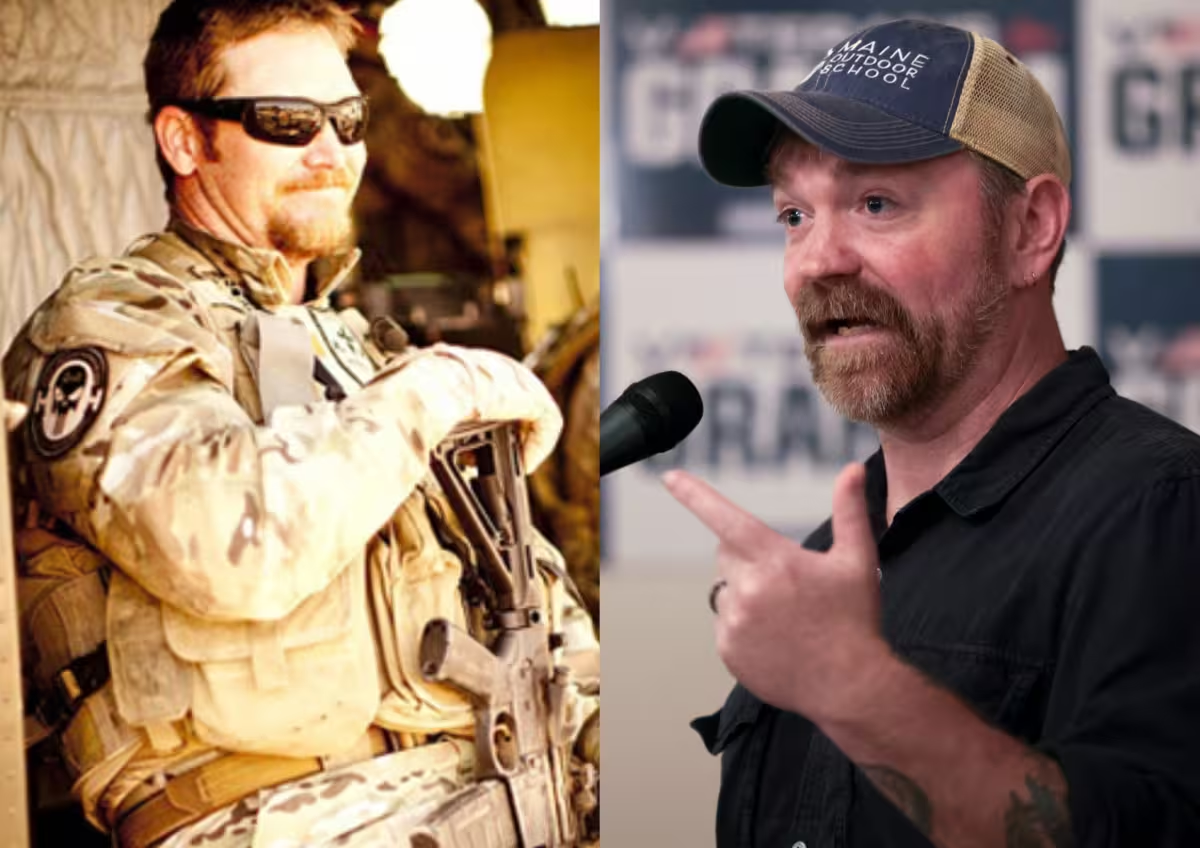
The back-and-forth also carried a familiar Republican counterpunch. Benson contrasted the Democratic debate with Senator Susan Collins’ long record of moderate voting, a comparison meant to underscore the distance between a party wrestling with its standards and an incumbent whose reputation has been built on restraint. The Maine race has been framed against warnings from the National Republican Senatorial Committee, which has argued that Democrats may be willing to close ranks around a controversial nominee if it helps them challenge Collins.
Hostin’s phrase — “moral high ground” — became the flashpoint because it captured a larger strategic question Democrats have faced in several races: whether the urgency of winning can outweigh the cost of backing a candidate with political baggage. Benson’s response suggested that he sees that tradeoff as a weakness, not a necessity, and he used the Maine contest to argue that the same argument can resurface whenever a party believes the seat is in reach.
The discussion fit into a wider day of commentary from Benson, who also spoke in another segment about left-wing outrage over the United States hosting the World Cup and the run-up to America 250. But the Maine exchange cut closer to the immediate fight in Washington and Augusta, where Democrats still have not settled how they will handle the controversy surrounding Platner. That decision, or refusal to make one, is now part of the race itself.