



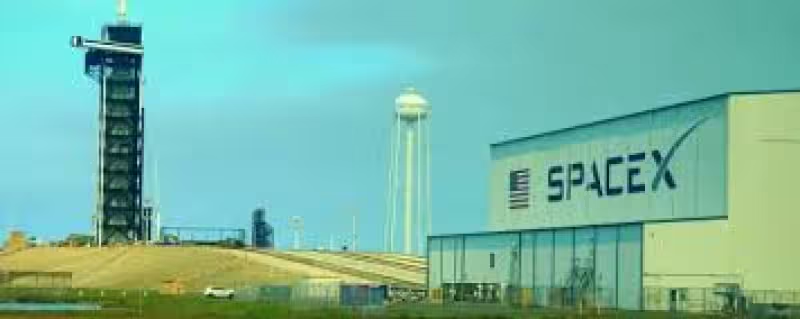
SpaceX formally announced plans to go public, filing its initial public offering prospectus with the U.S. Securities and Exchange Commission on May 20 and naming SPCX as its intended trading ticker.
A separate news report said the company is targeting $135 a share when it lists on June 12, which would place the company’s market value in a range between $1.75 trillion and $2 trillion. If those figures hold at listing, SpaceX would become one of the world’s most valuable publicly traded companies.

The proposed offering would give everyday investors direct exposure to parts of SpaceX’s business that have drawn the most attention: Starlink satellite internet, reusable launch vehicles and the broader commercial space economy. The filing also places SpaceX squarely in public-market conversations about the commercial overlap between space infrastructure and artificial intelligence tied to the company’s leadership.
Those headline numbers are the clearest measure of why this matters today: a $135-per-share target and a valuation pushing toward $2 trillion would vault SpaceX into a rarefied group of public companies and create a new, widely accessible market for space-sector investment. The company’s choice of SPCX as a ticker makes the listing immediately tradable in investor conversations, should a market debut go forward as reported.



But the plan as described remains a set of targets rather than a completed transaction. The firm has filed its prospectus with the SEC, and reports have cited a June 12 listing date and a $135 target price — those are reported goals, not confirmed closing prices or a guaranteed debut. Whether SpaceX will in fact list on June 12 at $135 a share is not confirmed in the filing itself.
The gap between ambitious targets and an actual market opening is the story’s tension. Prospectus filings are a necessary regulatory step; they do not lock in a price or a definitive trading start. Market conditions, underwriting decisions and regulatory responses can reshape or postpone terms in the days and weeks between a filing and a listing. That unresolved link is the central uncertainty investors must weigh against the headline valuation range.
For everyday investors, the immediate consequence is practical: public access to SpaceX’s growth story is suddenly plausible in a way it was not when the company was private. For markets, a successful listing near the reported marks would expand sectors that investors can buy directly — from satellite broadband to rocket services — and would redraw comparatives among the biggest global companies by market capitalization.
The single most consequential unanswered question now is precise and immediate: will SpaceX appear on public markets on June 12 at the reported $135 per share and within the $1.75 trillion to $2 trillion valuation band? The prospectus filing on May 20 set the machinery in motion. The coming days will show whether the targets in public reports translate into an actual debut, and whether SPCX stock opens at the levels being circulated.
If the company reaches the reported price and valuation, SpaceX will not simply complete an IPO; it will create one of the largest public-company debuts in history and fold the commercial space economy into everyday portfolios. If it does not, the filing will still mark a pivotal step toward an eventual public market for the business — but the headline valuation will remain an aspiration rather than a market fact.



