



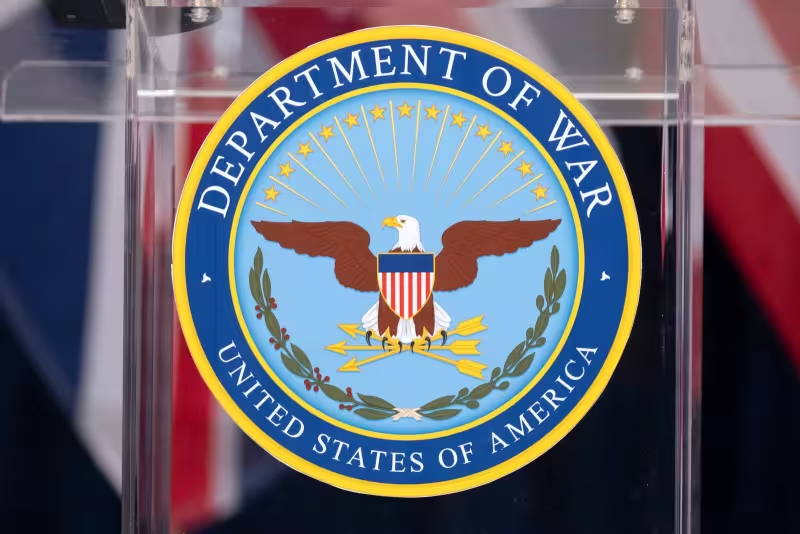
The Pentagon has cut its recognized religious faith and belief codes from 211 to 31, a sweeping revision ordered in a memorandum issued May 20, 2026. The change removes about 180 listed identities and directs the codes to be revised again within 60 days.
The memorandum was signed by Anthony Tata, the under secretary of defense for personnel and readiness, and says the revision was made at the direction of Defense Secretary Pete Hegseth. It says the narrower list will streamline the Department of War collection of religious preferences for service members and improve the delivery of targeted religious support from the chaplaincy.

The new list keeps major faith traditions and a wide range of Christian-based groups, including Agnostics, Buddhists, Hindus, Islam, Judaism and Sikh. But it drops many minority faith and worldview groups, among them Atheists, Asatru, Deists, Druids, Eckankar, Heathens, Humanists, Magick, New Age churches, Pagan, Rosicrucianism, Shaman, Spiritualists, Troth, Unitarian Universalists and various Wiccans.


The revision lands almost 10 years after the last official update, which was issued March 27, 2017 during President Donald Trump’s first term. That earlier change, endorsed by the Armed Forces Chaplains Board, was described as a way to standardize and better identify religious preferences recognized by the military services. The new memorandum does the same administrative work on a much smaller scale, but with a far sharper line over who counts in the Pentagon’s records.
That gap matters because the codes are used not just to file paperwork but to shape how chaplains plan support for service members. By trimming the list so dramatically, the Pentagon is telling commanders and chaplains to look through a narrower lens at religious needs even as the memorandum says the revision is intended to better serve them. The plan leaves open how the department chose the faiths to remove, and the memorandum does not say whether service members or chaplains objected before it was issued.
What happens next is spelled out more clearly than the rationale. The faith and belief codes are supposed to be revised within 60 days, which means the services now have a short runway to absorb a policy shift that changes both what gets counted and what gets supported. For many of the excluded groups, the question is no longer whether the Pentagon will recognize them in the same way; it is how the military will account for them at all.



