



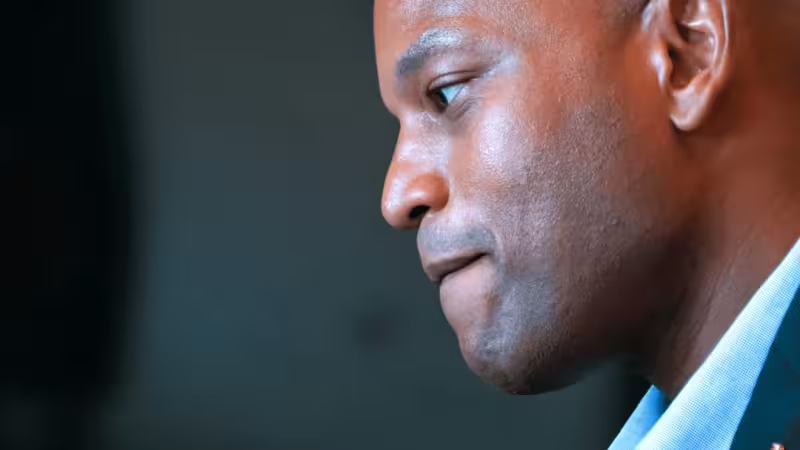
Wes Moore wrote in his 2015 book that he mourned 1st Sgt. Tobias "Toby" Meister at a funeral, then saw his name inside a casket and cried tears "for all of them." Meister had not died yet. He was killed 11 days later, on Dec. 28, 2005, when a roadside bomb struck his Humvee outside Asadabad in Afghanistan.
The detail matters because Moore’s military service has been a foundation of his public identity. As he built a national profile and moved into public office, he said of that service, "It’s been my foundation." He added, "It’s all I’ve ever prepared to do," and, "In some way, shape or form it’s the only thing that’s ever felt right to me."


The disputed passage appears in The Work: Searching for a Life That Matters, where Moore described a chaotic month in December 2005. On Dec. 8 that year, he was stationed at Forward Operating Base Salerno on the eastern edge of Afghanistan, sleeping in his tent unaware that the next day would bring rocket fire and news of his grandfather’s death. He later returned home to bury the man who had essentially been his father, eloped with his fiancée during that same month and was trying to finish a White House fellowship application while deployed. In the book, he wrote that when he saw the Rev. Dr. James Thomas’ casket, all of his emotion rushed out, that he also saw Toby inside it and that he felt "freer" when he left.
Moore later said the error was the result of poor editing and the effects stress, grief and time can have on memory. But the reporting did not stop with the funeral passage. A review of his public statements and writings also found other problems in how he described his Army service, including a 2006 White House Fellows résumé that presented him as a Bronze Star recipient even though he did not receive the medal until 2024, nearly 19 years later. On that application, he wrote, "For my work, the 82nd Airborne Division have[sic]awarded me the Bronze Star Medal and the Combat Action Badge."
Moore’s staff gave access to requested military records, some of which are not public, but the broader question remains whether the record that helped shape his rise has been fully corrected in the public view. He and Dawn Moore have said they were growing increasingly concerned about misinformation taking root, and for a politician widely seen as a potential 2028 presidential contender, that concern now cuts both ways: the scrutiny is not just about one sentence in one book, but about whether the story he told about service can still carry the weight it once did.



