



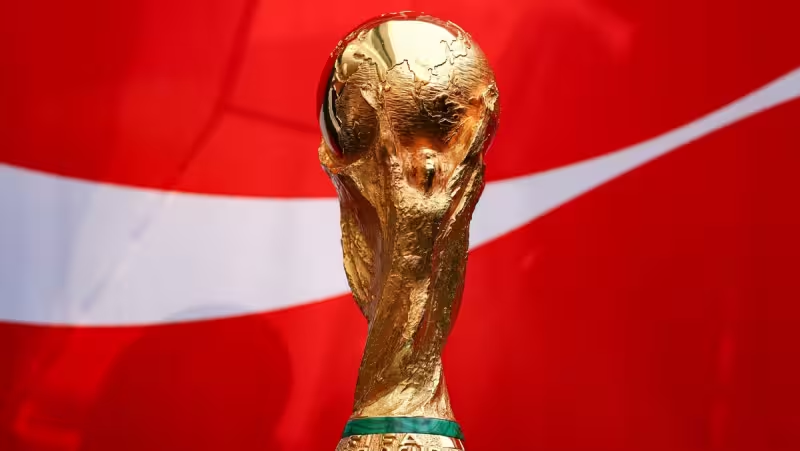
The 2026 FIFA World Cup will be the first edition contested by 48 teams, played across the United States, Mexico and Canada, with the tournament opening on June 11 in Mexico City and concluding with a final on July 19 in the New York and New Jersey area.
The expanded calendario mundial 2026 will feature 12 groups of four teams, each side playing three matches in the group stage. From those groups, the top two finishers will advance alongside the eight best third-place teams, producing a knockout stage that begins at a round of 32 instead of the traditional round of 16. In all, organizers have scheduled 104 matches across the three host countries.

Three nations will share hosting duties for the first time in World Cup history, and the jump from 32 teams to 48 adds 16 national sides to the field compared with recent tournaments. The structure — 12 groups, 4 teams per group, and the inclusion of eight third-place qualifiers — is the clearest map fans and federations have so far to plan around: group games, three matches each, then an expanded single-elimination phase beginning immediately with 32 teams.
Key dates to mark on any calendar: June 11, 2026, for the opening match in Mexico City and July 19, 2026, for the final in the New York/New Jersey area. Those bookends frame a month of play that will spread 104 matches through stadiums in all three host countries, increasing the tournament’s footprint and the number of match days required to complete the event.


The format change brings straightforward consequences: more teams, more matches and an earlier knockout round. It also changes qualification and advancement mechanics — with eight third-place finishers joining the round of 32 — which alters how teams approach group matches and how federations plan for travel and squad rotation across the tournament’s compressed schedule.
That last point is the central friction in this rollout. The expanded format increases the number of matches and reshuffles who advances, but the organizers have not said how those changes will affect competitive balance across 104 fixtures. Will the draw and match scheduling protect smaller nations from excessive travel and uneven rest? How will seeding and venue assignments be structured so that the round of 32 is a fair test and not merely a numbers exercise? Those questions follow directly from the announced calendario mundial 2026 but remain unanswered.
Practically, the next items to watch are the match schedule and the official tournament draw, which will place teams into the 12 groups and set the sequence of fixtures that determines travel patterns and rest days. Those procedural steps will shape whether the expanded World Cup increases opportunity — by allowing more nations to compete on soccer’s biggest stage — or whether it spreads the tournament thin in ways that alter its competitive spine.
For now, the facts are simple and dateable: a 48-team World Cup across three countries, 12 groups of four, group winners and runners-up plus eight best third-place teams advancing, a round of 32 to start the knockouts, an opening on June 11 in Mexico City and a final on July 19 in the New York/New Jersey area. The unresolved, and most consequential, question is how the match schedule, seeding and venue plan will address competitive fairness across those 104 matches — the detail that will determine whether the calendario mundial 2026 is a larger festival of football or a diluted championship.



