
“Ya puedo respirar,” Dayanara Torres said after watching her son Ryan step onto a runway for the first time at the inaugural Casa de Campo Fashion Week in República Dominicana.
Torres had not come simply as a proud parent. She traveled to the island as embajadora for the event and closed the show for Giannina Azar, then stayed in the wings as Ryan walked two designers after her. “No saben, yo pasé, cerré el show de Giannina Azar, pero yo no estaba nerviosa por eso, yo estaba nerviosa por mi hijo, que venía dos diseñadores después,” she said, describing a nervousness that eclipsed the spotlight she had just left.

Her anxiety was short-lived. She said she missed his first pass—“No lo vi cuando salió en la primera ronda, pero lo vi ya en la segunda, y ahí sí lo grabé, lo pude gozar, estaba temblando”—and when she did see him again she recorded the moment, overcome with emotion. “No me puse a llorar aquí, pero sí estoy segura de que las venas se me brotaron de la emoción. Lo hizo tan bien,” she said, calling the walk spectacular and quarters away from maternal pride.
Ryan himself was plainspoken about the experience. “Estuvo muy divertido,” he said, admitting he had been nervous but pleased by how it went. “Me gustó. Quizá continúa haciéndolo, es una nueva experiencia y fue definitivamente asombroso.” Those words are the only concrete sign of what comes next: interest, not a plan.

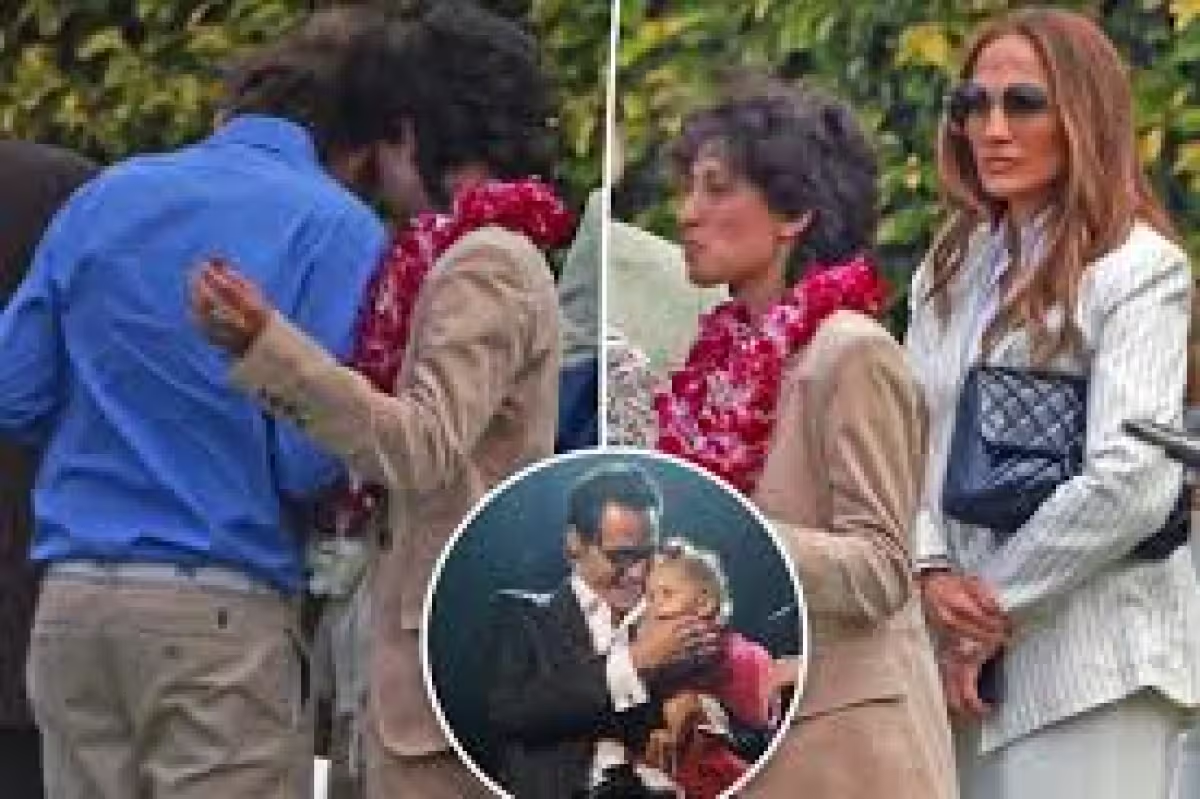

Torres used the moment on the Enrique Santos Show to push back at social-media critics who focused on Ryan’s expression. She quoted commenters who complained that he did not smile, and she answered them with a short primer on runway craft: “La gente de las redes, rápido, los policías en las redes: 'Este niño no sonríe'. Gente, ninguno se supone que sonría. Esa es la forma de modelar. Y la rapidez también. Todos iban a la par.”
Her defense was technical as well as familial. She outlined the preparation behind every step—models rehearsed “por como tres días” ahead of the show—and explained why the walk looks the way it does: speed, seriousness and a fixed point of focus. “A ellos los enseñan, tienen unos ensayos por como tres días donde están practicando lo mismo, caminar rápido. Ahí no hay tiempo que perder. No es acerca de ti, es de la ropa. Rápidamente, seriedad, punto fijo y ya,” she said, reminding critics that the runway is a presentation of clothes, not a moment for personal expression.
Torres also described the small, private instructions she gave her son: “Yo le decía a Ryan, no prestes atención a los lados, solamente derecho. Él lo hizo exactamente como le dije. Y yo le grité: '¡Ryan!', y ni me miró. Lo hizo espectacular. ¡Ay, estoy orgullosa de mí hijo!” The image is a tidy one—an experienced former Miss Universo and radio locutora teaching the basic rule of a runway and then watching it executed under pressure.
The public argument over whether a runway smile is required is less important than the fact that the family treated the evening as a professional debut. Torres was on site in an official capacity; Ryan had rehearsed; he completed two rounds and left the stage saying he enjoyed it. Critics can squint at his expression, but the mechanics of the show and his own approval of the experience are plain.
Will he do it again? The only definitive answer is the one Ryan gave: he might. Torres’s visible pride and her public rebuttal of online nitpicking create momentum; they do not create commitments. For now the debut stands as a successful first step—an experienced mother and event ambassador watching, recording and defending a son who found the runway “muy divertido” and left the door open to a second walk.