



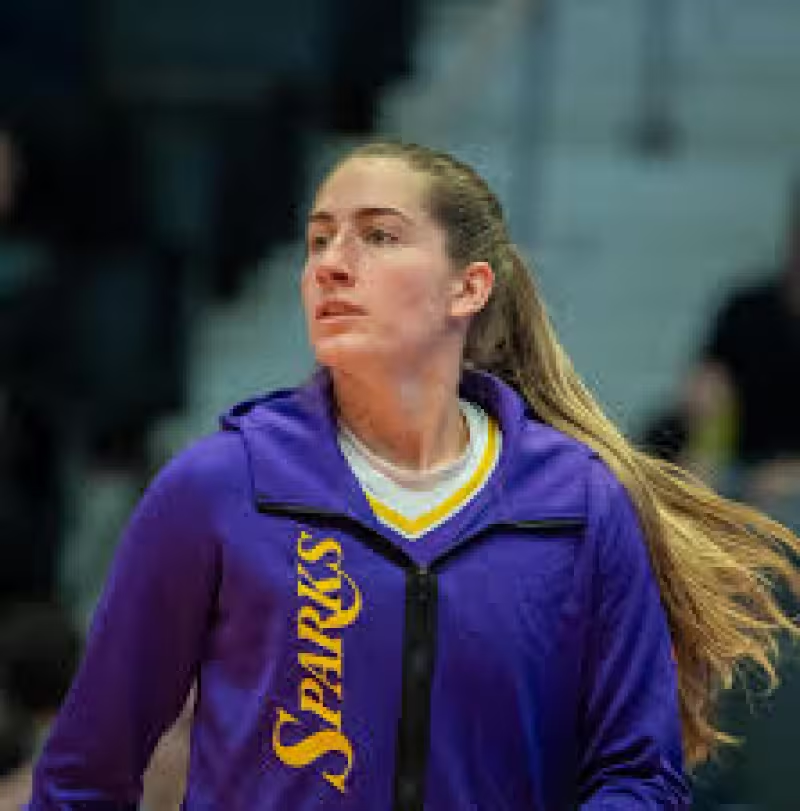
“She’s a generational player. She came with a fan base of millions, and it’s helping the league,” Nancy Lieberman said, and then added the blunt line that has dominated conversations inside the sport: “They don’t get the $2.2 billion collective bargaining agreement, honestly, without her being there.”
Lieberman’s claim lands against hard numbers. In March the WNBA and the Women’s National Basketball Players Association reached a tentative, seven-year CBA that establishes the league’s first-ever revenue-sharing model averaging 20% of league and team revenue, nearly quintuples the team salary cap and promises major upgrades to player benefits, family-planning support and facility standards.

Those provisions translate to higher pay across rosters, expanded health and parental benefits, and a financial architecture designed to grow player earnings as league revenue grows. The deal’s headline figure — $2.2 billion — is the shorthand for a shift in bargaining power the union and league negotiated this spring; Lieberman framed Clark’s arrival in 2024 as the catalytic element that made those terms possible.
Clark entered the WNBA in 2024 after a record-setting college career at Iowa and carried into the pros what Lieberman described as “a fan base of millions.” The rookie’s numbers don’t appear in the CBA text, but her presence has meant massive television audiences, sold-out arenas and a national conversation about the league that organizers say they can now quantify and monetize.

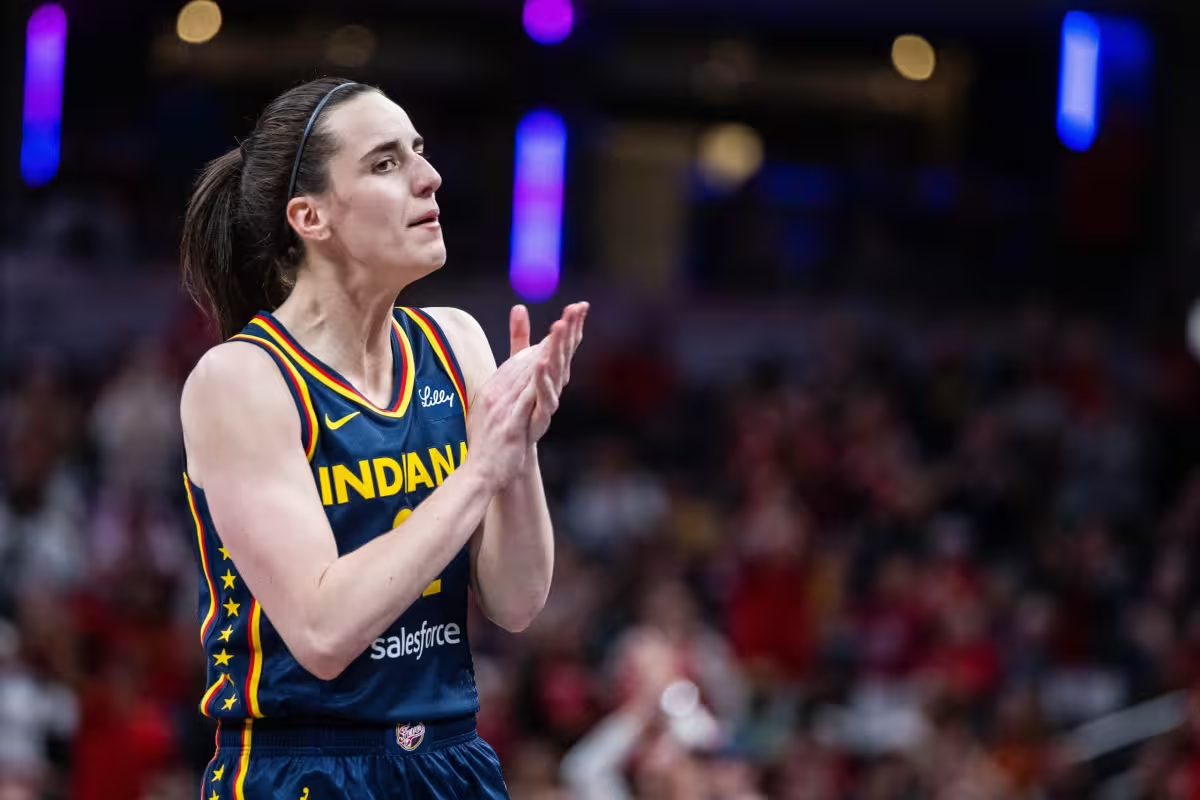
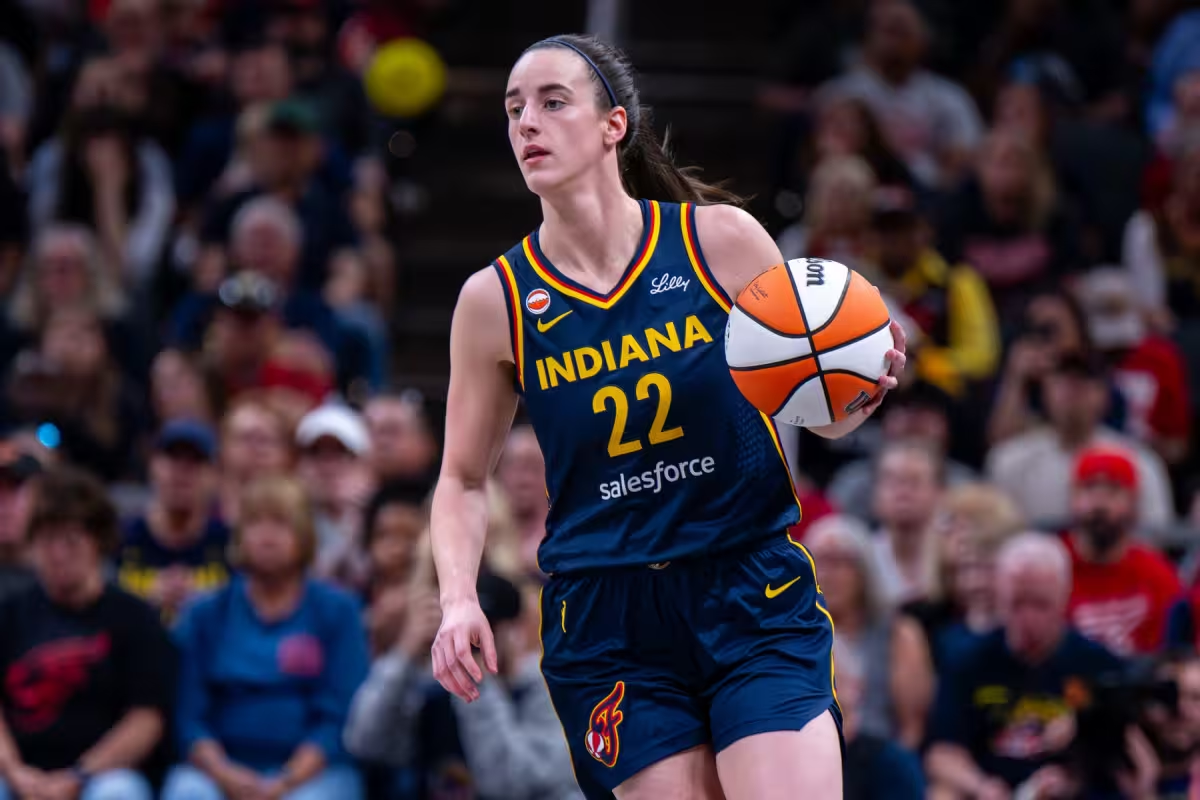
Lieberman compared Clark’s effect to transformative figures in other sports: “She’s done her job, just like Tiger did, just like Michael Jordan did,” she said, and added, “You can’t deny she brings the media,” and, pointedly, “You’re talking about her. You probably weren’t talking about anybody four years ago.” Those comparisons underline the argument: a single transcendent figure can change market expectations and force institutional responses.
At the same time, Lieberman did not present Clark as a lone wolf. “Now, you take A’ja, you take Napheesa, you take Stewie, you take Kelsey Plum, and you take Sabrina, and all these other great athletes, and now you put them together — that’s very formidable,” she said, highlighting how the league’s earning power rests on an assembled roster of established stars as well as new entrants.
That observation exposes the story’s tension. Public attention — and some of the commercial leverage tied to it — is concentrated on one player. But the CBA’s architecture rewards collective growth: revenue sharing, a higher cap and improved benefits lift every player under the agreement, not just the star drawing headlines. The open question Lieberman’s comments sharpen is not whether Clark mattered; it is how much of the $2.2 billion bargain is a direct response to her arrival versus the cumulative rise of the league and its existing stars.
For players the tentative deal is concrete progress: bigger paychecks, broader benefits and more robust facility standards. For the league it is a bet that national attention can be converted into lasting revenue streams. What comes next is procedural: the agreement remains tentative until the formal ratification process concludes, and there is no public final ratification date yet. The unresolved calculation — the precise share of causal credit owed to Clark’s audience versus long-term league trends and bargaining strategy — is now the central question shaping how fans, executives and players will remember this moment.



