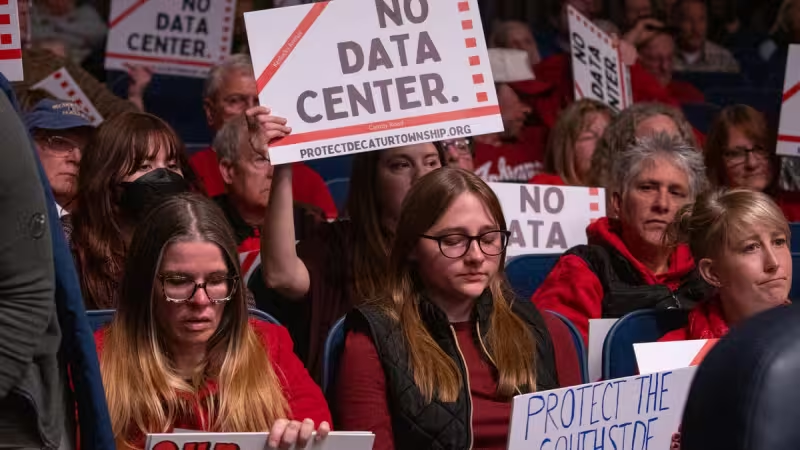
On June 5 in Indianapolis, U.S. Sen. Elissa Slotkin told Indiana Democrats and swing voters that utility bills and anxiety about data centers and artificial intelligence are now front‑of‑mind political issues. Slotkin walked into a Speedway focus group where voters had already been talking about rising energy costs; one woman told the room a friend’s daughter had been discouraged from becoming a paralegal because “artificial intelligence might kill those jobs.”
The concern Slotkin heard in Indianapolis matches a wider measure of public unease: Gallup has found that 70% of Americans oppose building data centers in their areas. A man in the room pointed to a local flashpoint — Shelbyville Mayor Scott Furgeson’s caught-on-video remarks about anti‑data center signs in front of “shitty houses” — as the type of community anger that is spreading beyond party lines.

Slotkin framed those complaints inside a broader campaign task list she unveiled last year. She introduced an economic war plan focused on jobs, schools, housing, energy and healthcare, and told the Indianapolis audience that AI and new data center projects sit downstream from housing, energy and healthcare in her pyramid of priorities. “I’ve got Democratic colleagues who are just pure populists, like, ‘Let’s do a moratorium, let’s say no.’ They don’t want to even touch it. They’d love to just put a blindfold on and pretend that saying no to everything is actual policy,” she said, laying out a choice between reflexive bans and engagement.
Slotkin did not shy from sharp criticism of how tech projects are being sold to communities. “Fire everyone who’s doing the community outreach for AI data centers, because they’re doing a horrible job,” she said, faulting both the messaging and the missing answers locals demand about taxes, jobs and utilities. She added a lighter, clarifying line about the kind of national leaders she wants: “I’m looking for serious people who are not boring,” and conceded, in an offhand moment of self‑aware pacing, “I feel like I have a couple of ounces.”
The tension Slotkin laid out is political as well as practical. She said some Democratic colleagues favor blanket moratoriums; Republican colleagues, she said, generally resist federal involvement — “And then I have Republican colleagues who are like, ‘I don’t believe in federal involvement in general, and so I … let each state a” — leaving the debate over the right level of government responsibility open. That split matters because local decisions about tax breaks and exemptions have real budget effects: Ohio committed a total of $2.3 billion in sales tax exemptions for data centers and later froze future issuances after the tax breaks cost the state $1.6 billion in lost revenue in 2025.
Other lawmakers at the convention echoed the gap between focus and consequence. Rep. Tristan Rader told the audience, “I think it’s absolutely ridiculous that we’re spending all this time going after caregivers of disabled children as fraudsters … when we’re handing out billions of dollars to data centers and nobody even seems to know about it?” His point sharpened a common voter complaint: enforcement and oversight feel mismatched to the size of the subsidies being granted. Local officials and analysts have pushed back that exemptions can change as projects grow; as Mason Waldvogel put it, “The exemption amounts are based on the qualifying investments companies make. In some cases, companies ultimately invest more into projects, which can result in a larger exemption than initial estimates.”
The Indianapolis stop also overlapped with routine party business: Beau Bayh won the nomination for secretary of state at the Indiana State Democratic Convention on June 5. Slotkin’s remarks at the convention were not a policy rollout so much as a listening tour update — a public inventory of the issues she says will shape the 2028 conversation if candidates and parties do not answer voters’ questions about power, jobs and community control.
Slotkin is continuing town halls and focus groups across the Midwest while asking voters what they are looking for in 2028. The unresolved question she left on the stage is concrete: can Democrats and Republicans craft responses to data center growth, rising utility bills and AI‑driven job fears that satisfy communities without defaulting to moratoriums or hands‑off federalism? Until leaders produce those concrete fixes, Slotkin argued, the politics of resentment around data centers will only deepen.
Reporting on local fights over land use and energy policy suggests the debate is already broadening: an Alaska $500 million planned data center on the North Slope and the Maysville land fight that echoes in Lower Mount Bethel both show how economic promises and neighborhood pushback can collide. Slotkin’s tour will test whether listening translates into policy with answers voters will accept before 2028.