RadioLink Internet notified customers by email last week that it was shutting down immediately, then the company’s owner pulled the plug — taking the website, phone lines and customer support offline without further notice.
The sudden closure left residents across roughly 5,000 square miles of southern Minnesota without service. Owner Daniel Petsinger shut down the provider from his home in Ellendale and told customers any questions about refunds should be handled through the Minnesota Bankruptcy Court.

The interruption became real for subscribers on June 1, when Allison Ludeman came home from work and found her connection dead. Ludeman said she and a neighbor had already paid for service in advance and that, in her area, cell coverage is poor enough that broadband is essential; she said an earlier warning would have let her make other plans and would have offered some chance of recouping prepaid fees.
Petsinger framed the shutdown as the outcome of a shrinking customer base and a changing political climate in some communities his network served. He accused local officials of choking competition and said actions by municipalities contributed to the decision to close.
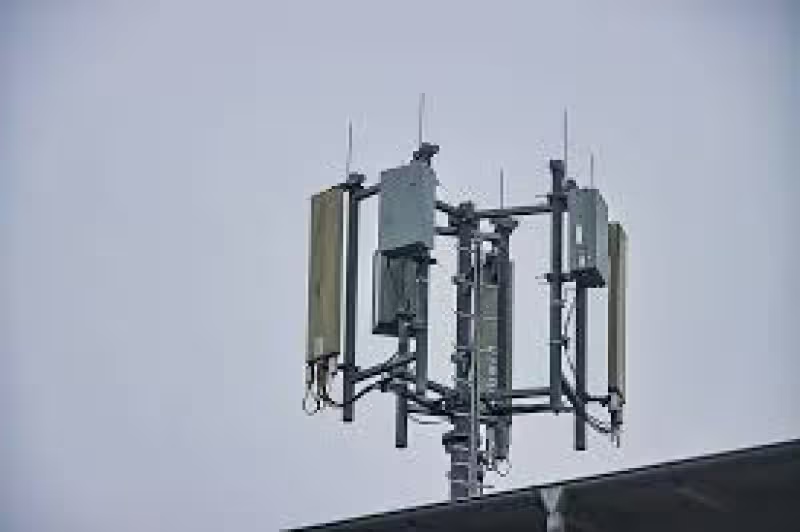
That accusation centers on actions by New Richland and Ellendale. New Richland’s city council voted in May 2026 to remove RLI equipment from its water tower and gave a 60-day notice; the city says its prior agreement with RadioLink ran from 2013 to 2018. Tyler Lendt, speaking for the city, said ending the arrangement was intended to make sure the city was fairly compensated and to protect a critical piece of municipal infrastructure.
The shutdown raises immediate practical questions. For many rural customers, RadioLink was not a secondary option but the primary way to work, study and access services. Petsinger directed customers seeking refunds to the Minnesota Bankruptcy Court, but he did not provide details on how many subscribers were affected or how the court process would handle prepaid accounts.
That gap — the number of customers left disconnected and whether their prepaid fees will be returned — is now the most pressing issue for people who relied on the service. Ludeman said she depends on the connection for remote work and that losing service without notice left her scrambling. She told reporters it would have been helpful to have advance notice so she could have arranged an alternative and that she hopes the bankruptcy process will return the fees she paid.
Petsinger pushed back on the suggestion he should have given customers more lead time, noting that small businesses rarely provide formal advance notice when they close. He asked rhetorically when a small business last warned customers before shutting down, arguing that immediate cessation is a common outcome for proprietors who decide to end operations.
The cities at the center of Petsinger’s complaint maintain their decisions were contractual and protective. Lendt said the council’s move to remove equipment followed a review of the old contract terms and a desire to ensure compensation and safeguard the water tower, language he framed as a municipal responsibility rather than an effort to shut down a competitor.
For now, affected customers are left with two concrete next steps and one unanswered question. The concrete steps: contact the Minnesota Bankruptcy Court for information about potential refunds, and seek alternative connectivity where possible. The unanswered question — and the one that will shape whether subscribers are made whole — is how many accounts will be recognized and paid out through the court process and how quickly that will happen.
The bankruptcy filing is the last official route Petsinger cited; beyond that, there is no public timetable for restoring service, reallocating equipment, or resolving the dispute over the water tower. The coming days will show whether the court process can deliver refunds to prepaid customers across the affected region or whether many will be left to find replacement service on their own.