



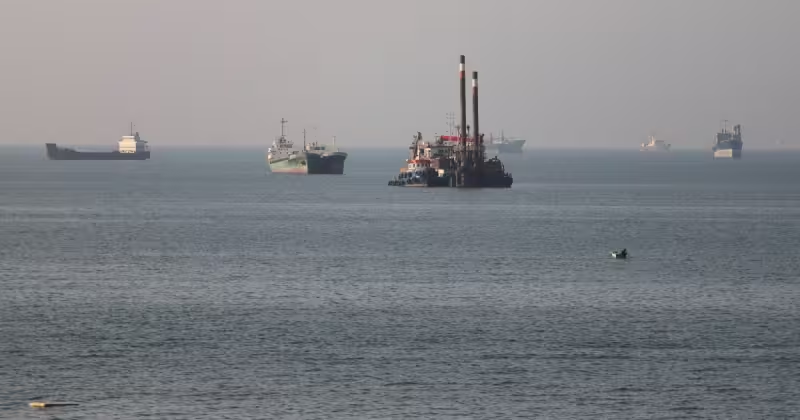
Iran’s Revolutionary Guard said early this morning that Iranian forces had targeted a number of American bases in the Middle East after the United States launched fresh strikes in retaliation for the downing of an American Apache helicopter.
U.S. Central Command confirmed that strikes were launched against Iran over the downed aircraft and said the operations were over shortly after 9 p.m. ET. The downed Apache had been patrolling over the Strait of Hormuz and, U.S. officials said, its two helicopter crewmembers were rescued by an unmanned boat after the aircraft went down off the coast of Oman.

The Revolutionary Guard’s operational arm, Khatam al‑Anbiya, said Iranian forces hit “a number” of American bases and warned of “devastating and more wide-ranging strikes” if the United States continued attacks. Tehran has not claimed responsibility for the helicopter’s downing.
Those admissions — an American admission of retaliatory strikes and an Iranian claim of counterstrikes on U.S. facilities — mark a rapid escalation in a confrontation that has centered on freedom of navigation and military activity around the Strait of Hormuz. U.S. Central Command’s brief timeline put the U.S. strikes and their conclusion in a single night of operations, but Iranian statements signaling further action removed any immediate sense of de‑escalation.
The exchange matters now because it replaces a tense standoff with direct, reciprocal military actions on both sides and because both capitals described different next steps. Iran’s foreign ministry spokesperson said Tehran will “need to assess the situation” before it can move forward with peace talks, a public narrowing of options that undercuts momentum toward diplomacy.
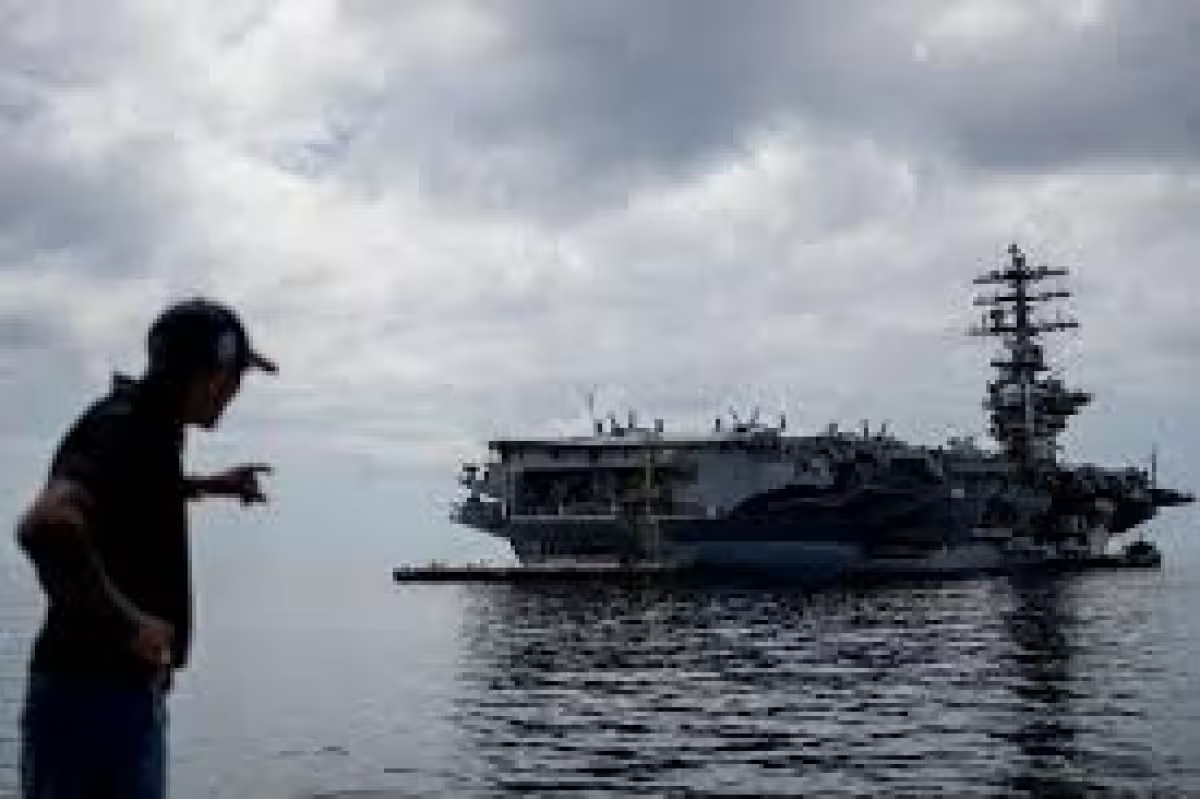

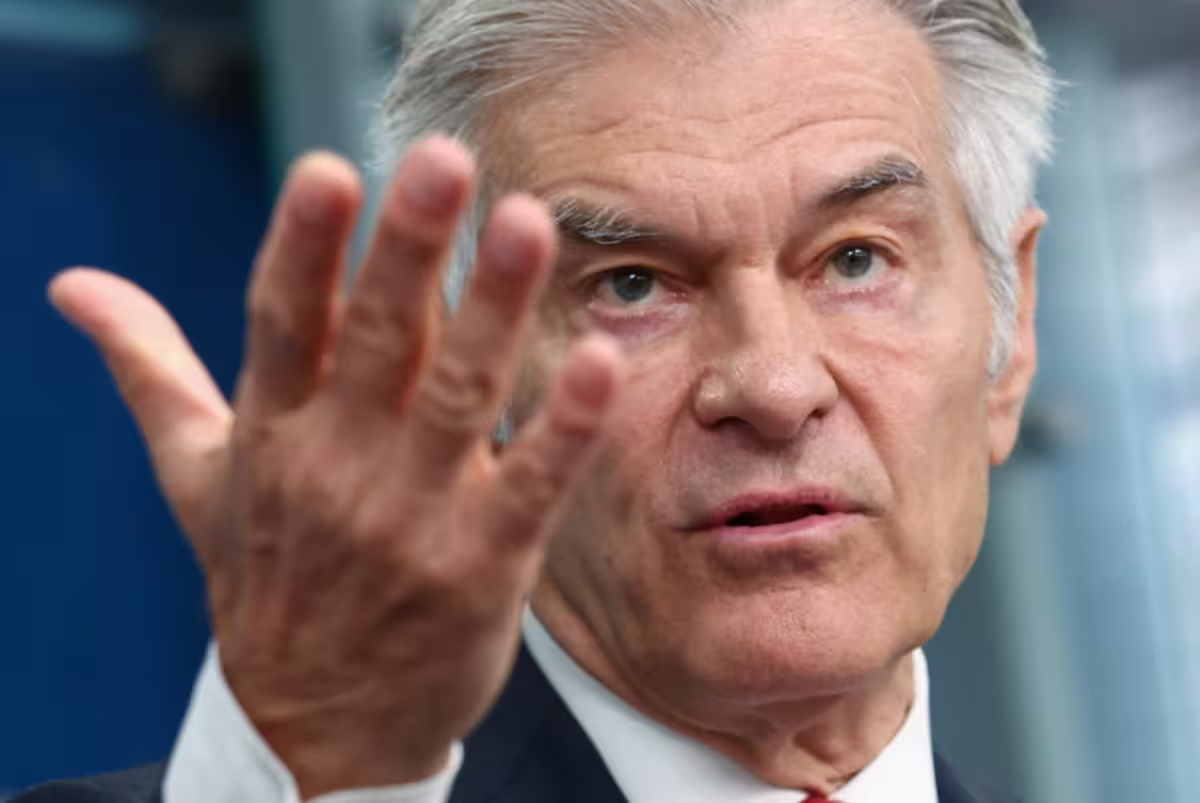
That diplomatic uncertainty sits alongside political signals from the U.S. side that point in another direction. Weeks ago, former President Donald Trump said, “We’re in the final throes of what will be a very, very good deal” to end the war and reopen the strait. His continued public optimism contrasts sharply with Tehran’s declaration that it must first evaluate the new military developments.
The mismatch creates the central friction: one side framing a deal as imminent while Iran’s military vows further strikes and Tehran’s diplomats insist on reassessment. The result is a fractured picture in which public political optimism and military threats proceed on different tracks, raising the risk that tactical retaliation will outpace any negotiating channel.
Operational details remain sparse. U.S. Central Command confirmed the strikes and the rescue of the two crewmembers but offered no public estimate of damage to Iranian forces or of any casualties. Khatam al‑Anbiya’s description of hitting “a number” of American bases gives a count only in general terms and doubles down on the promise of “devastating and more wide-ranging strikes” should U.S. attacks continue.
The most consequential unanswered question is whether either side will translate these public threats into a sustained campaign or step back to reopen diplomacy. Tehran’s call to “assess the situation” suggests a pause before it decides whether to press for more attacks or to negotiate. Washington’s overnight strikes and the rescue of the helicopter crew demonstrate both capability and resolve, but they do not signal whether the U.S. will accept a reciprocal de‑escalation or prepare for further operations.
Until that choice is made, American bases across the region and the fragile prospects for talks will hang in a tense balance: an immediate, reciprocal strike exchange has already taken place; whether it becomes a wider confrontation or the last round before real negotiations resumes is the single question shaping what comes next.



