



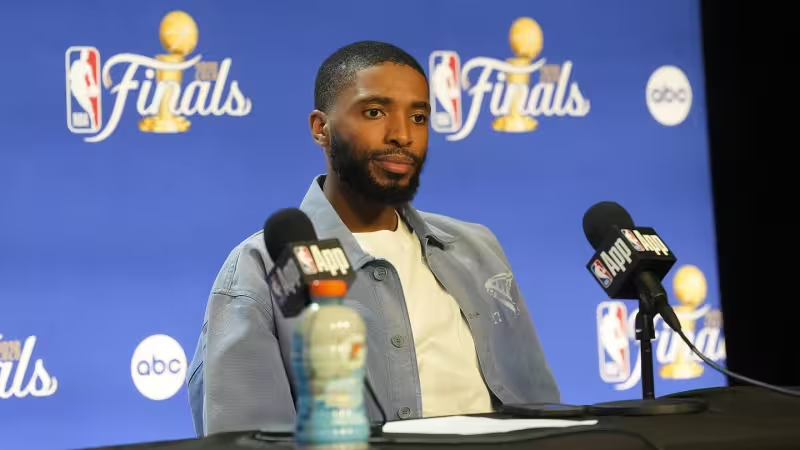
The New York Knicks will enter the offseason with only eight players under contract and sit less than $7 million from the NBA’s first luxury-tax apron, placing the franchise on a narrow path: keep core depth and push into the second apron, or surrender bench continuity to preserve cap flexibility.
That baseline is concrete. The club’s five starters are signed for the next two years, and the other three guaranteed roster slots belong to reserves Deuce McBride, Tyler Kolek and Pacome Dadiet. The combination leaves the Knicks with a compact group of contracted players and little room to add without triggering punitive team-building penalties.

The principal drivers of the coming decisions are the contracts owed to several rotation players. Mitchell Robinson, Jordan Clarkson and Landry Shamet are pending free agents; Robinson and Shamet have been regular contributors in Mike Brown’s rotation. League sources expect the Knicks to be willing to go into second-apron territory to keep both Robinson and Shamet, and both are expected to receive two-year offers from the club. A market-rate deal for Robinson would likely require a salary above the mid-level exception.
The weight of those choices matters because the roster has delivered at the highest level this season: New York is two wins away from snapping a title drought that dates to 1973, and the team’s construction — an elite starting five supported by a bench that produces high-end individual performances — is the engine behind the run. Preserving that engine by signing rotation pieces costs real dollars; the Knicks already sit within seven million dollars of the first apron, and the salary-cap architecture means the franchise will be working inside the second apron if it pursues the anticipated offers.
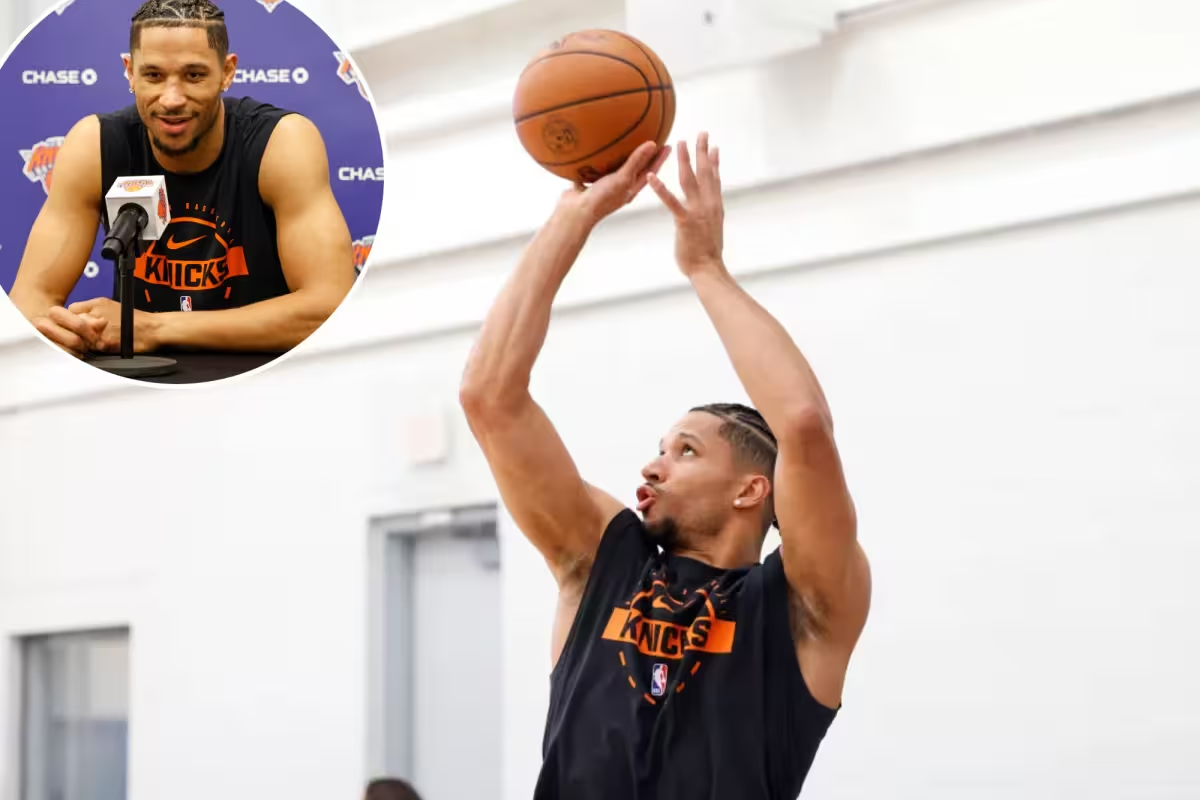
The financial mechanics are stark. Crossing the first apron triggers restrictions that change roster-building options; crossing into the second apron brings heavier penalties and longer-lasting team-building effects. The club’s likely plan, as depicted in league assessments, is to absorb second-apron penalties long enough to secure two-year deals for the bench players it values, then execute a strategic duck under the aprons later to reset the longer-term restrictions. That approach buys short-term continuity at the expense of higher immediate tax bills.
The practical consequence for the Knicks roster is tightened flexibility. The franchise has deliberately been built around starters trusted to carry workload while the second unit supplied occasional breakout performers. That model has produced results this season, but it leaves little margin when multiple role players hit free agency simultaneously — exactly the situation New York faces now.
The immediate calendar is simple: free agency and negotiations. The Knicks are expected to tender two-year proposals to Robinson and Shamet and to evaluate how Jordan Clarkson factors into their plans. Whether those offers are accepted, matched, or outbid will determine whether New York actually crosses the second apron and for how long it remains there.
The unresolved question that will define the offseason is clear: will management pay the compounding cost beyond that two-year window to preserve a championship window now, or will it trim immediately and accept a shorter-term sacrifice in depth to avoid prolonged second-apron penalties? The answer will decide how long this core — the starters plus the bench pieces who have made the group work — can realistically stay together.



