



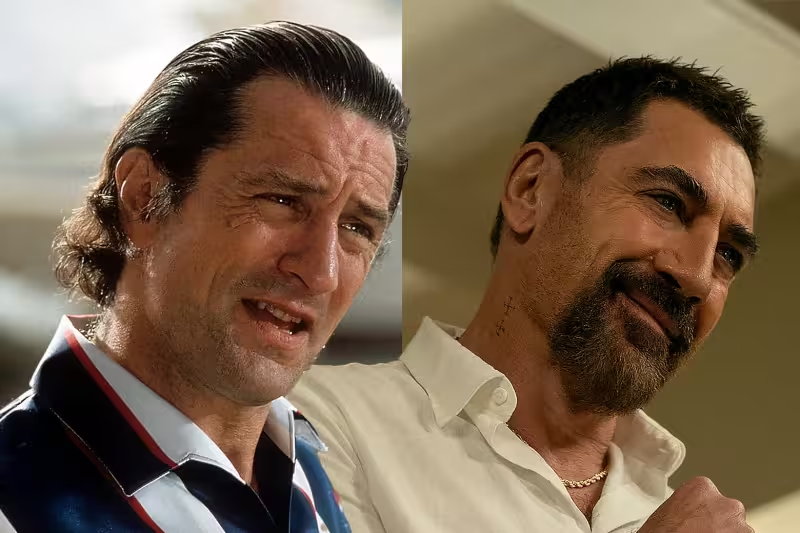
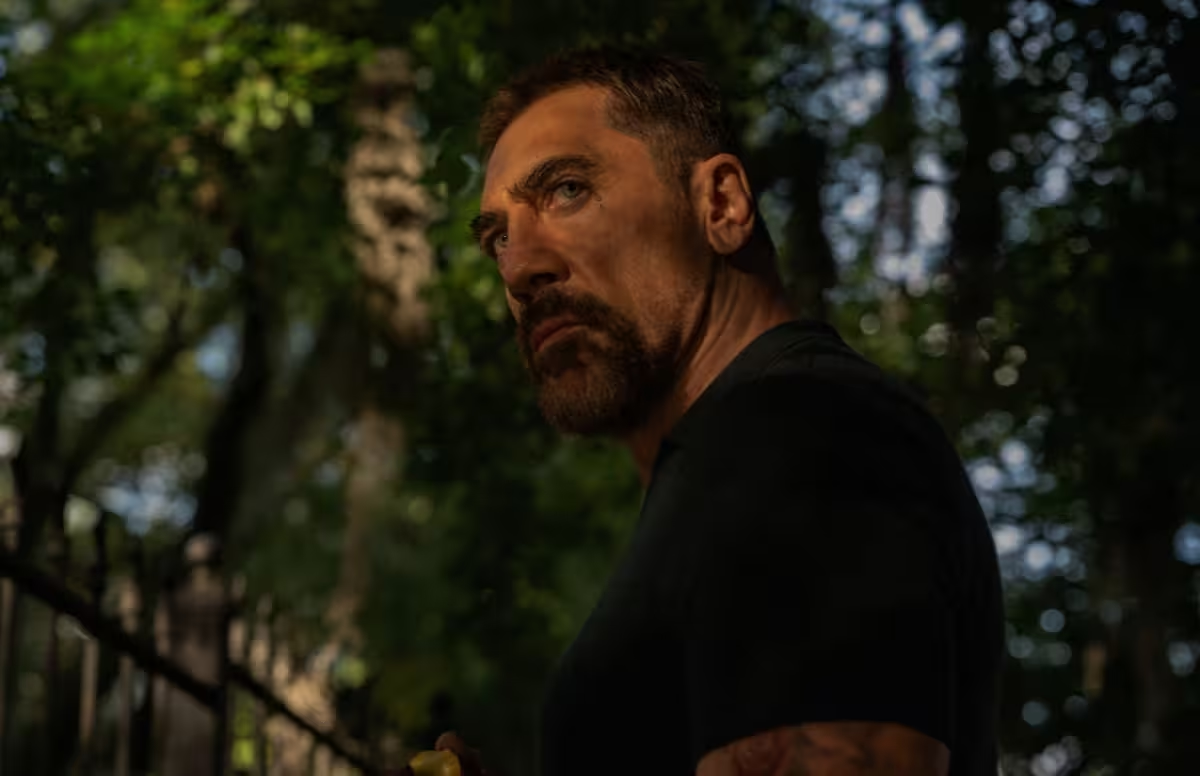
Apple TV’s new 10‑part Cape Fear arrives with Javier Bardem in full control of Max Cady, and his performance is the engine that keeps this remake moving across ten hours.
Creator Nick Antosca has unpacked John D. MacDonald’s 1957 novel The Executioners into a serialized hunt between the Bowden family—lawyers Anna and Tom, played by Amy Adams and Patrick Wilson—and the man they once helped convict. The show reorients the old two‑hour revenge plot into slow, corrosive harassment: drowned skunks in the pool, repeated intruder alarms, and a son, Zach, who proves especially vulnerable as the Bowdens’ private life frays.

Bardem’s Cady arrives with a full backstory: jailed for the murder of his wife after Anna advised him to plead guilty in hopes of a lighter sentence, then freed 17 years later after new evidence cleared him. The series opens with a stark scene—one woman taking the rap for a murder so Cady can get out—that immediately rewrites who the antagonist is and why he might return with a grudge.
Critics have seized on Bardem’s relish for the role. One review argued he seems to be having the absolute time of his life as he alternates charm and menace, turning Cady into a figure who can be momentarily sympathetic before snapping back to terrifying. Another critic called the show a wild ride, and yet another praised the decision to stretch the suspense over ten hours, delivering menace and charm in measured doses to keep viewers hooked.
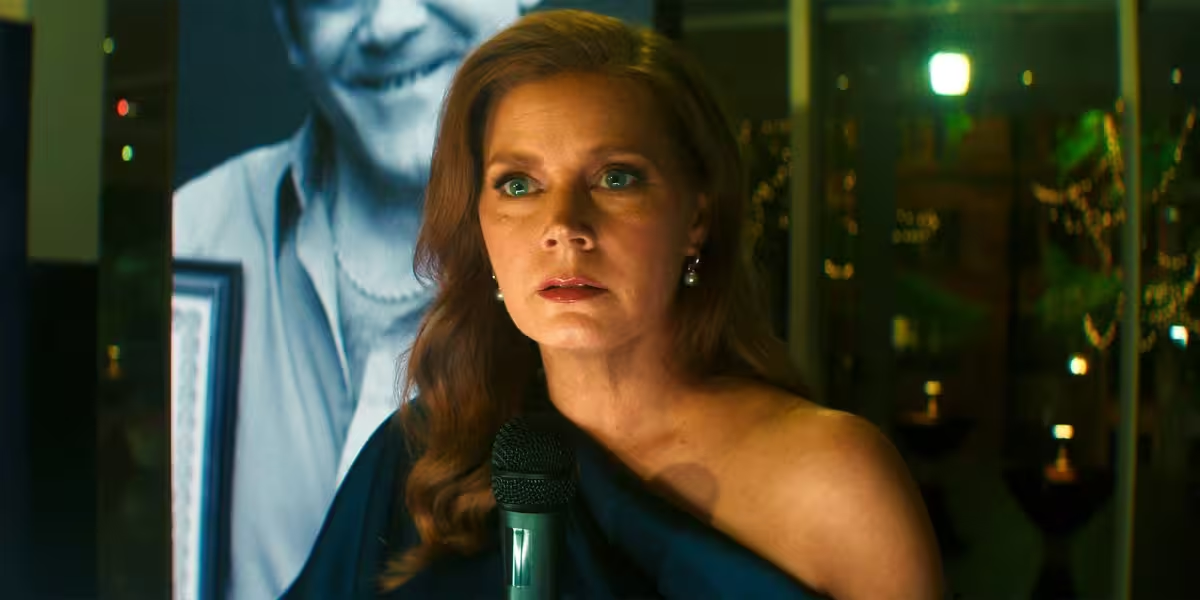

The evidence that the series deploys for its case against Cady is often small and specific: the Bowdens’ past courtroom decisions, the resurfacing of a charity client’s fatal case, and an escalation that reads less like blunt force and more like intimate torture. Amy Adams’s Anna is haunted in ways the earlier screen versions never fully allowed—she was pregnant with daughter Natalie during the trial and remains convinced of Cady’s culpability even after his legal exoneration, a psychological insistence that sits uneasily next to the court record.
That unease is the show’s central dramatic friction. The legal file says Cady was cleared; Anna’s memory and guilt say otherwise. The series mines that mismatch for tension: friends and neighbors see a free man with a tidy record, while Anna sees the man who once framed the family’s life. The drama does not resolve the contradiction in the first episodes; instead it uses it to ratchet dread around the Bowdens’ home and to complicate viewers’ loyalties.
Cape Fear also places itself in a lineage. This is the third screen adaptation of MacDonald’s book under the Cape Fear title—the 1962 film that starred Robert Mitchum and Gregory Peck and the 1991 Martin Scorsese remake with Nick Nolte and Robert De Niro—yet Antosca’s version aims less to reproduce either picture than to rewire the story for contemporary anxieties, probing modern weaknesses, fears and pressure points through legal, domestic and social optics.
Apple TV will make its case to viewers immediately: the first two episodes drop on Friday, setting the tone and the moral puzzle; the streamer has not confirmed the rest of the rollout. The most consequential unanswered item—what exactly the new evidence was that exonerated Max Cady—remains deliberately vague in these opening hours. That gap is the show’s pivot: the legal record clears Cady on paper, but the series delays a full accounting, forcing the audience to choose whether to accept a court’s verdict or Anna’s lived certainty.
In practical terms, the answer to what comes next is simple and deliberate: watch. Bardem’s performance and the ten‑hour structure mean the series is paced to reveal its proof over time, not in a single reveal. If you want immediate closure on the exoneration, Cape Fear will frustrate you; if you want a character study of escalating menace and a definitive, theatre‑scale take on Max Cady, Bardem provides it and the next episodes should offer the specifics the opening leaves out.



