




Microsoft stock closed out May up 10.4%, beating broader indexes, then reversed sharply into June — down roughly 7.5% early in the month as investors sold into strength. The S&P 500 rose 5.2% in May and the Nasdaq Composite gained 8.4%, underscoring how much of Microsoft’s rally was driven by sector momentum rather than company-specific change. Microsoft remains roughly 14% below its level at the start of 2026, and the swing from a double-digit monthly gain to a steep early‑June drop tracked a fresh wave of market concern after the Bureau of Labor Statistics’ May jobs report.
The rally that carried the stock through May followed Microsoft’s quarterly report at the end of April: non‑GAAP adjusted earnings per share of $4.27 on revenue of $82.89 billion, ahead of the average analyst forecast of $4.06 and $81.39 billion. Those beats helped support bullish trading in AI and tech names and fed a stretch of positive analyst commentary. Still, the company’s guidance clouded that picture — its revenue outlook midpoint sits inside a $86.7 billion to $87.8 billion range while the average analyst expected $87.53 billion — a narrow miss that left the stock vulnerable once macro risk reappeared.


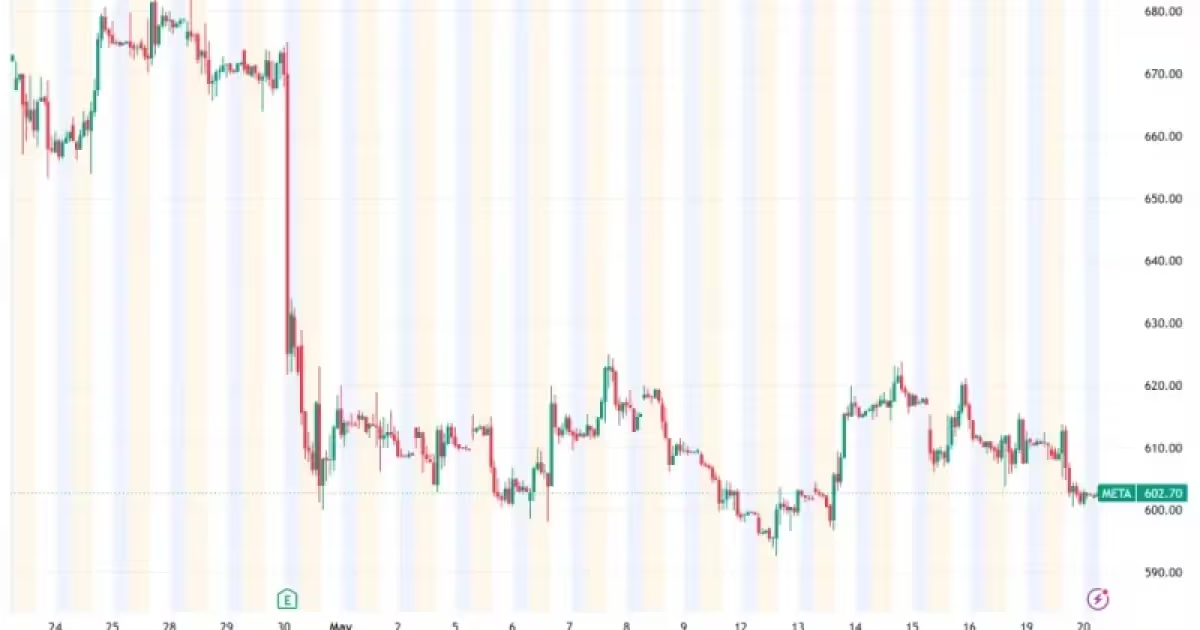

The immediate catalyst for the early‑June sell‑off was the May jobs report published last Friday, which showed job growth far stronger than anticipated. Investors interpreted the surprise as a potential obstacle to easier monetary policy: stronger employment raises the odds that the Federal Reserve will prioritize combating inflation and could choose to raise interest rates. Growth stocks tend to perform much better in a low‑rate environment, so the combination of a guidance shortfall and renewed rate anxiety hit Microsoft harder than the raw earnings beat might have suggested.
The market’s reaction split the story in two. On the one hand, Microsoft’s reported profit and sales outpaced consensus, supplying a concrete justification for the May advance. On the other, the company’s guidance midpoint sitting below the street estimate created a fresh vulnerability that the jobs print exploited. That contradiction — solid near‑term results paired with a forward projection that underwhelmed analysts — helps explain why a strong earnings report did not prevent a quick reversal once macroeconomic news turned hawkish. The stock’s year‑to‑date drop of about 14% also reflects broader valuation pressure as investors priced in possible AI‑related disruption to parts of Microsoft’s business.
What happens next is the central open question for shareholders. If the Federal Reserve leans toward higher rates in response to persistent strength in the labor market, the pressure on growth names including Microsoft could intensify and extend the June decline. Conversely, if the labor numbers prove temporary or the Fed signals tolerance, the company’s earnings beats give it a clear foundation to regain lost ground. For now, the microsoft stock price appears to be trading more on macro expectations than on the specific results in Microsoft’s last report; the next durable move will likely hinge on further jobs data and any fresh signals from policymakers about the path of interest rates.



