



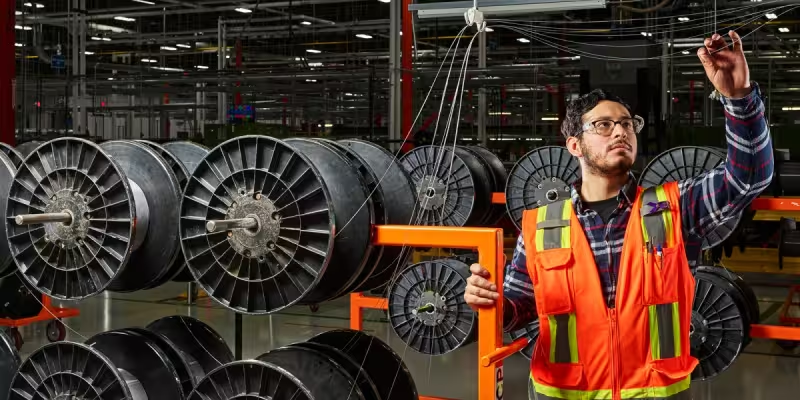
Amazon announced an agreement with Corning to boost U.S. fiber optics manufacturing, a multibillion-dollar deal that the companies say will create 1,000 advanced manufacturing jobs in North Carolina.
The announcement says the agreement will also support hundreds of construction jobs, expand Corning’s North Carolina facilities and establish a new workforce development program tied to that buildout.

The scale is clear in one number: 1,000 advanced manufacturing positions targeted for North Carolina, backed by a company statement that frames the arrangement as a multibillion-dollar investment in domestic fiber-optic production.
The deal’s immediate consequence is practical: it pairs a major customer and a major U.S. manufacturer to increase domestic capacity for fiber optics while routing construction and related work through the regional economy. The workforce program is meant to supply trained technicians for the expanded operations.
Put in context, the announcement is presented as part of broader efforts to boost U.S. fiber optics manufacturing by enlarging Corning’s footprint in North Carolina. Corning’s facility expansion is the operational hinge of the deal; the companies say the investment will support both the factory buildout and the new training pipeline.
But the public disclosure leaves a critical gap. The announcement does not specify when the 1,000 advanced manufacturing jobs will begin, nor does it provide a timetable for when the expanded facilities will be completed and operational. Nor has the statement detailed the precise total of the multibillion-dollar commitment.


That gap matters because the difference between a multiyear buildout and an immediate hiring push determines how quickly the economic effects — payrolls, construction spending, training slots — materialize for the community. The announcement ties concrete job counts to an expansion, but the missing schedule means officials, workers and local contractors cannot yet map those figures to hiring windows or project milestones.
For workers in North Carolina the headline number is straightforward. For planners and local officials the unanswered questions are as concrete as the jobs themselves: when will hiring start, how many positions will be created in each phase, and when will the expanded plant be producing at scale? The companies have announced the intention and the counts; they have not supplied the timeline or a full investment figure.
The announcement also includes a new workforce development program meant to prepare candidates for the technical roles the expansion will require. That program is a direct response to the skills gap in advanced manufacturing, but the description does not attach enrollment dates, class sizes or a launch timetable to the training effort.
The immediate next facts readers should expect are simple and specific: a schedule for the construction and hiring phases, a precise accounting of the multibillion-dollar spending, and program details for the workforce initiative. Those disclosures are the missing elements that convert a high-level corporate agreement into an executable plan for workers, contractors and regional economic planners.
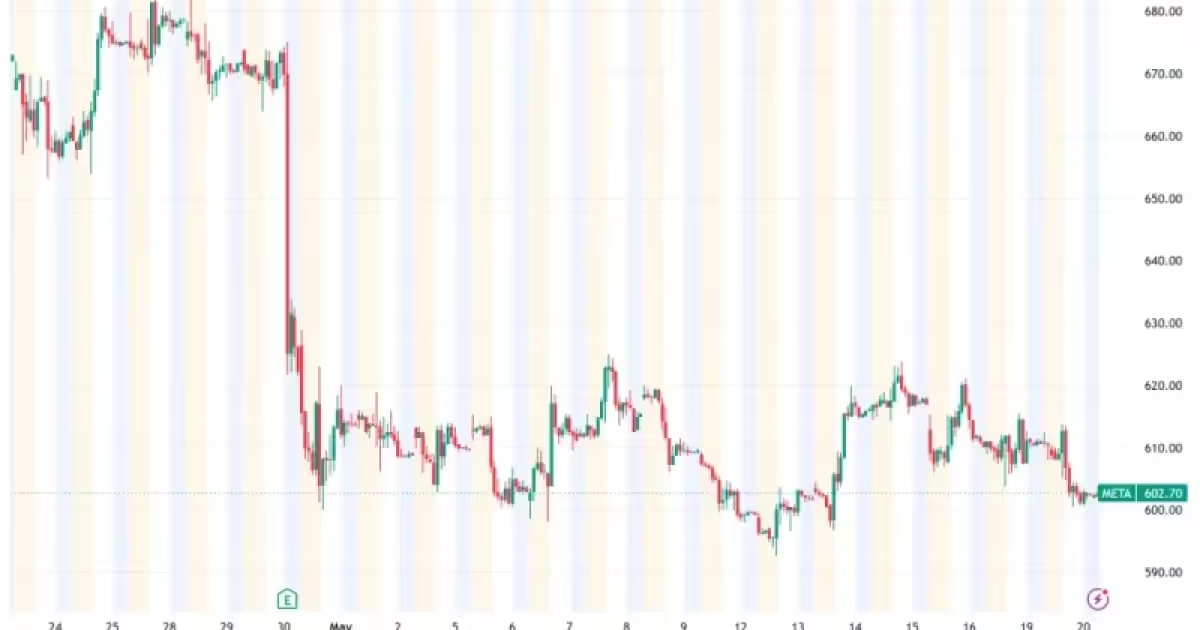
Meanwhile the announcement touches a financial thread: news of the deal bears on corning stock because it directly concerns Corning’s U.S. operations and capital spending plans. The company has not provided the timing or the full investment amount, so observers must wait for follow-up statements to understand the deal’s operational pace and budgetary impact.
The clearest unresolved question the announcement leaves behind is not whether the deal exists — it does — but when its promises become real: when the 1,000 advanced manufacturing jobs will be posted and filled, when construction will begin and end, and when Corning’s expanded North Carolina facilities will be producing. Until those dates and the precise investment total are disclosed, the headline counts remain commitments without a calendar.



